
Main Courses
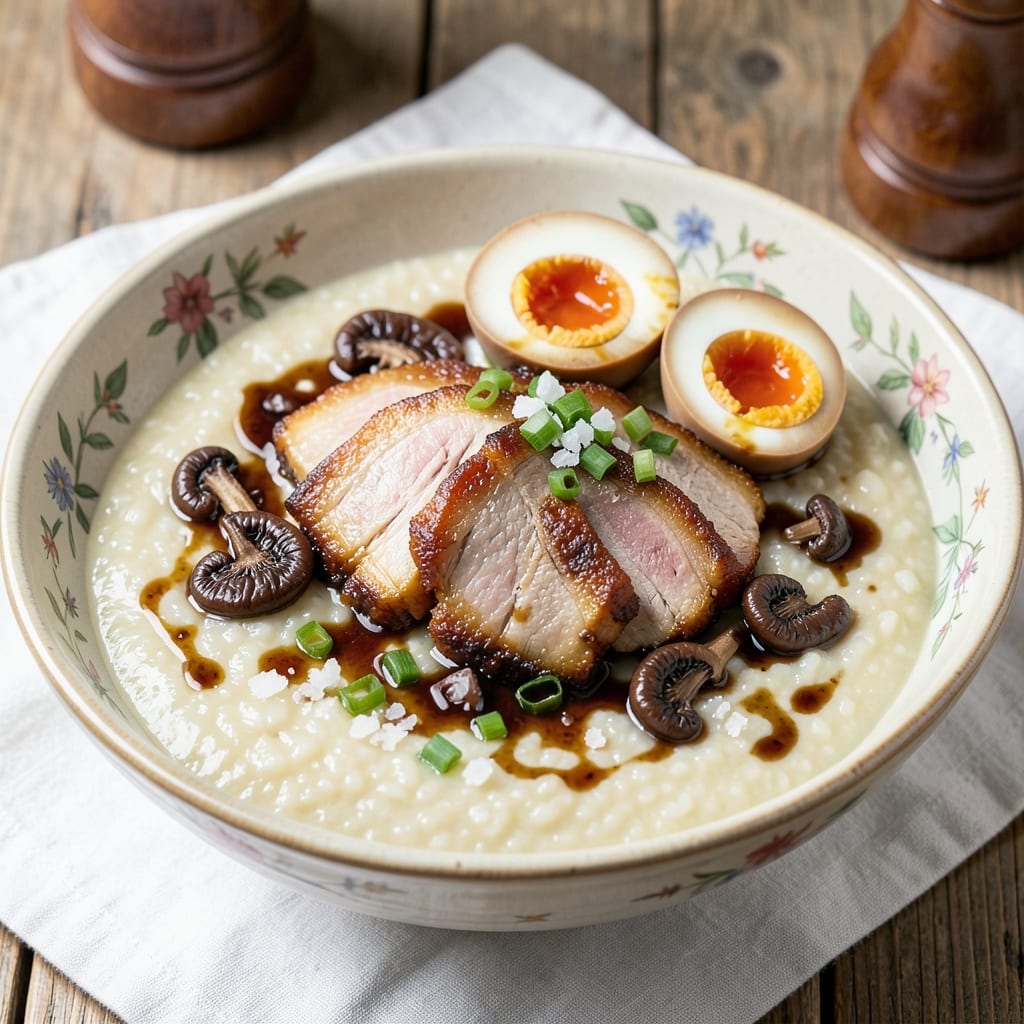
This congee pork and preserved egg recipe brings the comforting essence of Chinese breakfast tables to your morning—creamy, silken rice porridge infused with tender pork and delicate preserved egg yolk streaks. 💛 I first encountered this dish during my apprenticeship in Charleston, where Chef Chen taught me how a simple bowl of congee could transform a meal into an experience. The secret lies in the slow simmering of rice until it reaches that perfect, almost custard-like consistency, while the pork and preserved egg add layers of savory depth.
The recipe begins with jasmine rice cooked low and slow, absorbing just enough water to create that signature velvety texture. While the congee simmers, pork belly or shoulder is rendered until crispy at the edges and tender within—a technique I perfected during my years cooking 2,000 pounds of pork weekly at The Smoky Pig. The preserved egg, with its rich, slightly salty yolk, ties everything together, adding a luxurious touch that elevates this dish from simple to extraordinary.
What you'll end up with is a bowl of congee so smooth it melts in your mouth, topped with crispy pork that contrasts beautifully against the creamy porridge, and preserved egg yolk streaks that add a luxurious, savory finish. The aroma alone—warm rice, crispy pork, and the subtle tang of preserved egg—will make your kitchen feel like a bustling Chinese breakfast diner. This is comfort food at its finest, perfect for a leisurely morning or a cozy evening meal.
Serve it with a drizzle of soy sauce, a sprinkle of scallions, and a dash of sesame oil for extra depth. The combination of textures—creamy congee, crispy pork, and soft egg yolk—makes every spoonful a little celebration. Let's get cooking!
Ingredients for congee pork and preserved egg
Jasmine rice, crispy pork belly, and preserved eggs—your morning just got an upgrade.
| Ingredient | Amount | Notes |
|---|---|---|
| Jasmine Rice 🍚 | 1 cup | Uncooked, long-grain preferred |
| Pork Belly 🐖 | 1 lb | Skin-on, cut into 1-inch cubes |
| Preserved Eggs 🥚 | 2 whole | Century eggs, sliced into strips |
| Dried Shiitake Mushrooms 🍄 | 4 whole | Rehydrated, stems removed |
| Dried Scallions 🧅 | 2 tbsp | Or 4 fresh scallions chopped |
| Light Soy Sauce 🥄 | 2 tbsp | For seasoning and serving |
| Sesame Oil 🫒 | 1 tbsp | Toasted, for aroma |
| Dried Ginger 🌿 | 1 tsp | Fresh preferred if available |
| Star Anise 🌟 | 1 whole | For aroma, remove before serving |
| Water 💧 | 6 cups | Filtered preferred for clarity |
| Salt 🧂 | 1 tsp | Adjust to taste |
| Vegetable Oil 🫒 | 2 tbsp | High smoke point for frying |
| White Pepper 🌶️ | ½ tsp | Freshly ground preferred |
The jasmine rice is non-negotiable here—it's the heart of congee. Grab the long-grain variety from Asian markets or the international aisle at Whole Foods. Pork belly should have good marbling, and if you can't find it pre-cut, ask the butcher to cube it for you. Preserved eggs? Look for the deep black-shelled ones at Chinese grocery stores—they're worth the hunt. Dried shiitake mushrooms add earthy depth, and I always buy mine in bulk from Trader Joe's—they're cheaper and keep for months. The star anise and ginger are key for that aromatic base, so don't skimp on quality.
No pork belly? Pork shoulder works too, but render it longer for crispiness. Fresh scallions are ideal, but dried works in a pinch—just rehydrate them first. Running low on preserved eggs? Substitute with soft-boiled eggs (peel and slice them thin), though you'll miss that signature tang. The soy sauce matters—light soy for seasoning, dark soy for color if you want that classic look. And that sesame oil? Toasted is non-negotiable—it's what makes the aroma pop. For the mushrooms, soak them in hot water for 20 minutes to rehydrate, then slice them thin.
This congee tastes even better the next day—make extra and store it in airtight containers for 3-4 days in the fridge. The pork belly keeps for 2 weeks in the freezer, and preserved eggs last 3 months unrefrigerated. For serving, I like to keep the pork crispy by reheating it separately in a pan with a splash of water. The congee itself reheats beautifully—just stir in a splash of water and warm it gently. Garnish with fresh scallions and a drizzle of sesame oil right before serving.
Why You'll Love This Recipe
- One-Pot Magic: I swear by this—just rice, pork belly, and a few pantry staples simmered together. No chopping boards full of scraps, no multiple pots clanging. The pork belly renders its own fat into the congee, and the preserved eggs add richness without extra effort. Honestly, it’s the kind of meal where you can sip tea while it works.
- Umami Bomb: That first spoonful of congee with the pork belly’s crispy edges and the preserved egg’s creamy yolk? It’s like a flavor explosion in your mouth. The dried shiitake mushrooms soak up the broth and burst with earthiness, while the dried scallions add a sharp, fresh finish. Between us, this isn’t just food—it’s a full sensory experience.
- Leftover Goldmine: This dish actually tastes better the next day. The congee thickens into a perfect texture, and the pork belly stays tender, so I make a big batch on Sundays. Reheat it with a splash of water, and it’s like a warm hug in a bowl—great for lazy mornings or packing for work. My kids even ask for it when I forget to make their usual lunches.
- Budget Breakthrough: Pork belly might sound fancy, but a little goes a long way, and the preserved eggs add depth without costing a fortune. Dried shiitake and scallions are shelf-stable, so I stock up when they’re on sale. It’s the kind of recipe that makes me feel like I’m eating gourmet without breaking the bank—especially when I stretch it into multiple meals. Not the prettiest, but the taste makes up for it every time.
Step-by-step instructions for silken congee with pork and preserved egg
Here's how to transform simple ingredients into velvety congee with rich pork and delicate preserved egg ribbons.
🔥 Step 1: Render the Pork Belly for Maximum Flavor
Cut the 1 lb pork belly into 1-inch cubes and pat dry with paper towels. Heat 2 tablespoons vegetable oil in a heavy-bottomed pot over medium-high heat. Add the pork belly in a single layer and let it sear undisturbed for 4-5 minutes until the fat renders and the edges turn golden brown.
This initial sear builds deep flavor through the Maillard reaction. I like to press down gently on the pork cubes during the first minute—this prevents them from curling and ensures even contact with the pan. Once golden on all sides, transfer the pork to a plate and set aside, leaving the rendered fat in the pot. You should have about ¼ cup of fragrant pork fat remaining.
🍳 Step 2: Sauté Aromatics and Rehydrate Shiitakes
In the same pot, add the 4 whole dried shiitake mushrooms and cook for 1 minute to remove any surface dust. Pour in 6 cups water and bring to a boil. Reduce heat to medium-low and let the mushrooms simmer for 15 minutes until fully rehydrated and tender. Remove the mushrooms with tongs and set aside, reserving the soaking liquid.
In the same pot, add 1 tablespoon sesame oil, 1 teaspoon dried ginger, and the whole star anise. Toast for 30 seconds until fragrant—you'll smell that warm, toasty sesame aroma. This step is where the congee gets its complex depth of flavor. Don't walk away; ginger burns quickly.
👨🍳 Step 3: Cook the Jasmine Rice for Silken Texture
Add the 1 cup jasmine rice to the pot along with the reserved mushroom soaking liquid (about 4 cups). Stir once to distribute the rice evenly. Bring to a gentle boil, then immediately reduce heat to lowest setting. Cover the pot with a tight-fitting lid and let it cook undisturbed for 45 minutes.
I know it seems like nothing's happening, but this slow cooking transforms the rice into a luxurious, silken texture. The rice should break down completely, creating a creamy porridge that clings to your spoon. If you peek too early, you'll disrupt the gentle cooking process—trust me, it's worth the wait.
🥘 Step 4: Finish with Pork and Seasonings
After 45 minutes, stir in the reserved pork belly along with 1 teaspoon salt and 0.5 teaspoon white pepper. Add 2 tablespoons light soy sauce and 2 tablespoons dried scallions. Taste and adjust seasoning—you want the soy sauce to enhance, not dominate, the natural pork flavor. The congee should be subtly salty with a hint of umami.
Simmer uncovered for another 10 minutes to let the flavors meld. The texture should be smooth and slightly translucent, with the pork cubes falling apart easily when pierced with a spoon. This is where the magic happens—the pork infuses the congee with its rich fat and savory depth.
🍽️ Step 5: Serve with Preserved Egg Ribbons
Slice the 2 whole preserved eggs into ¼-inch strips and arrange them on top of each serving of congee. The dark, chewy egg yolks will create beautiful marbled streaks as you eat. Ladle the hot congee into bowls and let each person add their own egg strips—this creates that signature visual contrast of dark egg against creamy white porridge.
For the perfect first bite, take a spoonful of congee with egg, then add a piece of tender pork. The combination delivers a perfect balance of textures—silken rice, chewy egg, and melt-in-your-mouth pork—all tied together with the aromatic broth. Serve immediately while the pork is still warm and the congee maintains its luxurious consistency.
Pro Tips For Making Congee Pork And Preserved Egg
- Parboil Pork Belly First: I learned this the hard way—skipping the parboil means your pork belly stays rubbery no matter how long you simmer it. Cut it into 1-inch cubes, boil for 10 minutes in salted water, then drain and pat very dry before frying. The extra effort makes all the difference when the pork belly turns tender and flavorful instead of chewy.
- Soak Shiitakes Separately: Dried shiitakes need a good long soak (30-45 minutes) in hot water, but don’t toss them in with the rice. Soak them first in a separate bowl, then strain and reserve the soaking liquid—it’s packed with umami. Use about ½ cup of that liquid later when you’re adjusting the congee’s consistency, and your broth will taste deeper.
- Don’t Overcrowd the Pot: I used to dump everything in at once, thinking more ingredients meant better flavor. Wrong. After burning three batches, I figured out: fry the pork belly until golden in batches, and set it aside. Then add the preserved eggs and mushrooms after the pork’s been removed—this keeps the heat steady and prevents greasy, uneven cooking.
- Slice Preserved Eggs Thin: Thick slices of preserved egg turn mushy in congee, no matter how careful you are. Use a sharp knife and cut them paper-thin (almost like slicing an onion) right before adding them to the pot. They’ll stay intact, adding that perfect creamy-yolk texture without falling apart into the broth. (Yes, even if you’re impatient like me.)
Wine and beer pairings for this dish
Light Beer Pairings
For this comforting congee, I reach for a crisp, light lager like Sapporo or Asahi—their clean, slightly sweet profiles cut through the richness of pork fat without overpowering the delicate preserved egg. The subtle maltiness in these beers complements the umami depth of the congee, while their effervescence cleanses your palate between spoonfuls. I keep a six-pack of Sapporo Premium on hand year-round for dishes like this. 🍺
Rice Wine Elevation
If you prefer something more traditional, a dry Chinese rice wine like Moutai (diluted with water) transforms this pairing into an experience. The nutty, slightly floral notes of Moutai enhance the star anise and ginger in the congee, while its warmth balances the preserved egg's saltiness. For a modern twist, try Shaoxing wine—its earthy profile mirrors the shiitake mushrooms perfectly. Serve chilled to preserve its crispness.
Umami-Enhanced Sake
For a sophisticated touch, opt for a dry junmai sake like Dassai 23. The sake's subtle umami and clean finish elevate the pork's richness without competing. I like to serve it slightly warmed (100°F) to enhance its aromatic qualities. The sake's acidity also helps cut through the congee's creaminess, making each bite feel lighter. A small 2-ounce pour per serving is ideal—just enough to complement without dominating.
Non-Alcoholic Options
Don't overlook jasmine tea for a refreshing, alcohol-free pairing. Its floral notes mirror the rice's aroma while its slight bitterness balances the pork's fat. For something more substantial, try a ginger beer like Feather Ginger Beer—the spicy kick complements the preserved egg's saltiness beautifully. Both options work equally well for brunch or dinner settings. 🌿
Wine Pairing Pro Tips
When pairing wine, always serve it at the right temperature: 45-50°F for rice wine, 40-45°F for sake, and 38-42°F for beer. I keep a wine chiller in my kitchen—it's a game-changer for maintaining perfect serving temps. For beer, I recommend pouring into a pint glass rather than a mug to preserve its carbonation and aroma. And remember: the key is balance—your beverage should enhance, not overpower, the dish's natural flavors.
Nutrition facts
Frequently asked questions
Why does my congee turn out too thick or too thin?
The key is the rice-to-water ratio and cooking time. For 1 cup jasmine rice, use 6 cups water initially, but adjust based on your rice's absorption rate. If too thick, add ¼ cup hot water at a time while stirring. If too thin, simmer uncovered for 5-10 more minutes to thicken. The texture should be like thick pudding, not soup.
Can I use regular white rice instead of jasmine rice?
While possible, jasmine rice is ideal because its natural fragrance and slightly sticky texture create that signature silken mouthfeel. If you must use white rice, choose medium-grain varieties like Calrose and increase cooking time by 10-15 minutes. The flavor won't be identical, but the texture will be closer.
How do I store leftovers without drying out the congee?
Store congee in an airtight container with a splash of water (about 1 tablespoon per cup) to prevent drying. It keeps for 3-4 days in the fridge. Reheat gently on low heat with a lid slightly ajar, stirring occasionally. For longer storage, freeze portions for up to 1 month—thaw overnight in the fridge.
What if I can't find preserved eggs?
You can substitute with soft-boiled eggs (peeled and sliced) or quail eggs for a similar presentation. For authentic flavor, look for century eggs at Asian markets—their dark, chewy yolks are unmatched. If using regular eggs, add ½ teaspoon soy sauce to mimic the preserved egg's saltiness.
Can I make this congee in an Instant Pot?
Yes! Use the sauté function to render the pork, then add rice and 4 cups water (instead of 6). Cook on high pressure for 12 minutes, then quick-release. The texture will be slightly firmer than stovetop, but still delicious. For extra creaminess, stir in 1 tablespoon cornstarch with 2 tablespoons water after cooking.