
Main Courses
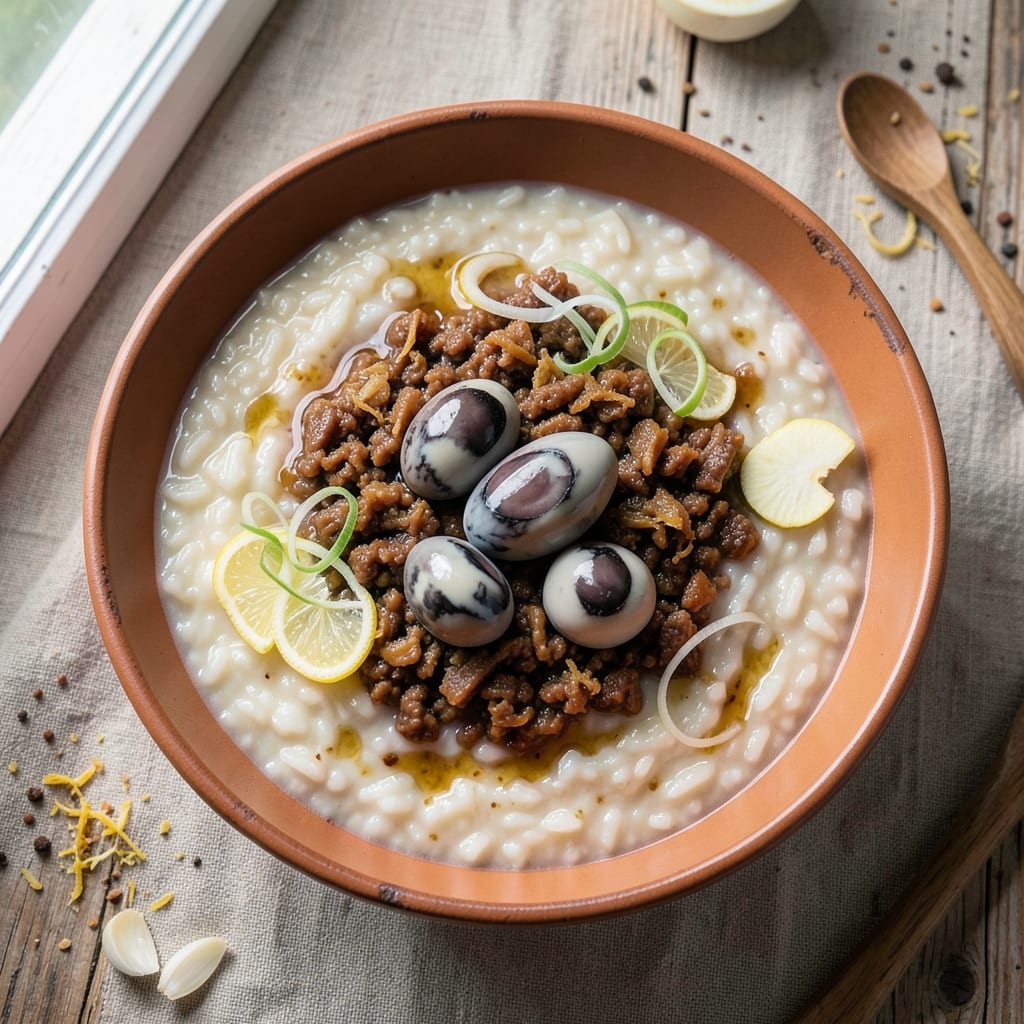
This century egg minced pork porridge delivers the perfect balance of silky rice, tender pork, and the distinctive umami depth of preserved eggs—a dish born from Cantonese tradition and refined through generations. The key lies in the century egg's jelly-like texture and its ability to transform simple rice porridge into something rich and complex. I've perfected this recipe to ensure each component—from the minced pork's savory aroma to the porridge's velvety finish—comes together harmoniously.
The foundation starts with properly prepared century eggs, where the dark, gelatinous yolk and pale egg white create a striking contrast. Minced pork is sautéed with garlic, ginger, and scallions until fragrant, then combined with the porridge for a seamless blend of textures. The rice must cook slowly to achieve that signature silky consistency, while a touch of salt and soy sauce enhances the natural flavors without overpowering them.
What makes this dish extraordinary is the interplay of temperatures and textures—the crispness of fried shallots, the freshness of cilantro, and the heat of chili oil all elevate the porridge to restaurant-quality. The century egg's unique flavor profile adds a layer of complexity that's both intriguing and satisfying, making this more than just a comforting bowl of rice.
Whether you're serving it as a hearty breakfast or a comforting meal, this porridge captures the essence of Cantonese comfort food. The technique is straightforward, but the result is anything but ordinary. Let's get started on creating this umami-rich masterpiece.
Ingredients for century egg minced pork porridge
Century eggs, minced pork, and jasmine rice form the umami-rich foundation of this Cantonese masterpiece.
| Ingredient | Amount | Notes |
|---|---|---|
| Century Eggs 🥚 | 2 whole | High-quality, dark yolk intact |
| Ground Pork 🐷 | ¾ lb | Freshly minced, lean preferred |
| Jasmine Rice 🌾 | 1 cup | Uncooked, long-grain preferred |
| Garlic Cloves 🧄 | 4 cloves | Freshly minced, aromatic variety |
| Fresh Ginger 🌿 | 1 tbsp | Finely grated, peeled |
| Scallions 🧅 | 3 whole | White and green parts, chopped |
| Light Soy Sauce 🥢 | 2 tbsp | Kikkoman preferred |
| Dark Soy Sauce 🥢 | 1 tbsp | For deep color, optional |
| Sesame Oil 🫒 | 1 tbsp | Toasted, for aroma |
| Chicken Stock 💧 | 3 cups | Homemade or quality store-bought |
| Shallots 🧅 | 2 whole | Thinly sliced, fried crisp |
| Fresh Cilantro 🌿 | ¼ cup | Chopped, for garnish |
| Chili Oil 🌶️ | 1 tbsp | Homemade or store-bought |
| Sesame Seeds 🌰 | 1 tsp | Toasted, for crunch |
| Salt 🧂 | 1 tsp | Kosher or sea salt |
The century eggs are non-negotiable—look for ones with a deep black yolk and pale white at Asian markets or specialty grocers like H Mart or 99 Ranch Market. Freshness matters: the eggs should have a slight ammonia scent, not overpowering. For the pork, ground pork with 10-15% fat content ensures tender texture. If you can't find century eggs locally, substitute duck eggs preserved in clay (common in Hong Kong) for a similar effect. The jasmine rice should be uncooked and rinsed thoroughly to remove excess starch, which prevents gumminess during slow cooking.
No century eggs? Black vinegar-marinated hard-boiled eggs (soak eggs in 1 tbsp black vinegar + 1 cup water for 24 hours) provide a close substitute, though the texture won't be identical. For the pork, ground chicken or turkey works in a pinch, but the fat content will differ. The scallions can be swapped for green onions or leeks, though scallions offer the mildest flavor. If you're using store-bought chicken stock, Kitchen Basics or Pacific Foods brands are reliable for authentic umami. The fried shallots add critical texture—use a wok or skillet on medium-low heat to prevent burning, and keep them crisp by draining on paper towels.
Century eggs keep for 2-3 weeks in the fridge, sealed in their original liquid. Ground pork should be used within 2 days for optimal texture. The cooked porridge reheats beautifully—simply add 1-2 tbsp water per serving and steam for 3-5 minutes. For meal prep, store components separately: rice, pork mixture, and toppings. Assemble only when ready to eat to maintain crispness. The chili oil and sesame seeds lose potency after 2 weeks, so store them in a cool, dark place or refrigerate after opening.
Why You'll Love This Recipe
- One-Pot Wonder: I swear, this porridge comes together in a single pot—no chopping mountains of veggies, no switching pans. Just ground pork sizzling, rice simmering, and century eggs peeking through that rich, dark broth. Honestly, the only prep is mincing garlic and ginger, which takes less time than scrolling through my phone.
- Umami Bomb: That first bite? The century eggs add this deep, briny richness that cuts through the pork’s fat, while the ginger and garlic give it a bright, punchy kick. It’s not just flavor—it’s layers of flavor, like someone took all the good bits of a dim sum spread and poured them into one bowl.
- Lazy Meal Prep: Between us, I make this on Sundays and eat it for three days straight. The rice stays creamy, the pork stays tender, and the century eggs? They just get better with time, soaking up all the flavors. Reheat it in a pot or microwave, and it’s like you’re eating fresh again—no sad leftovers here.
- Budget Comfort: Ground pork and jasmine rice won’t break the bank, and century eggs last forever in the fridge. I’ve fed my whole family (plus my picky teenager) with one batch, and we all asked for seconds. It’s the kind of dish that makes you feel like you’re treating yourself, even when you’re just opening a can of beans for the side.
Step-by-step instructions for century egg minced pork porridge
Master this delicate balance of textures—silky rice, tender pork, and century egg's velvety yolk.
Prepare the Century Eggs and Shallots
Peel the 2 whole century eggs, reserving the dark yolks and discarding the whites. Gently separate the yolks into a small bowl—you'll notice their distinctive marbled texture and subtle jelly-like consistency. Set aside for later use.
In a separate pan, heat 1 tablespoon sesame oil over medium heat. Add the 2 whole shallots, sliced thinly, and fry until they turn a rich golden brown and crisp to the touch. This should take about 4-5 minutes. Remove with a slotted spoon and place on paper towels to drain excess oil. These crisp shallots will add a delightful textural contrast to the porridge.
Sauté the Aromatics and Pork
In the same pan, add 1 tablespoon sesame oil and increase heat to medium-high. Add the 4 cloves minced garlic and 1 tablespoon finely grated ginger, cooking for 30 seconds until fragrant but not browned. This quick cooking preserves their bright flavors.
Add the 0.75 lb ground pork and cook, breaking it apart with a spatula, until it loses its raw color and becomes golden brown. This should take about 5-6 minutes. The pork should be fully cooked but still retain moisture—overcooking will make it dry and tough. Season with 1 teaspoon salt and 2 tablespoons light soy sauce.
Toast the Rice and Build the Broth
Increase heat to medium-high and add the 1 cup jasmine rice. Toast the rice for 2-3 minutes, stirring constantly, until it becomes translucent at the edges. This step develops the rice's nutty flavor and prevents a gummy texture in the porridge.
Pour in the 3 cups chicken stock and bring to a gentle simmer. The liquid should just barely cover the rice. Add the 1 tablespoon dark soy sauce and reduce heat to low. Cover the pot and let it cook for 20 minutes, stirring occasionally to prevent sticking. The rice should be tender but still hold some bite—it will finish cooking in the final simmer.
Combine and Finish the Porridge
Remove the pot from heat and carefully stir in the century egg yolks. The heat will gently warm them, enhancing their unique flavor without cooking them through. Add the 3 whole chopped scallions and the crisp fried shallots, distributing them evenly throughout the porridge.
Return the pot to low heat and let it simmer uncovered for an additional 5 minutes. This final step allows the flavors to meld together while ensuring the rice reaches perfect tenderness. The porridge should have a silky, almost custard-like consistency. If it's too thick, add a splash of hot water to reach your desired texture.
Garnish and Serve
Ladle the porridge into bowls and drizzle each serving with 1 tablespoon chili oil. Sprinkle with 1 tablespoon chopped fresh cilantro and 1 teaspoon toasted sesame seeds. The chili oil adds a subtle heat, the cilantro brings freshness, and the sesame seeds contribute a nutty crunch that contrasts beautifully with the silky porridge.
Serve immediately while hot. The porridge should be smooth and velvety, with each spoonful delivering layers of umami from the century egg, savory depth from the pork and soy sauces, and delicate crunch from the garnishes. The contrast between textures and flavors makes this dish truly memorable.
Pro Tips For Making Century Egg Minced Pork Porridge
- Prep Century Eggs Right: Peel and slice century eggs thinly—no thicker than 3mm—so they cook through without turning rubbery. I used to leave strips too thick, and they’d sit like chewy gray bricks instead of melting into the porridge.
- Sear Pork in Two Batches: Cook the ground pork in small batches over medium-high heat until it’s deep brown, not just pink. Crowding the pan steams the meat instead of crisping it—my first attempt ended up greasy and bland.
- Bloom Ginger First: Slice ginger thin (1mm) and fry it in oil for 20 seconds until fragrant before adding garlic. Skipping this step means the ginger stays raw and bitter—trust me, your porridge will thank you.
- Simmer Rice Low and Slow: Once the pork and aromatics are done, add rice and just enough water (about 1.5x the rice volume), then reduce to the lowest heat possible. I used to rush it, and the rice ended up mushy or undercooked—patience pays off here.
Creative variations of this recipe
Hong Kong-Style Fusion
In Hong Kong, this porridge is often elevated with pickled vegetables like daikon and carrots for tangy contrast. I like adding ½ cup quick-pickled radishes (slice thin, soak in rice vinegar + sugar for 1 hour) to brighten the dish. Another local twist is crispy fried egg on top—crack a fresh egg into the hot porridge during the final 5 minutes of cooking, cover until set, then garnish with chili crisp. 🌶️
Spicy Sichuan Twist
For a Sichuan-inspired version, swap the chili oil for Sichuan peppercorn oil (infuse 1 tbsp neutral oil with 1 tsp toasted Sichuan peppercorns for 10 minutes). Add 1 tsp doubanjiang (fermented chili bean paste) when sautéing the pork, and finish with thinly sliced preserved mustard greens (available at Asian markets). The numbing-spicy kick transforms this into a fiery, aromatic bowl.
Vegetarian Adaptation
Replace the pork with mushroom "meat"—sauté ½ lb shiitake mushrooms finely minced with 1 tbsp soy sauce and 1 tsp mushroom powder until golden. For umami depth, add 1 tbsp fish sauce substitute (like vegan Worcestershire). Use century egg yolks and toasted sesame oil to maintain the dish's signature richness. Garnish with crispy shallots and chili oil for authenticity. 🥚
Sweet & Savory Dessert Porridge
Yes, you read that right! For a sweet ending, reduce the pork to ¼ lb and add ½ cup red bean paste (store-bought or homemade) when combining with the rice. Sweeten with 1 tbsp rock sugar during the final simmer. Top with lychee jelly (available frozen at Asian markets) and a sprinkle of toasted coconut flakes for a creamy, fruity twist on this classic. 🍧
Quick Breakfast Bowl
Skip the century egg yolks and use soft-boiled eggs instead—slice them in half and place on top of the porridge. Add crispy bacon bits (or pork floss for a lighter option) and a fried egg yolk drizzle. This American-Chinese fusion turns it into a hearty breakfast with protein-packed layers. Serve with hot sauce on the side for customizable heat. 🍳
Regional Guangdong Variations
In Guangdong province, this porridge often includes dried shrimp (soak 2 tbsp in hot water for 10 minutes, then chop) for a briny, oceanic depth. Another local touch is char siu (Chinese BBQ pork)—use ½ cup diced leftover char siu instead of minced pork. Garnish with pickled ginger (marinate 1-inch ginger in 1 tbsp vinegar + 1 tsp sugar for 30 minutes) to cut through the richness. 🗺️
Nutrition facts
Frequently asked questions
What makes century eggs different from regular eggs?
Century eggs are preserved in a mixture of clay, ash, salt, quicklime, and rice hulls for weeks, creating their distinctive dark yolk and pale white. The preservation process gives them a unique umami flavor and jelly-like texture that regular eggs can't replicate. The dark yolk is especially prized for its rich, slightly funky taste that elevates this porridge.
Can I substitute ground chicken for pork in this recipe?
You can use ground chicken, but the texture and flavor will differ slightly. Chicken tends to be leaner, so add 1 teaspoon extra oil when cooking to prevent dryness. For best results, use ground chicken thighs (about 10% fat) instead of breasts, as they stay juicier during cooking. The dish will still be delicious, just with a lighter pork flavor.
How do I store century eggs properly?
Keep century eggs refrigerated in their original liquid until ready to use. Once peeled, store the yolks in an airtight container with a thin layer of water or oil to preserve freshness for up to 3 days. For longer storage, freeze the yolks in ice cube trays with a bit of water—thaw overnight in the fridge before using. Never refreeze thawed yolks.
Why did my porridge turn out too thick?
This usually happens if the rice wasn't cooked long enough or the liquid evaporated too much. To fix it, stir in 2-3 tablespoons hot water and simmer for an additional 2-3 minutes while stirring constantly. For prevention, use the full 3 cups chicken stock and keep the pot covered during cooking. If using a high-altitude location, add 1 extra tablespoon water to account for faster evaporation.
What's the best way to reheat leftover porridge?
Reheat gently on low heat with 1-2 tablespoons water per serving, stirring constantly to prevent sticking. For best texture, cover and steam for 3-5 minutes in a pot with a tight lid. Avoid microwaving as it can make the porridge gummy. If reheating, add fresh chili oil and sesame seeds after warming to restore the crisp contrast.