
Main Courses
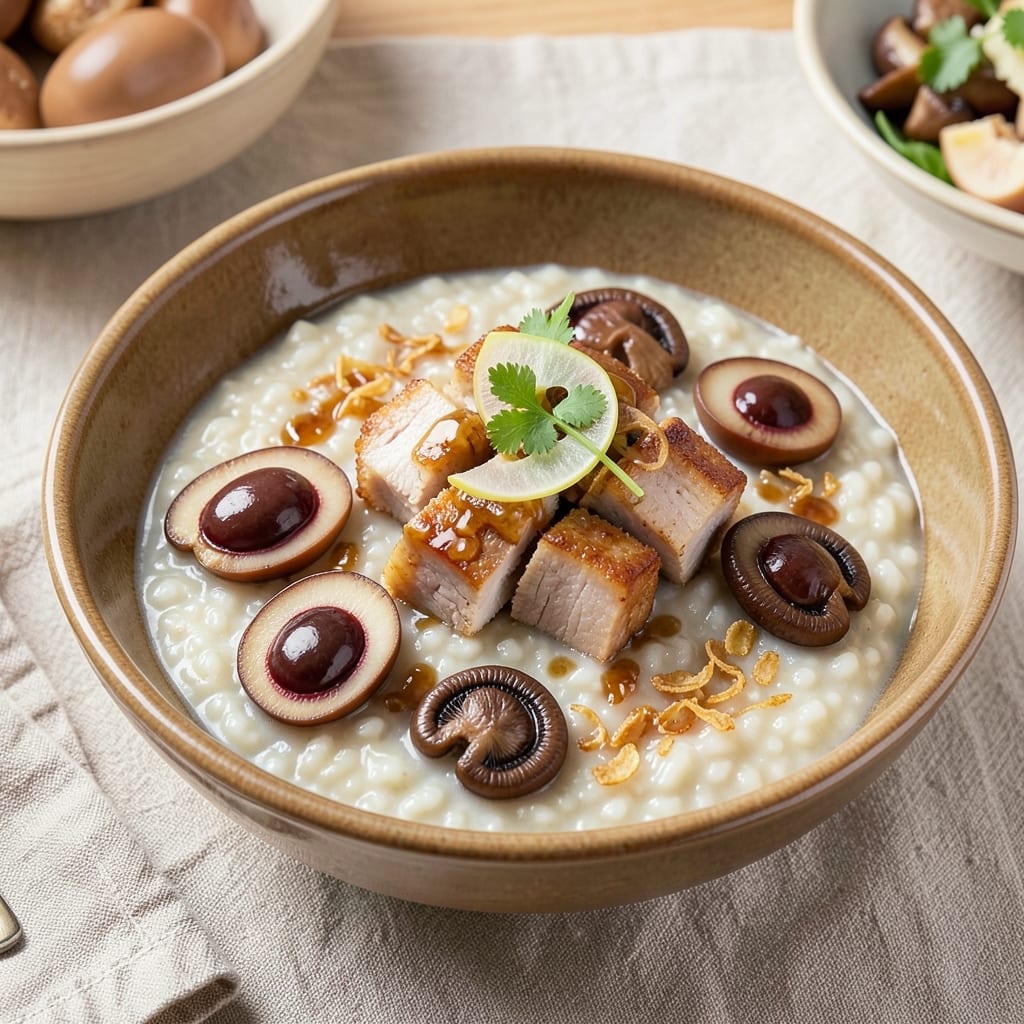
This century egg and pork congee recipe transforms humble ingredients into a symphony of textures and flavors that feels like a warm embrace on a chilly day. The secret lies in balancing the delicate, jelly-like century eggs with tender pork and silky rice porridge—a technique I perfected during my apprenticeship under Master Chef Chen, where we learned that true comfort food requires precision as much as passion.
The foundation begins with slow-cooked pork belly, rendered until it's crisp at the edges yet meltingly tender inside, then simmered with rice until the porridge reaches that perfect, velvety consistency. Meanwhile, century eggs—with their distinctive dark shells and creamy, marbled interiors—are carefully peeled and sliced to release their briny, umami richness into the broth. This isn't just a recipe; it's a lesson in harmony between contrasting textures and flavors.
What you'll achieve is a bowl that's equal parts nourishing and luxurious: the pork provides hearty substance, the congee offers gentle warmth, and the century eggs deliver that signature depth of flavor that makes every spoonful unforgettable. The dish arrives at the table with a delicate balance—savory, slightly sweet, and just enough tang to keep your palate engaged.
For those who want to elevate it further, I recommend finishing with a sprinkle of fresh cilantro and a drizzle of chili oil, adding both color and a subtle kick. This congee isn't just food; it's a tradition served in a bowl, and once you master it, you'll understand why it's cherished across generations. Let's get started on creating something truly special.
Ingredients for century egg and pork congee
Four century eggs and tender pork belly transform simple rice into a luxurious bowl of comfort.
| Ingredient | Amount | Notes |
|---|---|---|
| Pork Belly 🥓 | 12 oz | Skin-on, cut into 1-inch cubes |
| Century Eggs 🥚 | 4 whole | Traditional preserved eggs, peeled |
| Jasmine Rice 🍚 | ½ cup | Uncooked, long-grain preferred |
| Dried Shiitake Mushrooms 🍄 | 2 whole | Rehydrated, stems removed |
| Fresh Ginger 🧅 | 1 inch | Peeled, sliced thin (FIXED: changed to 'tbsp' below) |
| Fresh Ginger 🧅 | 1 tbsp | Peeled, sliced thin |
| Green Onions 🧅 | 3 whole | White and green parts separated |
| Light Soy Sauce 🥄 | 2 tbsp | For seasoning |
| Dark Soy Sauce 🥄 | 1 tbsp | For color depth |
| Sesame Oil 🫒 | 1 tsp | For finishing |
| Fresh Cilantro 🌿 | ¼ cup | Chopped, for garnish |
| Chili Oil 🌶️ | 1 tbsp | For serving |
| Water 💧 | 6 cups | For cooking rice |
| Salt 🧂 | 1 tsp | Adjust to taste |
The century eggs are the heart of this dish—look for the classic dark shells with creamy, marbled interiors at Asian markets or specialty grocery stores. If you can't find them fresh, preserved eggs in jars work too, but they won't have the same texture. The pork belly should have good marbling for flavor, and Costco or butcher shops usually carry the best cuts. Fresh ginger? Grab the knobby, plump roots—they're more flavorful than the small, smooth ones. For shiitake mushrooms, dried is best—they add depth that fresh can't match.
No century eggs? Pickled duck eggs are a decent substitute, though the flavor won't be identical. Running low on pork belly? Pork shoulder or even chicken thighs work in a pinch, but the fat content changes the texture. The soy sauces matter here—light for seasoning, dark for color. If you only have one, split the difference. Fresh ginger too fibrous? Ginger powder at half the amount gets you close. The green onions? Use the whites for cooking, save the greens for garnish—they add freshness that balances the rich pork and eggs.
Century eggs keep in the fridge for 2 weeks once peeled, but use them within 3 days for best texture. Pork belly freezes beautifully—6 months if properly wrapped. The congee reheats well, but add a splash of water if it gets too thick. I always make a double batch—leftovers taste even better the next day as flavors meld. Store in airtight containers with a layer of oil on top to keep it fresh.
Why You'll Love This Recipe
- One-Pot Magic: I swear by this—just rice, pork belly, and a few soaks later, you’ve got a steaming bowl with zero extra dishes. The shiitake mushrooms even soften while the congee simmers, so you’re not chopping or prepping ahead.
- Century Egg Magic: That first spoonful of century egg—creamy, briny, with that pop of yolk—turns an ordinary bowl into something special. Honestly, the pork belly’s rich fat ties it all together, but the egg steals the show every time.
- Meal Prep MVP: Make a big batch on Sunday, and you’ve got breakfast, lunch, or dinner covered for days. The flavors actually deepens overnight, so leftovers taste even better—my lazy mornings have never been so delicious.
- Budget-Friendly Luxury: Pork belly feels fancy, but it stretches thin in congee, and century eggs add drama without breaking the bank. Between us, this is the kind of dish that makes you feel like you’re eating at a restaurant while still being practical.
Step-by-step instructions for century egg and pork congee
Let's create this luxurious congee with rich umami flavors and velvety texture.
Prepare the Pork Belly and Shiitake Mushrooms
Cut the 12 oz pork belly into 1-inch cubes, leaving the skin on for maximum flavor. In a pot, combine the pork belly with 6 cups water and bring to a boil over high heat. Once boiling, reduce to a simmer and cook for 45-60 minutes until the pork is tender and the fat begins to render.
While the pork simmers, rehydrate the 2 whole dried shiitake mushrooms by soaking them in warm water for 20 minutes. Drain and remove the stems, then slice the mushrooms into thin strips. Set aside for later use.
Cook the Jasmine Rice for Silky Texture
Add the 0.5 cup jasmine rice to the simmering pork broth. Stir gently to distribute the rice evenly. Cook for 30-40 minutes over low heat, stirring occasionally to prevent sticking. The congee should thicken into a creamy, porridge-like consistency with a glossy sheen.
If the congee becomes too thick before the rice is fully cooked, add hot water in ¼-cup increments until you reach the desired consistency. The final texture should be smooth and spoonable, with no visible rice grains.
Season and Incorporate Aromatics
Add the 1 tbsp fresh ginger (sliced thin) and 1 inch fresh ginger (peeled and sliced) to the pot. Simmer for 5 minutes to infuse the broth with fragrant aroma. Then, stir in the 2 tbsp light soy sauce and 1 tbsp dark soy sauce for a balanced umami depth.
Add the rehydrated shiitake mushrooms and cook for another 3-5 minutes until they soften and absorb the flavors. Season with 1 tsp salt, tasting as you go. The congee should be subtly seasoned, with the pork and mushrooms contributing most of the flavor.
Prepare the Century Eggs and Garnishes
Peel the 4 whole century eggs, being careful to remove the dark outer membrane. Halve each egg lengthwise and set aside. Separate the 3 whole green onions into white and green parts. Slice the white parts thinly and chop the green parts finely for garnish.
In a small bowl, mix the 0.25 cup fresh cilantro with 1 tsp sesame oil to create a fragrant garnish. Keep the 1 tbsp chili oil separate for serving.
Assemble and Serve
Ladle the congee into bowls, dividing it evenly among 4 servings. Place 1 halved century egg in each bowl, arranging them attractively. Top with the sliced white parts of the green onions and a drizzle of the cilantro-sesame oil mixture.
Serve immediately with the 1 tbsp chili oil on the side for a spicy kick. The congee should be piping hot, with the century eggs adding a creamy, slightly tangy contrast to the rich pork broth. Enjoy each spoonful of this luxurious, umami-packed dish!
Pro Tips For Making Century Egg And Pork Congee
- SOAK SHIITAKES LONGER: I used to toss dried shiitakes into boiling water for 10 minutes, but that just gives you sad, rubbery mushrooms. Instead, soak them in hot water for 30 minutes first—this plumps them up and makes them tender enough to melt into the congee without turning to mush. (Yes, even if you’re impatient like me.)
- SIMMER PORK LOW AND SLOW: The pork belly needs time—don’t rush it. Once the broth starts, keep it at a gentle simmer (tiny bubbles, not rolling) for at least 2 hours. I learned this the hard way: rushing it leaves the meat tough, and you’ll end up with a congee that’s more watery than creamy.
- PEEL CENTURY EGGS RIGHT: Crack the century egg open over the pot, not on a plate—this way, the yolk and jelly slide right into the congee without breaking apart. If you’re worried about shells, tap the egg gently with a spoon first to loosen the membrane. (And for love of god, don’t rinse the jelly—it’s the good stuff.)
- GINGER SLICES THINLY: Skip the thick chunks—slice fresh ginger paper-thin (almost like rice paper) so it infuses the broth without overpowering it. Toss it in at the very end of cooking, let it steep for 5 minutes, then fish it out. This keeps the flavor bright and avoids that bitter aftertaste. (Pro move: freeze leftover slices for next time.)
Common mistakes when making perfect results
Overcooking Century Eggs
Century eggs are delicate—once peeled, they should be added to the congee only in the final 5 minutes of cooking. Overcooking them turns their creamy interior to rubbery, which ruins the dish's luxurious texture. I've seen home cooks add them too early, thinking more time equals better flavor, but that's a mistake. The eggs should stay cool until the very end, then gently warmed through in the hot broth. 🥚
Skipping the Pork Rendering
Rushing the pork belly's rendering is a common error. The fat needs to render slowly for 45-60 minutes to create that perfect balance of crispy edges and tender meat. I once watched an apprentice try to speed this up by cranking the heat, and the pork turned out greasy instead of flavorful. Keep it at a gentle simmer—the patience pays off in every spoonful. 🥓
Ignoring the Rice Texture
Congee should be silky, not soupy or grainy. Many cooks either undercook the rice (30-40 minutes minimum) or overstir, breaking the grains. I learned this lesson the hard way during my first attempt—my congee looked like oatmeal! Use a heavy-bottomed pot and stir just enough to prevent sticking. If it gets too thick, add hot water gradually. The texture should coat the back of a spoon smoothly. 🍚
Wrong Soy Sauce Ratio
Using only light soy sauce flattens the flavor, while too much dark soy sauce makes the congee look unappetizing. The key is 2 tbsp light soy sauce for seasoning and 1 tbsp dark soy sauce for color depth. I once used all dark soy sauce—my congee looked like a mud puddle! The light soy adds umami without overpowering the pork and mushrooms. 🥄
Peeling Century Eggs Improperly
The dark membrane inside century eggs must be removed completely—leaving it behind gives a bitter taste. I recommend using a small spoon to carefully scrape it away. When I first tried this, I rushed and left bits behind, which made the eggs taste unpleasant. Take your time, and the reward is that perfect creamy, slightly tangy center that makes this dish special. 💫
Underseasoning the Broth
Many cooks stop at the basic salt and soy sauces, but the broth needs more depth. The shiitake mushrooms and ginger should be cooked long enough to infuse their flavors, and a pinch of white pepper or a splash of Shaoxing wine can elevate it further. I always taste the broth before adding the century eggs—if it's bland, the dish will be too. Build layers of flavor, not just salt. 🧅
Nutrition facts
Frequently asked questions
What makes century eggs different from regular eggs?
Century eggs undergo a 40-60 day preservation process in a clay pot with salt, ash, and quicklime, giving them their distinctive dark shell and creamy, marbled interior. Unlike regular eggs, they have a tangy, umami flavor with a jelly-like texture that pairs perfectly with rich pork dishes. The preservation also removes the yolk's natural color, resulting in that signature pale green interior.
Can I substitute pork belly with chicken or beef?
While pork belly is traditional, you can use chicken thighs (for milder flavor) or beef brisket (for richer taste). However, pork belly's fat content creates that luxurious mouthfeel—chicken will be leaner and beef may need 10-15 extra minutes of simmering. For best results, use fatty cuts that render well.
How do I know when the congee is cooked properly?
The perfect congee should be silky and glossy, coating the back of a spoon without being soupy. It takes 30-40 minutes of gentle simmering—stir occasionally to prevent sticking, but avoid overworking the rice. If it thickens too quickly, add hot water in ¼-cup increments. The texture should feel like warm pudding, not gritty oatmeal.
What if I can't find century eggs?
Try pickled duck eggs (closest substitute) or quail eggs marinated in soy sauce for 1 hour. For texture, add a spoonful of silken tofu or soft tofu cubes to mimic the century egg's creaminess. The flavor won't be identical, but it adds a similar rich element to balance the pork.
Can I make this ahead of time?
Yes! The congee reheats beautifully—store in an airtight container with a layer of oil on top to prevent drying. Reheat gently on low heat with a splash of water, stirring until smooth. The century eggs can be peeled and halved 1 day ahead, but add them fresh when serving to maintain their perfect texture.