
Main Courses
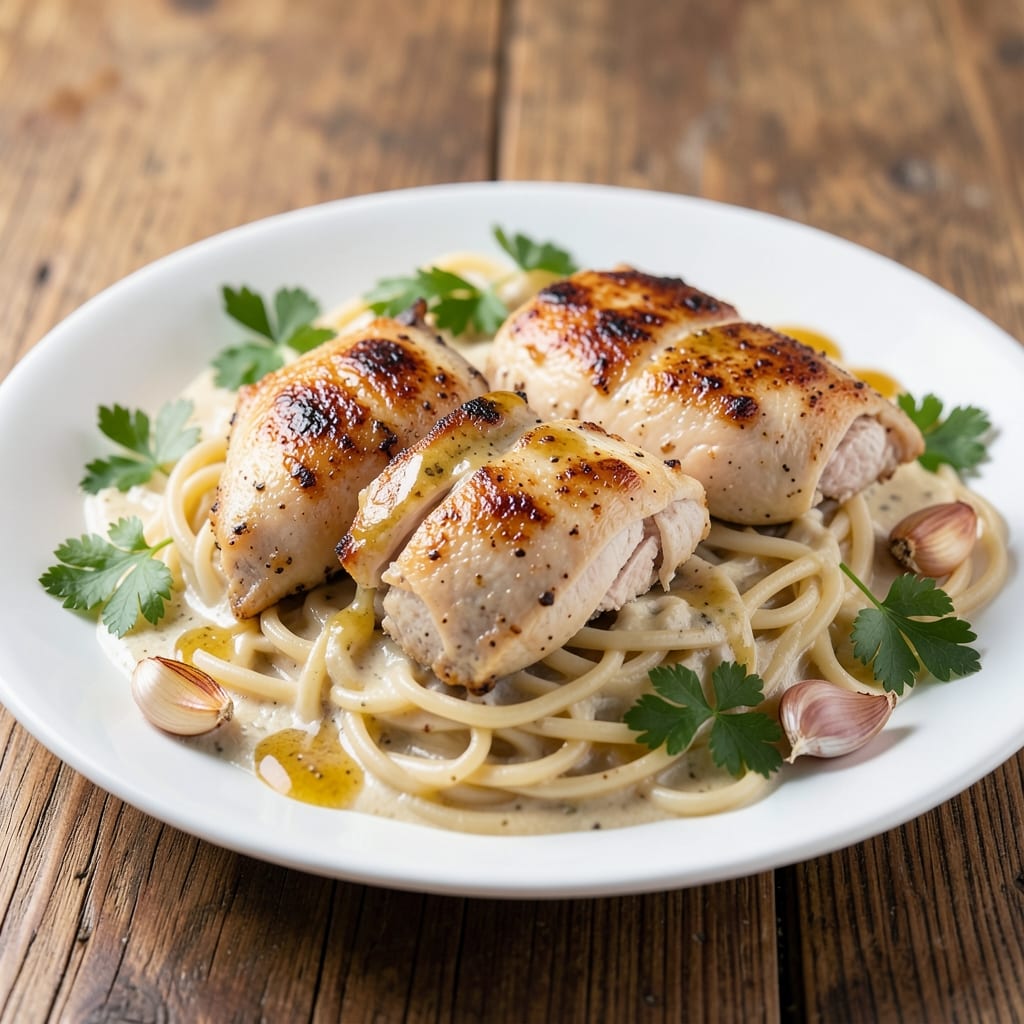
The magic happens when the garlic-infused cream sauce melds with the chicken's natural juices, creating a velvety coating that clings to both the chicken and noodles. Using egg noodles—sturdy enough to hold their shape yet tender enough to soak up the sauce—ensures each forkful delivers perfect balance. This isn't just another chicken dish; it's a foolproof method that transforms simple ingredients into something truly special.
By the time you're done, you'll have golden-brown chicken thighs with crisp edges, a sauce so creamy it practically melts in your mouth, and noodles that are al dente yet perfectly coated. The aroma alone will have everyone gathering around the table, and the first bite delivers that satisfying harmony of textures and flavors. This is comfort food at its finest—rich, creamy, and impossible to resist.
Perfect for a weeknight dinner that feels like a celebration, this recipe scales beautifully for feeding a crowd or meal prepping for the week. The one-pot method means less cleanup, and the sauce keeps well, making it easy to reheat without losing its silky texture. Let's get cooking!
Ingredients for creamy garlic chicken thighs over egg noodles
Pantry staples plus a few fresh finds for that restaurant-worthy creamy garlic harmony.
| Ingredient | Amount | Notes |
|---|---|---|
| Boneless, Skinless Chicken Thighs 🍗 | 1 ½ lb | Pounded to even thickness |
| Egg Noodles 🍝 | 12 oz | Medium or wide egg noodles |
| Garlic Cloves 🧄 | 6 cloves | Minced, fresh preferred |
| Shallots 🧅 | 2 whole | Minced, or sub 2 tbsp onion |
| Heavy Cream 🥛 | 1 cup | Full-fat for best texture |
| Chicken Broth 💧 | 1 cup | Low-sodium preferred |
| Unsalted Butter 🧈 | 2 tbsp | For searing chicken |
| All-Purpose Flour 🌾 | 1 tbsp | For thickening sauce |
| Dried Thyme 🌿 | 1 tsp | Or 1 tbsp fresh thyme |
| Salt 🧂 | 1 ½ tsp | Kosher or sea salt |
| Black Pepper 🌶️ | ½ tsp | Freshly ground preferred |
| Fresh Parsley 🌿 | ¼ cup | Chopped, for garnish |
| Lemon Juice 🍋 | 1 tbsp | Brightens the sauce |
The chicken thighs are non-negotiable here—bone-in would work too, but boneless keeps things simple. Look for thighs with good marbling at the grocery store, usually near the chicken breasts. I grab mine from Whole Foods or the butcher section at Publix—their freshness makes all the difference. The egg noodles? Barilla or De Cecco are my go-tos, but any medium or wide egg noodles will work. If you can't find egg noodles, substitute with regular egg pasta, but the texture won't be quite the same. Pound the chicken thighs to an even thickness so they cook through perfectly—about 1/4-inch thick works best.
No fresh thyme? Dried works at one-third the amount, but fresh has that bright, herby punch. The shallots can be swapped for onions if that's what you've got—just use the same amount. Running low on chicken broth? Vegetable broth works too, though it'll have a slightly different flavor profile. For a richer sauce, add an extra splash of heavy cream, but don't overdo it or the sauce might break. The lemon juice is key—it cuts through the richness and brightens everything up. If you're prepping ahead, make the sauce first and store it separately—it reheats beautifully and you can just toss in the chicken and noodles later.
This dish reheats like a dream—just add a splash of broth or water to loosen the sauce. Keeps in the fridge for 3 days or freeze for 3 months. I always make a double batch because leftovers are just as good as the first serving. The sauce gets even better as it sits, so don't hesitate to make it ahead. Store the chicken and noodles separately if you're freezing—just toss everything together when you're ready to reheat. Garnish with fresh parsley right before serving to keep it looking fresh and vibrant.
Why You'll Love This Recipe
- One-Pan Magic: The chicken, noodles, and sauce all hit the same skillet—no extra dishes, no stress. I swear by this method: toss in the thighs first, let them brown while you chop the shallots, then just fold in the cooked noodles at the end. It’s the kind of meal where cleanup feels like a bonus.
- Rich Without Effort: That heavy cream and garlic combo? It’s the secret weapon here. The sauce clings to the noodles like a hug, and the chicken stays juicy instead of dry. Honestly, I’ve tried fancier creamy pasta dishes, but this one hits the spot every time—no fancy techniques, just pure flavor.
- Lunchbox Hero: Between us, this is my go-to for meal prep. The leftovers reheat like a dream (microwave or stovetop, no judgment), and the portions are perfect for work lunches or quick dinners. My kids even ask for it—yes, even the picky ones—because it’s not "bland" or "healthy-ish." It’s just good food.
- Budget-Friendly Luxury: Chicken thighs are forgiving, cheap, and packed with flavor—no need for pricey cuts. Egg noodles stretch further than you’d think, and a splash of heavy cream makes it feel indulgent without breaking the bank. I’ll be real: this is the kind of recipe that makes me feel like I’m treating myself, even when I’m not.
Step-by-step instructions for creamy garlic chicken thighs over egg noodles
Here's how to create a rich, velvety sauce in one pot that perfectly balances tender chicken and al dente noodles.
🍳 Step 1: Sear the Chicken for Maximum Flavor
Heat a large Dutch oven or deep skillet over medium-high heat until hot. Add the 2 tablespoons unsalted butter and let it melt completely, watching for small bubbles to form around the edges. This is your signal the butter's ready.
Pat the 1.5 lb boneless, skinless chicken thighs completely dry with paper towels—this ensures maximum browning. Working in batches if needed, add the chicken thighs to the pan in a single layer. Cook undisturbed for 4-5 minutes until the bottoms develop a deep golden-brown crust. You'll see the edges curl slightly—that's perfect.
Flip the chicken and cook another 3-4 minutes until the second side is also golden brown. Remove the chicken to a plate and tent loosely with foil to keep warm. Don't clean the pan yet—those browned bits are pure flavor.
👨🍳 Step 2: Build the Garlic-Shallot Base
Reduce the heat to medium and add the 2 whole shallots and 6 cloves garlic cloves (minced) to the same pan. Cook for 3-4 minutes until the shallots soften and the garlic becomes fragrant—you'll smell that sweet, pungent aroma filling your kitchen.
Here's the thing—don't let the garlic burn. It's easy to walk away for a second, but burned garlic tastes bitter. Keep your eye on the pan and stir occasionally. When the garlic turns golden and the shallots are translucent, you're ready for the next step.
Sprinkle in the 1 tablespoon all-purpose flour and stir vigorously for 30 seconds to coat the aromatics. This creates a light roux that will thicken our sauce beautifully. The mixture should look slightly grainy but well combined.
🥘 Step 3: Create the Creamy Sauce Foundation
Pour in the 1 cup chicken broth and scrape up any browned bits from the bottom of the pan with a wooden spoon. These bits, called fond, are packed with flavor that will dissolve into your sauce. Bring the mixture to a gentle simmer and let it cook for 3-4 minutes until slightly reduced.
Now add the 1 cup heavy cream and stir gently. The sauce should begin to thicken immediately. If it's too thick for your liking, add 2-3 tablespoons water to reach your desired consistency. Stir in the 1 teaspoon dried thyme, 1.5 teaspoons salt, and 0.5 teaspoon black pepper.
Return the chicken thighs to the pan and spoon the sauce over them, making sure they're well coated. Let everything simmer together for 5-6 minutes to allow the chicken to finish cooking and absorb those rich garlic flavors.
🍲 Step 4: Cook the Noodles in the Sauce
While the chicken simmers, add the 12 oz egg noodles directly to the pan. Stir gently to distribute them evenly among the chicken and sauce. The noodles will absorb some of the liquid, so you might need to add ¼-½ cup additional chicken broth if the mixture looks too dry.
Bring the contents to a gentle boil, then reduce heat to medium-low and let it simmer for 8-10 minutes, stirring occasionally. You're looking for noodles that are al dente—tender but still with a slight bite. The sauce should coat everything beautifully, creating that luxurious creamy texture we're after.
If the sauce becomes too thick during cooking, add more broth 1 tablespoon at a time until it reaches your ideal consistency. The goal is a sauce that clings to the noodles and chicken without being watery.
🍽️ Step 5: Finish and Serve with Fresh Herbs
Once the noodles are perfectly cooked, remove the pan from heat and stir in the 1 tablespoon lemon juice. This brightens the rich flavors and cuts through the creaminess just enough to make the dish balanced. Taste and adjust seasoning if needed—you might want a bit more salt or pepper to suit your preference.
Transfer the creamy garlic chicken and noodles to serving plates, garnishing each portion with 1 tablespoon chopped fresh parsley. The parsley adds a fresh pop of color and a subtle herbal note that complements the garlic beautifully. Serve immediately while the sauce is still silky and warm.
Each bite should deliver tender chicken, perfectly cooked noodles, and that velvety garlic cream sauce in perfect harmony. The one-pot method keeps everything cohesive, and the lemon juice ensures the dish isn't too heavy.
Pro Tips For Making Creamy Garlic Chicken Thighs Over Egg Noodles
- Brown the Chicken First: Don’t skip the sear—pat those thighs very dry and cook them in a hot pan for 4-5 minutes per side until golden. I used to rush this and ended up with pale, rubbery chicken swimming in cream. That crust makes all the difference when the sauce hits.
- Mince Shallots Like Mad: Tiny shallot pieces mean faster cooking and no bitter aftertaste. Pulse them in a food processor for 2-3 seconds, then stir-fry until translucent before adding garlic. I learned this the hard way—raw shallots in a creamy sauce just taste sad.
- Temper the Cream: Warm the heavy cream gently off the heat before mixing it into the pan—just a few seconds until it’s lukewarm. Cold cream curdles like a science experiment gone wrong. A splash of chicken fat from the pan helps it blend smoother too.
- Reserve the Noodle Water: Save ½ cup of starchy pasta water before draining the noodles. Toss them in the pan with the sauce, then add a splash of that water to loosen everything up. It’s the lazy chef’s secret to a silky, cohesive dish—no extra ingredients needed.
Common mistakes when making this dish
Overcooking Chicken
Chicken thighs are forgiving, but pushing them past 175°F internal temperature turns them dry and rubbery. Use a meat thermometer to check—pull them when they hit 165°F at their thickest point. I’ve ruined many a batch by walking away while they simmered, so set a timer for 5-6 minutes after returning them to the sauce. 🌡️
Skipping the Sear
That golden crust isn’t just for looks—it traps moisture and adds depth. If you’re short on time, sear the chicken in batches over medium-high heat until deeply browned. I once rushed this step and ended up with bland, pale chicken that soaked up sauce like a sponge instead of delivering rich flavor. Trust me, the extra 5 minutes pays off.
Burning the Garlic
Garlic burns faster than you think—one second too long, and you’re left with bitter, acrid flavor. Keep heat at medium and stir constantly. I learned this the hard way when I walked away to answer a phone call and came back to a pan full of blackened garlic. For extra insurance, add the garlic just before the shallots are soft and remove it immediately when fragrant.
Underseasoning the Sauce
The sauce needs bold seasoning to stand up to the rich cream. Taste as you go—start with the full 1.5 tsp salt and 0.5 tsp pepper, then adjust. I’ve seen home cooks hold back, thinking they can add more later, but once the noodles absorb the sauce, you can’t fix it. The lemon juice at the end is your secret weapon for balancing richness.
Adding Noodles Too Early
Tossing in noodles before the chicken finishes cooking dilutes the sauce and makes it watery. Let the chicken simmer in the sauce for 5-6 minutes first, then add the noodles. If the sauce looks too thick after adding noodles, thin it with 1 tbsp broth at a time. I’ve had to start over twice because I got impatient and added noodles too soon—don’t make my mistake!
Using Low-Quality Cream
Heavy cream is non-negotiable here—light cream or half-and-half won’t give the same velvety texture. I swear by Whole Foods Organic Heavy Cream for its rich, buttery quality. If you’re worried about cost, remember: this is a splurge worth making. The sauce will separate or taste greasy if you skimp. For a lighter version, you can substitute with Greek yogurt or coconut milk, but the texture will differ significantly.
Nutrition facts
Frequently asked questions
Why do you pound the chicken thighs?
Pounding the thighs to ¼-inch thickness ensures they cook evenly and reach perfect doneness at the same time. Thicker pieces can stay undercooked inside while the edges overcook. This also helps the sauce penetrate more evenly, creating that luscious coating we all love. I learned this trick from my time in Charleston kitchens where precision matters!
Can I substitute egg noodles for regular pasta?
You can try, but egg noodles hold their shape better in creamy sauces while absorbing flavor beautifully. Regular pasta tends to get mushy faster. For the closest substitute, use fettuccine or linguine—they're sturdy enough but won't be quite the same texture. The egg noodles' slight chewiness pairs perfectly with the velvety sauce.
How do I fix a sauce that's too thick?
Add 1 tablespoon chicken broth at a time while stirring constantly. The sauce should coat the back of a spoon but still flow easily. If it's still too thick after adding ¼ cup broth, you might need to remove the chicken and noodles, then reheat the sauce separately with more liquid. The key is gradual additions—don't dump it all in at once or you'll dilute the flavor.
Can I make this ahead of time?
Make the sauce first and store it in the fridge for up to 3 days or freeze for 3 months. When ready to serve, just reheat the sauce gently, add the chicken and noodles, and cook through. The sauce actually tastes better the next day as the flavors meld. For best results, store components separately—chicken, sauce, and noodles—then combine when reheating.
What if I don't have heavy cream?
You can substitute with full-fat Greek yogurt (for a tangier version) or coconut milk (for a dairy-free option). However, the texture will differ—Greek yogurt makes it thicker while coconut milk adds a subtle sweetness. For closest results, use equal parts half-and-half with a splash of cream cheese to mimic the richness. The sauce won't be quite as velvety but will still taste delicious.