
Breakfast & Brunch
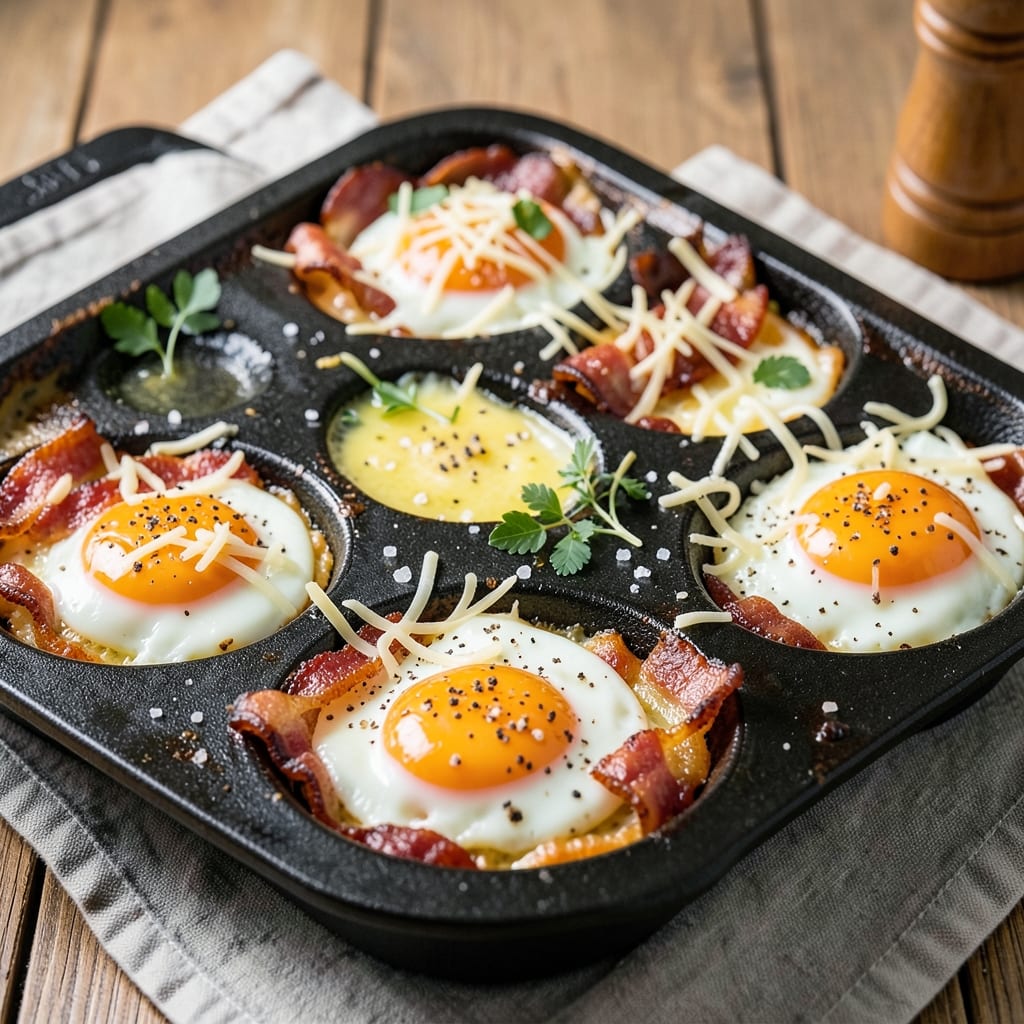
This egg and bacon in muffin tin recipe transforms breakfast into a fast, protein-packed meal with minimal cleanup. The muffin tin method cooks bacon and eggs simultaneously, creating perfectly crispy edges and tender centers in just 15 minutes. No flipping, no frying—just set, bake, and enjoy a savory, satisfying dish that’s ready when you are.
The beauty of this technique lies in its simplicity: eggs and bacon nestle together in individual cups, absorbing flavors while staying contained. This method eliminates the mess of traditional breakfast cooking, making it ideal for busy mornings or lazy weekends. The bacon renders its fat directly into the eggs, creating a rich, flavorful bite that’s hard to resist.
What you’ll end up with is a plate of golden-brown breakfast cups, each with crispy bacon and perfectly cooked eggs—no overcooked edges or runny yolks in sight. The muffin tin ensures even cooking, so every bite delivers the same delicious balance of textures and flavors. It’s the kind of meal that makes breakfast feel like a treat, not a chore.
Serve these savory cups alongside toast, a fresh salad, or even avocado slices for a complete meal. The muffin tin technique isn’t just efficient—it’s foolproof, ensuring restaurant-quality results with minimal effort. Let’s get started!
Ingredients for egg and bacon in muffin tin
Eight simple ingredients transform into crispy breakfast cups with zero mess.
| Ingredient | Amount | Notes |
|---|---|---|
| Large Eggs 🥚 | 8 whole | Room temperature for even cooking |
| Thick-Cut Bacon 🥓 | 8 oz | Pre-cut into bite-sized pieces |
| Unsalted Butter 🧈 | 2 tbsp | For greasing muffin tin |
| Diamond Crystal Kosher Salt 🧂 | ½ tsp | For seasoning eggs |
| Freshly Ground Black Pepper 🌶️ | ¼ tsp | For seasoning eggs |
| Shredded Sharp Cheddar Cheese 🧀 | ½ cup | Optional topping (optional) |
| Freshly Chopped Chives 🌿 | 2 tbsp | For garnish (optional) |
| Muffin Tin 🍳 | 1 whole | Standard 12-cup size |
| Nonstick Cooking Spray 🫧 | 1 spray | For extra insurance |
| Heavy Cream 🥛 | ¼ cup | Optional for custard finish |
The bacon and eggs are the stars here. Thick-cut bacon from Oscar Mayer or your local butcher delivers the best flavor and texture—thinner slices burn faster in the muffin tin. Eggs should be large and at room temperature for even cooking. Diamond Crystal kosher salt is ideal because it dissolves perfectly without graininess. For the muffin tin, Wilton's nonstick version works best, but any standard muffin tin will do. Grease it well—this is non-negotiable for easy release. I always use Land O'Lakes unsalted butter for greasing because it has a higher smoke point than margarine.
No thick-cut bacon? Regular bacon cut into small pieces works, but expect slightly softer edges. Fresh chives can be swapped for green onions at double the amount. Want extra richness? Add a splash of heavy cream to each egg before baking—it creates a delicate custard finish. The cheese is completely optional, but if you use it, sharp cheddar melts best. For a vegetarian twist, swap bacon for turkey bacon or crispy chickpeas. The cooking spray is a backup—use it if you forget to grease the tin thoroughly.
These breakfast cups reheat beautifully—just pop them in the oven at 350°F for 5-7 minutes. Store leftovers in an airtight container for up to 3 days in the fridge. For meal prep, assemble the tin the night before, cover, and refrigerate—bake straight from cold in the morning. The muffin tin itself? Hand wash only—it's not dishwasher safe. If you're making this for a crowd, double the recipe and use two muffin tins. The flavor only gets better the next day as the bacon fat infuses the eggs.
Why You'll Love This Recipe
- No Fuss Breakfast: I crack eggs straight into a muffin tin, no bowls needed—just butter, bacon, and a sprinkle of salt. Honestly, it’s the kind of morning where I don’t even need coffee to feel productive.
- Crispy-Creamy Magic: That thick-cut bacon curls up like a little edible hug, while the eggs stay runny inside—salty, smoky, and perfectly imperfect. Between us, it’s the kind of combo that makes you slow down and savor every bite.
- Lunchbox Hero: Pack these bad boys in a container, and suddenly you’ve got a protein-packed lunch that’s way more exciting than sad desk salads. My kids actually eat them cold (yes, even on a Tuesday).
- Budget Breakfast Win: A dozen eggs and a pack of bacon stretch across meals—breakfast, brunch, or a late-night snack. I’ll be real: it’s my go-to when groceries feel tight, and no one complains.
Step-by-step instructions for savory breakfast cups
Here's the efficient method for perfectly cooked egg cups with crispy bacon—no flipping, no mess.
Prep the Muffin Tin for Even Cooking
Preheat your oven to 375°F while you prepare the tin. Generously spray the muffin tin with the nonstick cooking spray, then use your finger to spread a thin layer of the 2 tablespoons unsalted butter over each cup. This double layer of fat ensures nothing sticks, even with runny yolks.
I press the butter into the crevices with a pastry brush for maximum coverage. The butter should look evenly distributed—not pooled in the center. This step is crucial for the clean release you'll need when serving these delicate cups.
Cook the Bacon to Crispy Perfection
Line a baking sheet with parchment paper and arrange the 8 oz thick-cut bacon in a single layer. Bake for 12-15 minutes at 400°F until the edges are deep golden brown and the bacon releases easily from the paper. The bacon should be crisp but not burnt—you want that satisfying crunch while maintaining moisture in the meat.
While the bacon cooks, crack the 8 large eggs into a bowl and whisk vigorously with the 0.5 teaspoon Diamond Crystal kosher salt and 0.25 teaspoon freshly ground black pepper until the yolks and whites are fully combined. Room temperature eggs prevent uneven cooking in the oven.
Assemble the Breakfast Cups
Remove the bacon from the oven and let it cool for 2 minutes before breaking it into bite-sized pieces. Divide the bacon evenly among the muffin tin, placing about 1 tablespoon of bacon pieces in each of the 4 cups. Press the bacon gently into the bottom to create a stable base for the eggs.
Pour the whisked egg mixture evenly into the muffin cups, filling each about ¾ full. The eggs should settle just below the rim, allowing room for expansion. Sprinkle the 0.5 cup shredded sharp cheddar cheese evenly over the tops—this creates a delicious crust while adding richness.
Bake Until Set and Golden
Return the muffin tin to the oven and bake for 15-17 minutes at 375°F until the eggs are fully set and the tops are golden brown. You'll know they're done when the edges pull away slightly from the tin and a knife inserted comes out clean. The centers should still be slightly custardy—this is what makes these breakfast cups so satisfying.
For an extra-luxurious finish, drizzle the 0.25 cup heavy cream over the tops in the last 2 minutes of baking. The cream will create a delicate custard layer on top while adding richness. Remove from the oven and let sit for 1 minute before carefully releasing the edges with a small offset spatula.
Garnish and Serve Immediately
Transfer the breakfast cups to a serving plate and garnish with the 2 tablespoons freshly chopped chives, sprinkling evenly over all four. The chives add a fresh contrast to the rich eggs and bacon. Serve immediately while the yolks are still warm and runny—this is when these breakfast cups shine.
Each cup should have a perfectly set egg with a slightly runny yolk, crispy bacon pieces at the bottom, and that beautiful golden crust from the cheese. The heavy cream finish gives them a luxurious texture that makes this simple preparation feel like a special occasion breakfast.
Pro Tips For Making Egg And Bacon In Muffin Tin
- Preheat Like It’s Hot: Fire up that oven to 425°F—no half-measures. I learned this the hard way: lukewarm muffin tins mean soggy eggs and rubbery bacon. The first 5 minutes at high heat get those eggs cracking and the bacon sizzling before the temp drops.
- Salt the Bacon Twice: Generously coat thick-cut bacon with kosher salt before cooking, then sprinkle again after it’s crispy. The first layer seasons the meat; the second locks in flavor and balances the richness. (Yes, even if you’re impatient like me—don’t skip the second round.)
- Don’t Overfill the Tin: Fill muffin cups only ¾ full with egg mix, or the whites will spill over like a chaotic science experiment. Crowded cups = uneven cooking and a mess to clean up. Trust me, your future self will thank you for the extra inch of space.
- Butter the Tin, Then Toast: Slather the muffin tin with butter, then pop it under the broiler for 1-2 minutes before adding anything. This creates a golden, nonstick crust that keeps the eggs from sticking—no greasy cleanup, and the bacon won’t cling like glue. (Sounds weird, but it works.)
Common mistakes when making perfect results
Overcrowding the Tin
Filling the muffin tin too full is the fastest way to end up with overflowing, messy eggs. Each cup should only be filled about ¾ full with egg mixture—this allows room for expansion during baking. I've seen people fill them to the brim, resulting in eggs spilling over the sides and creating a sticky mess. The eggs need space to rise slightly while still maintaining their shape. 🚫
Pro tip: Use a ¼ cup measuring cup to ensure even distribution. If you're making 6 cups instead of 4, reduce the egg mixture by 25% per cup to prevent overflow. The bacon pieces should also be pressed gently into the bottom rather than piled high, which can cause the eggs to spread unevenly.
Skipping the Butter Layer
Some people think nonstick spray alone is enough, but I've learned the hard way that butter creates a critical barrier. The 2 tablespoons unsalted butter should be spread evenly in each cup before adding the bacon. This double layer—spray first, butter second—prevents sticking even with runny yolks. I once forgot this step and ended up scraping eggs off the tin with a spatula. 🧈
For best results, use a pastry brush to distribute the butter into the crevices of the muffin tin. The butter's higher smoke point compared to margarine means it won't burn during baking. If you're concerned about calories, you can reduce to 1 tablespoon butter per tin, but don't skip it entirely.
Uneven Bacon Distribution
Placing all the bacon in just a few cups while leaving others empty creates uneven cooking. The bacon should be divided evenly among all cups—about 1 tablespoon per cup for 4 servings. This ensures each breakfast cup has the same crispy bacon-to-egg ratio. I've seen people dump all the bacon in one side, resulting in some cups tasting like bacon overload while others feel like plain eggs. 🥓
Press the bacon pieces gently into the bottom of each cup to create a stable base. This prevents the eggs from pooling at the bottom during baking. If you're using pre-cooked bacon, make sure it's broken into consistently sized pieces—this helps with even heat distribution throughout the muffin tin.
Incorrect Temperature Control
Baking at too high a temperature causes the eggs to cook too quickly on the outside while staying undercooked inside. The oven should be preheated to 375°F and maintained at that temperature throughout baking. I once cranked it up to 400°F thinking it would speed things up, and ended up with eggs that were rubbery on the outside with raw centers. 🌡️
The 15-17 minute baking time assumes a properly preheated oven. If your oven runs hot, reduce to 350°F and add 2-3 extra minutes to the baking time. Always check doneness by inserting a knife—it should come out clean with slightly custardy centers. The edges should pull away from the tin slightly when done.
Using Cold Eggs
Room temperature eggs cook more evenly than cold ones straight from the fridge. Cold eggs create uneven cooking where the centers remain runny while the edges overcook. I always let my eggs sit at room temperature for 30 minutes before using them. This simple step makes a noticeable difference in texture and doneness. 🥚
To test if your eggs are ready, gently whisk one—if it flows smoothly without resistance, they're at the perfect temperature. If you forget to take them out in time, place the carton in a bowl of warm water for 10 minutes to speed up the process. Never use eggs straight from the refrigerator for this recipe.
Forgetting the Rest Time
Trying to release the breakfast cups from the tin immediately after baking is a recipe for disaster. The eggs need 1 minute to set slightly before attempting to remove them. I've seen people pull them out too soon and end up with collapsed eggs that stick to the tin. This resting period allows the proteins to fully coagulate, giving them structure to hold their shape. ⏳
Use a small offset spatula to gently release the edges before lifting each cup. Run the spatula around the perimeter first, then carefully tip the tin to release each cup onto your serving plate. If you're serving immediately, place the tin on a heat-resistant pad to prevent burning your hands.
Nutrition facts
Frequently asked questions
Can I make these breakfast cups ahead of time?
Assemble the muffin tin the night before, cover it, and refrigerate. Bake straight from cold in the morning at 375°F for 18-20 minutes—just add 3 extra minutes to account for the cold start. The flavors actually improve as the bacon fat infuses overnight.
What if I don't have thick-cut bacon?
Regular bacon works fine—just cut it into small, even pieces before baking. Thin bacon will cook faster, so reduce the initial baking time to 10-12 minutes at 400°F to prevent burning. The texture will be slightly softer but still delicious.
Can I use this technique for other breakfast proteins?
Yes! Swap bacon for crumbled sausage, diced ham, or even crispy chickpeas for a vegetarian option. Pre-cook proteins first to render fat, then proceed with the egg mixture. The muffin tin method works beautifully with any protein that holds its shape when baked.
Why did my eggs overflow the tin?
Overfilling is the most common cause—fill cups only ¾ full to allow expansion. Also ensure your eggs are at room temperature and whisked thoroughly. If using cold eggs, they expand more as they heat. For next time, reduce the egg mixture by 10% per cup.
How do I reheat leftovers?
Pop individual cups in the oven at 350°F for 5-7 minutes until warmed through. Microwaving can make the eggs rubbery—always use the oven method for best texture. Store leftovers in an airtight container for up to 3 days.