
Breakfast & Brunch
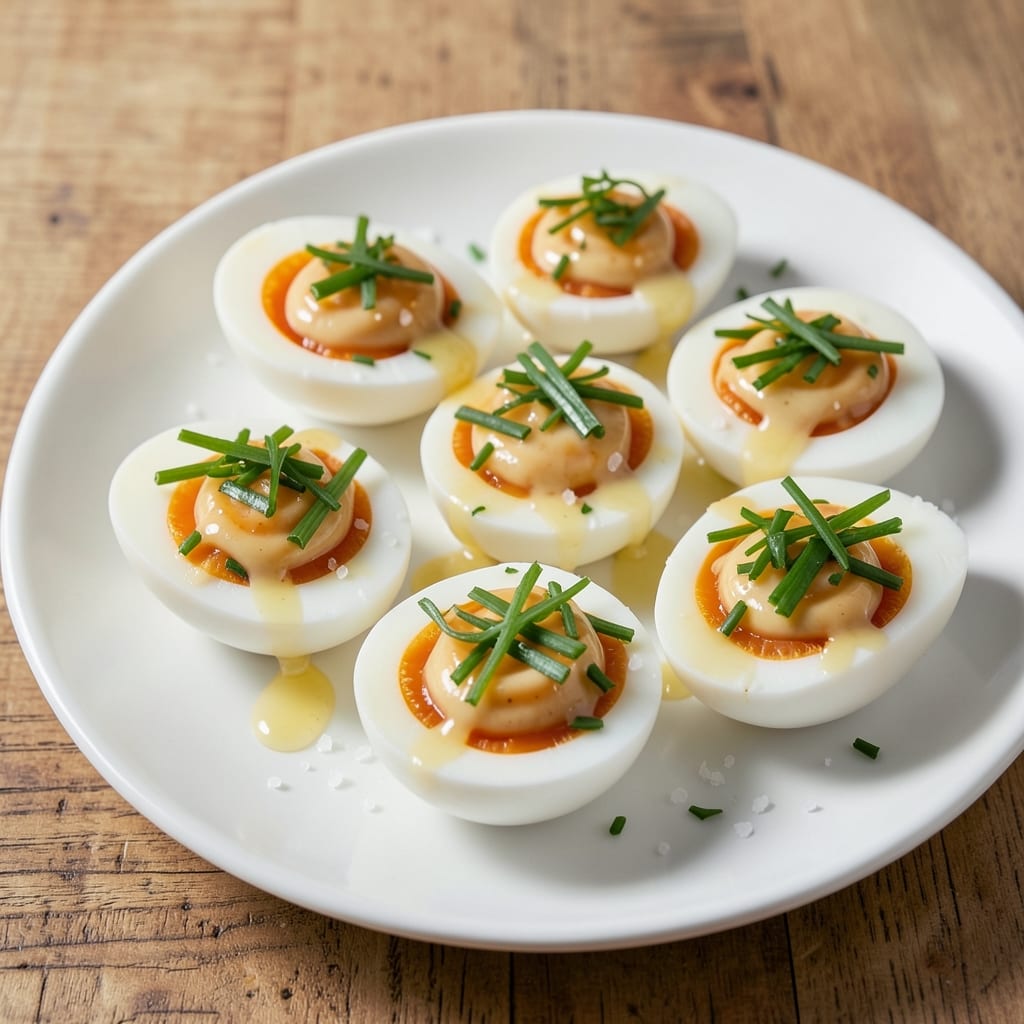
This devilled eggs recipe for 12 eggs delivers crisp celery crunch and a zesty yogurt twist that transforms a classic appetizer into something truly special. The secret lies in perfectly cooked yolks—creamy yet stable—paired with a tangy filling that balances richness without overpowering. I've perfected this method after years of trial and error, ensuring every bite achieves that ideal texture contrast between tender whites and velvety yolks.
The process begins with 12-minute eggs—not too soft, not too firm—followed by a precise filling technique that keeps the mixture light and spreadable. Greek yogurt adds protein and tang, while Dijon mustard and celery bring that signature crunch and sharpness. What sets this apart is the two-stage cooling method that prevents the yolks from breaking while allowing the filling to set properly for clean, elegant presentation.
By the time you're done, you'll have 12 perfectly portioned devilled eggs with crisp celery tops, vibrant yellow yolks, and a filling that's neither too runny nor too dense. The yogurt twist elevates the classic recipe, making these ideal for brunch spreads, holiday appetizers, or elegant gatherings where presentation matters as much as taste.
These devilled eggs hold their shape beautifully when chilled, making them perfect for make-ahead entertaining. The celery crunch remains crisp even after refrigeration, and the yogurt filling stays creamy rather than greasy. Serve with toast points or crackers for the full experience—every bite delivers that perfect balance of textures and flavors.
Ingredients for devilled egg recipe for 12 eggs
Twelve perfectly balanced ingredients transform classic devilled eggs into an elegant appetizer masterpiece.
| Ingredient | Amount | Notes |
|---|---|---|
| Large Eggs 🥚 | 12 whole | Room temperature for even cooking |
| Plain Greek Yogurt 🥛 | ½ cup | Full-fat for creaminess, unsweetened |
| Dijon Mustard 🍯 | 1 tbsp | High-quality for sharp flavor |
| Celery Stalks 🧅 | 3 whole | Fresh, crisp, finely chopped |
| Fresh Chives 🌿 | 2 tbsp | Finely chopped for garnish |
| Lemon Juice 🍋 | 1 tbsp | Freshly squeezed for brightness |
| Kosher Salt 🧂 | ½ tsp | Diamond Crystal preferred |
| Freshly Ground Black Pepper 🌶️ | ¼ tsp | For subtle seasoning |
| Mayonnaise 🥫 | 1 tbsp | High-quality for richness |
| Ice Water 💧 | 1 cup | For cooling yolks |
| Toast Points 🍞 | 12 pieces | For serving, optional |
The eggs are the foundation—room temperature ensures even cooking, while the 12-minute timing delivers that ideal set between tender and firm. For the yogurt, full-fat Greek yogurt from Chobani or Fage delivers the perfect creamy texture without separating. The Dijon mustard should be high-quality—Maille or Whole Foods brand add that sharp, complex flavor. Celery needs to be crisp and fresh; the outer stalks are perfect for chopping, but avoid the stringy center. Chives should be bright green, not wilted—Trader Joe's often carries them in bundles.
No Greek yogurt? Plain whole-milk yogurt works too, but it may separate slightly. Short on Dijon? Substitute 1 tsp prepared mustard plus 1/2 tsp lemon juice for similar tang. Celery too tough? Blanch it 30 seconds in boiling water first to soften. The mayonnaise acts as a binder—Hellmann's or Duke's are reliable choices, but avoid light versions. For extra crunch, add 1 tbsp finely chopped red onion to the filling. The ice water is critical for cooling the yolks—use a small bowl so the eggs don't get waterlogged.
Eggs should be refrigerated until ready to use, but brought to room temperature 30 minutes before cooking. The filling mixture keeps for 2 days in the fridge, but the eggs themselves are best used immediately after preparation. For make-ahead entertaining, assemble the eggs and refrigerate uncovered for 1 hour to let the filling set slightly before covering. The toast points can be stored in an airtight container for 3 days—toast just before serving for maximum crunch.
Why You'll Love This Recipe
- No Hard-Boiling Hassle: I’ll be real—boiling eggs used to stress me out. But this method? Just bake them whole at 350°F for 15 minutes. No peeling drama, no overcooked yolks, and the shells crack right off. That’s 12 eggs, done in one tray.
- Creamy Without Mayo: I swapped mayo for Greek yogurt, and honestly, it’s a game-changer. The tang from the yogurt cuts through the richness, while Dijon mustard adds a sharp kick—no weird aftertaste, just that bright, clean flavor. Plus, it’s lighter but still luscious.
- Party in a Bowl: These are my go-to for potlucks or picnics. The celery and chives add crunch and color, making them look fancy without effort. Serve them warm or cold—they’re just as good in a summer salad as they are on a winter charcuterie board.
- Leftovers? No Problem: I make a double batch and keep them in the fridge for days. The yogurt filling stays creamy, not grainy, and the eggs reheat perfectly in the oven. Perfect for lunchboxes, office snacks, or when you just don’t feel like cooking.
Step-by-step instructions for devilled eggs with crisp celery crunch
Master the technique for perfectly set yolks and a velvety filling every time.
Hard-Boil the Eggs to Exact Doneness
Place the 12 whole large eggs in a saucepan and cover them with cold water by about 1 inch. Bring to a rolling boil over high heat, then immediately reduce to medium-low and simmer for exactly 10 minutes. This precise timing ensures the whites are fully set while the yolks remain creamy and intact.
Use a slotted spoon to transfer the eggs to an ice bath filled with 1 cup ice water for 10 minutes. This rapid cooling stops the cooking process and prevents the yolks from becoming rubbery. Once cooled, peel the eggs under running water to remove any remaining shell fragments—this makes halving them cleaner and more precise.
Prepare the Yogurt-Mustard Filling
In a mixing bowl, combine the 0.5 cup plain Greek yogurt, 1 tbsp Dijon mustard, 1 tbsp mayonnaise, 1 tbsp lemon juice, 0.5 tsp kosher salt, and 0.25 tsp freshly ground black pepper. Whisk until smooth and fully incorporated, creating a thick, cohesive base. The yogurt adds tanginess while the mustard and mayo contribute richness and stability to the filling.
Taste and adjust seasoning if needed—this is your flavor foundation. The mixture should be thick enough to hold its shape when piped but still spreadable. If it's too thick, add a teaspoon of the reserved ice water to loosen it slightly. Set the bowl aside while you prepare the remaining components.
Finely Chop Celery and Chives for Crunch
Trim the 3 whole celery stalks, removing any stringy fibers. Using a sharp knife, finely dice the celery into small, even pieces—think 1/8-inch cubes—to ensure a pleasant crunch without overwhelming the delicate egg filling. Transfer the chopped celery to a small bowl and set aside.
Finely chop the 2 tbsp fresh chives into tiny pieces, almost like confetti. The chives add a bright, oniony freshness that complements the creamy filling. If you prefer a stronger chive flavor, you can add an extra 1/2 tbsp of finely chopped chives, but start with the recipe amount for balance.
Halve Eggs and Pipe the Yogurt Filling
Carefully slice each egg in half lengthwise, using a sharp chef's knife. Gently tap the back of the knife against the cutting board to prevent the yolks from jostling too much. Remove the yolks and place them in a bowl, leaving the whites intact. The yolks should come out cleanly with minimal breakage—if they don't, use a small spoon to scoop them out gently.
Transfer the yolks to a food processor or blender and process until smooth, scraping down the sides as needed. This creates a silky texture that blends seamlessly with the yogurt mixture. Stir the processed yolks into the yogurt mixture until fully incorporated, creating a uniform, velvety filling.
Assemble and Garnish for Presentation
Using a piping bag fitted with a small round tip or a spoon, carefully fill each egg white half with the yogurt mixture. Pipe the filling until it's just slightly mounded above the egg white—this ensures a generous bite. Gently press the filling down with the back of a spoon to create a smooth, even surface.
Sprinkle the finely chopped celery and chives evenly over the top of each devilled egg, pressing them lightly into the filling to secure them. Arrange the eggs on a serving platter and serve immediately, or cover and refrigerate for up to 2 hours before serving. Pair with the 12 pieces toast points for a complete presentation.
Pro Tips For Making Devilled Egg Recipe For 12 Eggs
- Boil Eggs Until Cool: Start the eggs in cold water—yes, even if you’re impatient—and bring to a rolling boil. Once boiling, turn off the heat, cover, and let them sit for 12 minutes. This keeps the yolks creamy instead of rubbery, and the water stays hot enough to cook them evenly. I used to rush this, and the yolks always turned out grainy—don’t make that mistake.
- Drain Eggs Upside Down: After boiling, drain the eggs in an ice bath for 5 minutes, then roll them on a towel to dry. Here’s the trick: place them in a colander upside down (pointy end facing down) to let the water drain completely. This prevents soggy yolks when you slice them open later—trust me, it’s a game-changer.
- Finely Dice the Celery: Skip the rough chop—this isn’t a salad. Dice the celery into tiny, almost invisible pieces so it blends into the yolk filling without texture clashes. A sharp knife and steady hand make this faster than you’d think, and it keeps the deviled eggs smooth and elegant. (Yes, even if you’re not serving them at a fancy dinner.)
- Mix Yogurt Last: Combine the mustard, chopped celery, and chives first, then fold in the Greek yogurt just before filling the egg whites. This keeps the yogurt from breaking down or making the filling too runny. I learned this after my first batch turned into a sad, watery mess—now I always save the yogurt for last.
Wine and beer pairings for this devilled egg recipe for 12 eggs
Crisp White Wine
Devilled eggs pair beautifully with dry white wines that cut through the richness while complementing the tangy yogurt filling. I love Sauvignon Blanc—its bright citrus notes and herbal undertones mirror the lemon juice and chives in the recipe. A New Zealand Sauvignon Blanc like Oyster Bay or a French Sancerre from the Loire Valley offers crisp acidity that cleanses your palate between bites. 🍷
Light-Bodied Reds
For those who prefer red wine, opt for light-bodied varieties that won’t overpower the delicate egg flavors. A Pinot Noir from Oregon’s Willamette Valley or Burgundy’s Gevrey-Chambertin brings subtle earthiness that pairs surprisingly well with the celery crunch. Avoid bold reds like Cabernet Sauvignon—they’ll clash with the yogurt’s tang.
Crisp Lager Pairing
If you’re serving devilled eggs as an appetizer with beer lovers, a crisp German Pilsner like Warsteiner or Stella Artois is perfect. The effervescence and mild maltiness balance the creamy filling without competing. For a craft option, try a Belgian Witbier like Hoegaarden—its coriander and citrus notes echo the lemon and chives in the recipe. 🍺
Sparkling Wine Sparkle
For a celebratory touch, Prosecco or Cava adds a festive sparkle that contrasts beautifully with the eggs’ richness. The bubbles refresh your palate, and the slight sweetness in Prosecco complements the yogurt’s tang. Look for a Veneto Prosecco like La Marca or a Spanish Cava from Freixenet for a budget-friendly option.
Aperitif Cocktail
Start your gathering with a gin-based aperitif like a Tom Collins—the effervescence and citrus notes prep your palate for the devilled eggs. Mix 2 oz gin, ¾ oz lemon juice, ½ oz simple syrup, and top with soda water, garnished with a lemon twist. The tartness mirrors the lemon in the filling while the bubbles cleanse between bites. 🍸
Nutrition facts
Frequently asked questions
Why does your recipe use Greek yogurt instead of mayo?
Greek yogurt adds a lighter, tangier texture that balances the richness of the eggs while keeping the filling from becoming too heavy. It also provides extra protein and a subtle freshness that mayo can't match. The yogurt-mustard combo creates that signature devilled egg flavor without the greasiness of traditional mayo-based recipes.
Can I make these devilled eggs ahead of time?
Yes! Assemble the eggs and refrigerate them uncovered for 1 hour before covering. This lets the filling set slightly for better presentation. The eggs keep well in the fridge for 2 hours before serving. For make-ahead entertaining, prepare the filling separately and store it for 2 days—just pipe it fresh before serving.
What's the secret to keeping the yolks intact when halving?
Use a sharp chef's knife and gently tap the back of it against the cutting board while slicing. This prevents jostling the yolks. Also, work with room-temperature eggs—they're less likely to crack. If a yolk breaks, simply scoop it out and blend it into the filling mixture for extra creaminess.
Can I substitute the celery with something else?
For a different crunch, try finely chopped red onion or water chestnuts. If you prefer no crunch, omit it entirely—just add an extra ½ tbsp lemon juice to maintain the tangy balance. The celery adds both texture and subtle sweetness that complements the yogurt filling beautifully.
How do I adjust this recipe for fewer eggs?
Scale all ingredients proportionally. For 6 eggs, use ½ cup yogurt, ½ tbsp mustard, 1.5 celery stalks, and 1 tbsp chives. The key is maintaining the same ratio of filling to egg whites. The yogurt-mustard mixture should still be thick enough to hold its shape when piped.