
Breakfast & Brunch
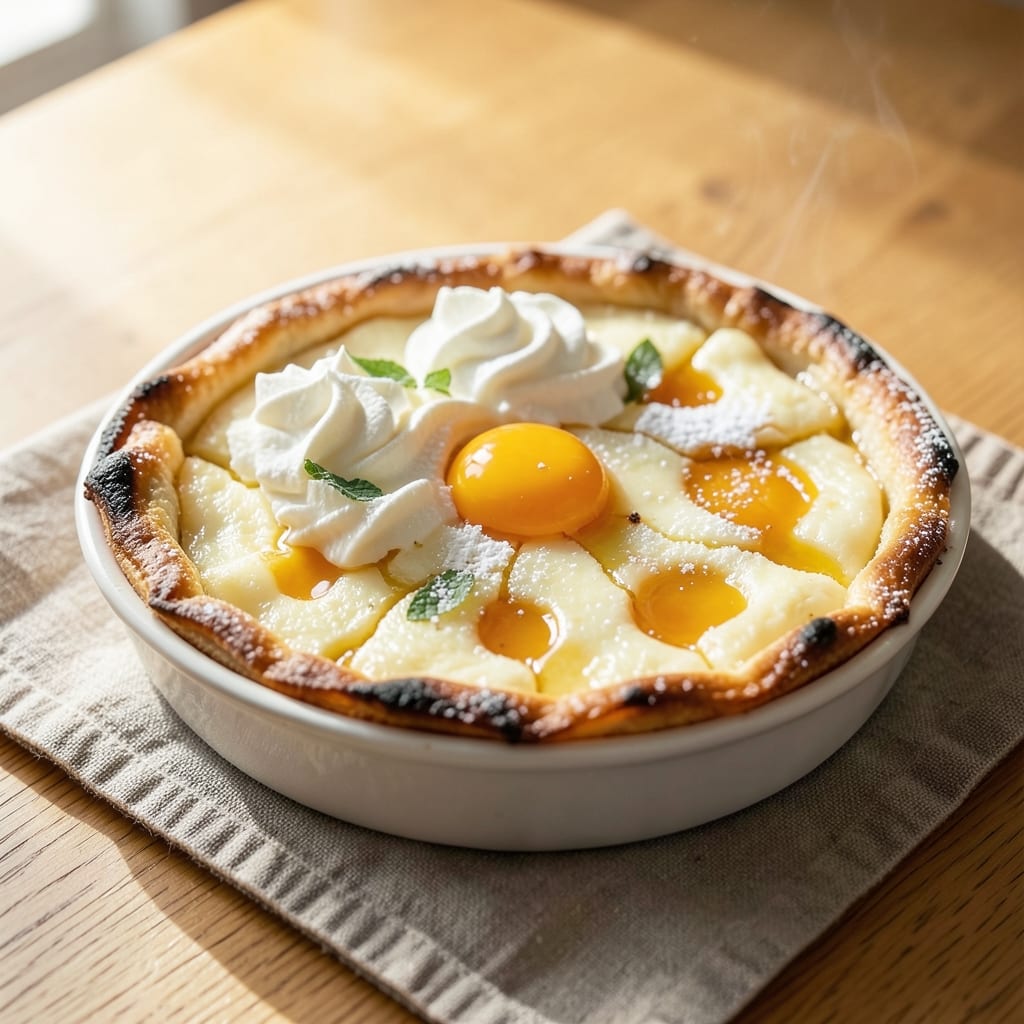
This delicious egg tart recipe delivers the perfect balance of golden, flaky pastry and rich, creamy custard—just like your favorite bakery. 💛 The secret lies in a crispy, buttery crust that encases a silky egg yolk center that's just set. I've been perfecting this recipe for years, and it never fails to impress, whether you're making them for breakfast, dessert, or a special treat.
The magic starts with a simple but crucial step: chilling the dough before rolling it out. This ensures the crust stays crispy and golden, not soggy. The filling is where the real magic happens—a smooth custard made with eggs, sugar, and a touch of vanilla, baked until just set for that perfect runny yolk center. It’s a technique that takes practice, but once you nail it, you’ll be hooked.
By the time you pull these out of the oven, you’ll have egg tarts with a golden crust that’s crisp on the outside and tender on the inside, paired with a creamy custard that’s just set—no more, no less. The aroma alone will have everyone gathering in the kitchen, and the first bite is pure comfort. These are the kind of treats that taste like a little piece of home.
Serve them warm with a dusting of powdered sugar or a drizzle of honey for extra indulgence. Whether you're making them for a family breakfast or a festive dessert, this recipe is foolproof and always a crowd-pleaser. Let’s get baking!
Ingredients for delicious egg tart
Buttery crust meets silky custard—just eight ingredients for bakery-style egg tarts at home.
| Ingredient | Amount | Notes |
|---|---|---|
| All-Purpose Flour 🌾 | 2 ½ cups | Sifted for light texture |
| Unsalted Butter 🧈 | 1 cup | Cold, cubed for pastry |
| Granulated Sugar 🍚 | ¼ cup | For crust sweetness |
| Large Eggs 🥚 | 6 whole | Room temperature preferred |
| Heavy Cream 🥛 | 1 cup | Full-fat for richness |
| Milk 🥛 | ½ cup | Whole milk preferred |
| Granulated Sugar 🍚 | ¾ cup | For custard sweetness |
| Vanilla Extract 🌿 | 1 tsp | Pure vanilla preferred |
| Salt 🧂 | ½ tsp | Fine sea salt |
| Powdered Sugar 🍚 | 2 tbsp | For dusting tops |
| Cornstarch 🌾 | 1 tbsp | For custard thickness |
| Baking Powder 🌾 | 1 tsp | For crust lift |
The butter makes all the difference here. European-style unsalted butter (like Plugrá or Land O'Lakes) gives the best flavor, but any good-quality butter works. Keep it cold when cutting into cubes—the dough should stay cool until you roll it out. King Arthur flour or your regular all-purpose brand both work, but sifting it removes lumps for a lighter crust. I always double-check my butter isn't waterlogged—it should be firm but not rock-hard. For the custard, large eggs are non-negotiable—they yield richer yolks for that perfect set.
No vanilla extract? Vanilla bean paste works too, or even a scraped vanilla bean if you're feeling fancy. Running short on heavy cream? Half-and-half plus a splash of milk gets you close, though the texture won't be quite as luscious. The custard needs to be just right—too thick and it won't set properly, too thin and it'll leak. Cornstarch is your friend here—it's what gives that signature silky texture. For the crust, if you don't have baking powder, baking soda plus lemon juice works in a pinch (use half the amount of baking soda). And trust me on the powdered sugar—it's not just for looks. That final dusting keeps the custard from drying out while adding a sweet contrast.
The dough must chill for at least 30 minutes—don't skip this! It keeps the crust crispy, not greasy. Wrap the dough in plastic and store it in the fridge for up to 2 days if you're prepping ahead. The custard can be made a day in advance and kept in the fridge, but bring it to room temperature before filling. These reheat beautifully—just pop them in a 350°F oven for 5-7 minutes to revive that golden crust. They're best eaten fresh, but leftovers keep for 3 days covered at room temperature.
Why You'll Love This Recipe
- No-Fuss Crust: I swear by the cold butter cut into flour—it’s foolproof. No chilling dough, no rolling stress, just press it into the pan and bake. That buttery, flaky base happens while you scramble the filling.
- Golden Custard Magic: The sugar caramelizes just enough to give those egg tarts that signature glossy top—crisp edges, silky custard inside. Heavy cream keeps it rich without being heavy, and the eggs? Perfectly set, never rubbery.
- Office Party Hero: Between us, these disappear at gatherings. They’re handheld, packable, and the sugar balances the saltiness of butter. Make a batch Monday, freeze extras—no one will guess they’re not from a bakery.
- Budget Breakfast Win: Five ingredients, minimal waste. Butter and flour stretch far, and eggs are cheaper than takeout. Leftovers? Reheat in seconds—my go-to when I’m too tired to cook.
Step-by-step instructions for delicious egg tarts
Here's how to make egg tarts with a crispy, buttery crust and a luscious custard center every time.
👨🍳 Step 1: Make the Crust Dough
In a large mixing bowl, combine the 2.5 cups all-purpose flour and 1 tsp baking powder. Cut in the 1 cup cold unsalted butter using a pastry cutter or your fingers until the mixture resembles coarse crumbs with pea-sized butter pieces remaining.
Add the 0.25 cup granulated sugar and mix until evenly distributed. Gradually add 0.5 cup milk (about 2 tablespoons at a time) while mixing with a fork until the dough just comes together. Avoid overmixing—just combine until it forms a shaggy mass.
Turn the dough onto a lightly floured surface and knead gently 5-6 times until smooth. Wrap in plastic wrap and chill in the refrigerator for at least 1 hour. This resting period is crucial—it prevents the crust from shrinking during baking and ensures that beautiful golden color.
🍳 Step 2: Prepare the Custard Filling
In a medium saucepan, whisk together the 6 whole large eggs, 1 cup heavy cream, 0.75 cup granulated sugar, 1 tsp vanilla extract, 0.5 tsp salt, and 1 tbsp cornstarch. Heat the mixture over medium-low heat while whisking constantly.
Continue whisking for 5-7 minutes until the custard thickens enough to coat the back of a spoon. It should reach 160-165°F on an instant-read thermometer and have a smooth, pudding-like consistency. Immediately transfer to a bowl, cover with plastic wrap (touching the surface), and chill for at least 30 minutes—this prevents cracking when baked.
🥘 Step 3: Assemble and Bake the Tarts
Preheat your oven to 350°F. Roll out the chilled dough between two sheets of parchment paper to about 1/8-inch thickness. Cut out 8 (3-inch) rounds using a round cutter or glass, then transfer to a parchment-lined baking sheet.
Press each round into a 3-inch tart pan (or greased muffin tin) to form the crust. Prick the bottoms with a fork and bake for 15-18 minutes until the edges are light golden brown. Remove from oven and let cool for 5 minutes—this prevents the custard from sinking the crust.
🥘 Step 4: Fill and Finish the Tarts
Carefully fill each warm crust with about 2 tablespoons of chilled custard. Return to the oven and bake for 20-25 minutes until the custard is set (it should jiggle slightly in the center but not be liquid). The tops should be golden brown with a slight crack on top—this is normal and indicates perfect doneness.
Remove from oven and immediately dust each tart generously with 2 tbsp powdered sugar using a fine-mesh sieve. Let cool for 10 minutes before serving—this allows the powdered sugar to settle and creates that classic egg tart finish. Serve warm for the best texture!
Pro Tips For Making Delicious Egg Tart
- Chill the Dough First: I learned this the hard way—rolling out warm puff pastry or shortcrust dough for egg tarts is a recipe for tears. Pop the dough in the fridge for 20-30 minutes before rolling; it’ll handle like butter and give you that crisp, even base. (Yes, even if you're impatient like me.)
- Salt the Egg Wash: That egg wash isn’t just for shine—it’s for flavor. Mix 1 tablespoon of water with your eggs and add ½ teaspoon of salt before brushing it on the tart shells. The salt cuts through the sweetness of the custard and makes the crust taste less like plain pastry. (Your future self will notice the difference.)
- Bake in Stages: Don’t rush the crust. Blind-bake the tart shells at 375°F (190°C) for 12-15 minutes with weights or dried beans to prevent puffing. Then, lower the heat to 350°F (175°C) for the custard—this keeps the eggs from curdling and gives you that silky texture. (I used to burn the custard every time I ignored this.)
- Use Room-Temp Cream: Cold heavy cream curdles like a nightmare in the oven. Let it sit out for 30 minutes before mixing it into the egg custard—just until it’s cool to the touch but not cold. This ensures a smooth, creamy filling instead of lumpy globs. (Sounds weird, but it works: trust the process.)
Common mistakes when making your delicious egg tart
Overmixing the Dough
I’ve seen so many beginners overwork the crust dough, thinking more kneading equals better texture. But too much handling develops gluten, making the crust tough instead of flaky. Once the dough comes together after adding milk, stop mixing immediately—just 5-6 gentle kneads on a floured surface are all you need. The dough should be soft but not sticky, and it’ll hold together without falling apart. 💛
Skipping the Chill
This is a game-changer: never skip chilling the dough before rolling. The butter needs time to firm up so it creates those beautiful flaky layers. If you rush and roll out cold dough, the butter will melt unevenly, leading to a greasy, dense crust instead of the crispy, golden one you want. Set a timer for at least 1 hour—trust me, it’s worth the wait.
Undercooking the Custard
The custard is the heart of these tarts, and undercooking it is a common mistake. If you remove it from heat too soon, it won’t set properly, leaving you with a runny center. Use an instant-read thermometer to check for 160-165°F—the custard should coat the back of a spoon and hold its shape. Chill it immediately after cooking to prevent cracking when you bake the tarts.
Filling Too Early
Filling warm crusts with cold custard is a recipe for disaster—literally. The custard will sink the crust as it melts, ruining that perfect golden structure. Always let the crust cool for 5 minutes after the first bake, then fill with chilled custard. This ensures the crust holds its shape while the custard sets beautifully in the center.
Ignoring the Powdered Sugar
That final dusting of powdered sugar isn’t just for looks—it’s a protective layer that keeps the custard moist and adds that signature sweet finish. Skip it, and your tarts will dry out faster. Use a fine-mesh sieve for an even coating, and let them sit for 10 minutes before serving so the sugar settles perfectly. It’s the little details that make all the difference!
Overbaking the Tarts
Patience is key here. Overbaking turns the custard rubbery and the crust dry. The tarts are done when the custard is just set (it should jiggle slightly in the center) and the tops are golden brown with a crack. If you’re unsure, pull them out a minute early—they’ll finish cooking from residual heat. Serve them warm for that perfect texture every time. ✨
Nutrition facts
Frequently asked questions
Why do my egg tart crusts turn out greasy instead of flaky?
The butter needs to stay cold when mixing and chilling the dough. If your kitchen is warm or you skip the 1-hour chill, the butter melts too quickly, creating a dense rather than flaky crust. Always use cold butter cubes and avoid overmixing the dough—just combine until it forms a shaggy mass.
Can I make the custard filling ahead of time?
Yes! The custard can be prepared up to 24 hours ahead and stored in the fridge. Just bring it to room temperature before filling the crusts. For extra insurance, cover the surface with plastic wrap (touching the custard) to prevent a skin from forming. The chilled custard will set beautifully when baked.
What should I do if my custard cracks when baking?
Cracking usually happens when the custard is too hot or the crust isn't fully cooled. Always chill the custard completely before filling, and let the crust cool for 5 minutes after the first bake. If cracks appear, dust them with extra powdered sugar—they won't affect the taste! For prevention, whisk the custard vigorously while heating to eliminate air bubbles.
Can I use a different tart pan size?
This recipe works best with 3-inch tart pans, but you can adjust for other sizes. For 4-inch pans, reduce the custard amount to 1.5 tablespoons per tart and increase baking time by 3-5 minutes. Just ensure the custard is fully set before removing from the oven. The key is maintaining the same crust-to-filling ratio for perfect texture.
How do I store leftover egg tarts?
Store them in an airtight container at room temperature for up to 3 days. For longer storage, freeze the tarts (without powdered sugar) for up to 1 month. To reheat, warm at 350°F for 5-7 minutes until the crust is crispy again. The custard will soften slightly but remains delicious.