
Breakfast & Brunch
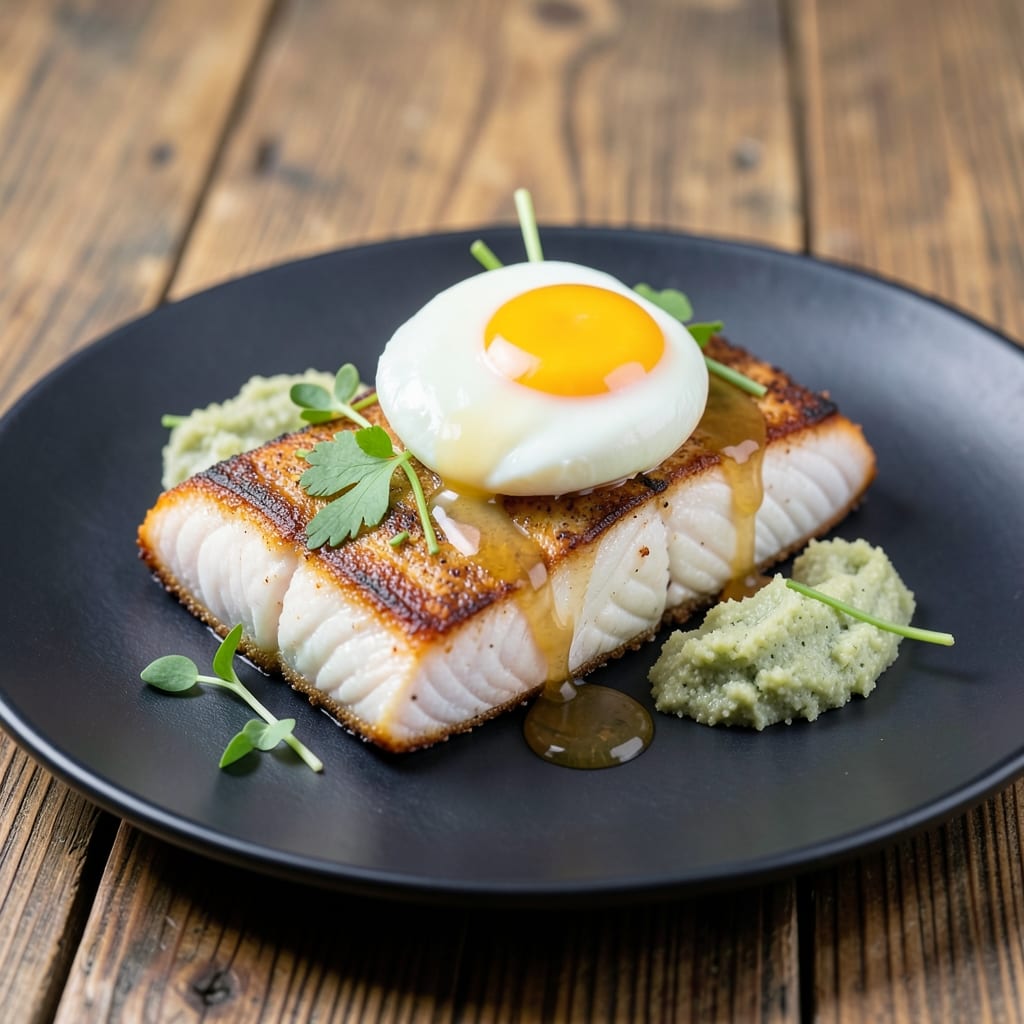
This cod and poached egg recipe transforms a simple breakfast into a restaurant-worthy dish with a crispy celery crust and rivers of golden yolk. The secret lies in perfectly searing the cod fillet and mastering the French technique of œufs pochés—silky, runny yolks that glide effortlessly onto the crispy fish. I developed this after years of experimenting with seafood and eggs, and it never fails to impress. The foundation starts with a thin, crispy crust made from finely chopped celery, butter, and a touch of flour—it adds texture without overpowering the delicate flavors. Meanwhile, the cod fillet is seared in a hot pan until golden, then finished with a quick broil for that perfect crispy edge. The poached eggs require patience and precision, but the result is worth every second: bright whites and a molten yolk that pools beautifully over the fish. What makes this dish truly special is the balance of textures and temperatures: the crispy crust contrasts with the tender cod and silky egg, while the lemon-dill sauce ties everything together with a bright, herby finish. Serve it with a side of buttery toast or fresh greens to complete the meal. This recipe is perfect for weekend brunches or a special dinner that feels indulgent yet refined. Let’s get cooking!
Ingredients for cod and poached egg
Crispy crust, tender cod, and silky poached eggs—this refined dish starts with simple ingredients.
| Ingredient | Amount | Notes |
|---|---|---|
| Cod Fillets 🐟 | 4 whole | Skin-on, 6-8 oz each |
| Large Eggs 🥚 | 4 whole | Fresh, cold for poaching |
| Celery Stalk 🧅 | 2 whole | Finely chopped, no leaves |
| Unsalted Butter 🧈 | 4 tbsp | Cold, cut into small pieces |
| All-Purpose Flour 🌾 | 2 tbsp | For crispy crust |
| Extra-Virgin Olive Oil 🫒 | 2 tbsp | For searing cod |
| White Wine Vinegar 🍷 | ¼ cup | For poaching liquid |
| Water 💧 | 4 cups | For poaching liquid |
| Salt 🧂 | 1 ½ tsp | Kosher or sea salt |
| Black Pepper 🌶️ | ½ tsp | Freshly ground |
| Fresh Dill 🌿 | ¼ cup | Chopped, for sauce |
| Lemon Juice 🍋 | 2 tbsp | Freshly squeezed |
| Lemon Zest 🍋 | 1 tsp | For sauce brightness |
| Heavy Cream 🥛 | ¼ cup | For lemon-dill sauce |
The cod fillets are the heart of this dish, so look for fresh, skin-on portions at your local seafood counter. Whole Foods or Trader Joe's often carry high-quality cod fillets, but don't overlook the frozen section—just thaw overnight in the fridge. For the celery crust, freshness matters: use celery with crisp stalks and no brown spots. If you're feeling ambitious, toast the chopped celery in butter first to deepen its flavor. The eggs should be cold and fresh—room temperature eggs won't poach properly.
No white wine vinegar? Apple cider vinegar or lemon juice works in a pinch, though the flavor will differ slightly. For the lemon-dill sauce, substitute parsley for dill if needed, but the bright acidity is key—skip the heavy cream if you're avoiding dairy, though it adds richness. The celery crust can be prepped ahead and refrigerated for up to 2 days, but assemble it just before cooking. If your cod fillets vary in thickness, pound them to even thickness for consistent doneness. The poaching liquid should be simmering gently—not boiling—so adjust heat as needed.
The cod crust keeps best at room temperature for 30 minutes before serving, allowing flavors to meld. Store any leftovers in an airtight container in the fridge for up to 2 days, though the poached eggs won't hold their texture. The lemon-dill sauce can be made ahead and reheated gently—just add a splash of water or cream to loosen. For a restaurant-worthy presentation, plate the cod on the crispy crust, top with the poached egg, and drizzle with sauce. Garnish with extra dill and a pinch of flaky salt for that final touch.
Why You'll Love This Recipe
- Here’s what sold me: the floured cod gets that golden, almost papery crust while staying tender inside. Then you crack that egg right on top—yolk spills like sunshine over the flaky fish. It’s the kind of bite that makes you close your eyes.
- Five-Ingredient Magic: I swear by this—just cod, eggs, celery, butter, and flour. That’s it. No crowded pantry raid, no last-minute grocery runs. The celery adds this subtle crunch that cuts through the richness, and the egg? Perfectly runny every time.
- Crispy-Creamy Contrast: Here’s what sold me: the floured cod gets that golden, almost papery crust while staying tender inside. Then you crack that egg right on top—yolk spills like sunshine over the flaky fish. It’s the kind of bite that makes you close your eyes.
- Weeknight to Weekend: Between us, this works for everything. Toss it together for a lazy Tuesday dinner, bring it to a potluck (it’s fancy enough to impress), or pack leftovers for lunch—just reheat gently. My college-aged son even asked for seconds when I made it after a late shift.
Step-by-step instructions for crispy cod with poached eggs
Here's how to create perfectly crispy cod fillets with a celery crust and velvety poached eggs.
Create the Celery Crust for Cod Fillets
Finely chop the 2 whole celery stalks into tiny pieces, almost like a paste. In a food processor, pulse the celery until it reaches a consistency similar to wet sand. This texture is crucial for creating that signature crispy crust.
In a small bowl, combine the celery mixture with the 2 tablespoons all-purpose flour and 1 teaspoon salt. The celery will absorb the flour, creating a coarse batter. Spread this mixture evenly over the skin-side of each cod fillet, pressing gently to adhere. Let them rest for 10 minutes at room temperature while you prepare the poaching liquid.
Prepare the Poaching Liquid
In a medium saucepan, combine the 4 cups water, 0.25 cup white wine vinegar, 1.5 teaspoons salt, and 0.5 teaspoon black pepper. Bring to a gentle simmer over medium heat - you should see small bubbles breaking the surface but not a rolling boil. The vinegar helps create a clear, clean poaching liquid that won't cloud the eggs.
Keep this liquid at a steady simmer throughout the entire poaching process. If it boils vigorously, reduce the heat immediately - we want just enough movement to create those perfect egg whites without breaking the yolks.
Sear and Poach the Cod
Heat the 2 tablespoons extra-virgin olive oil in a large skillet over medium-high heat until shimmering. Carefully place the cod fillets in the pan, skin-side down. Cook for 3-4 minutes until the crust becomes golden brown and crispy. Flip gently and cook the other side for 2-3 minutes until the fish flakes easily with a fork.
While the cod cooks, prepare the eggs by cracking each one into a small ramekin. Once the cod is cooked, carefully transfer it to a plate and maintain the poaching liquid at a simmer. Gently slide each egg into the simmering liquid using a spoon, letting the whites set for 3-4 minutes until just set but with a perfectly runny yolk.
Assemble with Lemon-Dill Sauce
In a small saucepan, melt the 4 tablespoons unsalted butter over low heat. Add the 0.25 cup chopped fresh dill, 2 tablespoons lemon juice, 1 teaspoon lemon zest, and 0.25 cup heavy cream. Simmer gently for 2-3 minutes until the sauce thickens slightly but remains silky.
To serve, place each cod fillet on a plate, top with a poached egg, and drizzle generously with the lemon-dill sauce. The contrast of crispy cod crust, silky egg yolk, and bright lemon-dill sauce creates the perfect balance of textures and flavors in every bite.
Pro Tips For Making Cod And Poached Egg
- Pat the cod DRY first: Wet skin sticks to the pan and steams instead of searing. I learned this the hard way—my first batch turned out soggy because I rushed straight to the butter. Grab paper towels and press firmly for 10 seconds on each side. The crust will be worth it.
- Use cold butter for poaching: Room-temperature butter burns before the egg sets. I was skeptical until I tried it—chill the butter in the fridge for 10 minutes first, then melt it slowly over low heat. The gentle rise in temperature keeps the water from boiling too fast, giving you that perfect runny yolk every time.
- Salt the poaching water: Plain water makes the egg spread like a sad pancake. Add 1 tablespoon of salt to the poaching liquid (water or broth) to tighten the whites. It’s not just for flavor—it’s the thing that actually keeps the egg intact while cooking.
- Cook celery until tender-crisp: Raw celery in this dish is a textural crime. Slice it into ¼-inch pieces and sauté in the same butter you’ll use for the cod—just until it’s bright green and offers a tiny bite. Overcook it, and the dish turns mushy; undercook it, and you’ll regret every bite.
Wine and beer pairings for these flavors
Crisp White Wine Pairings
A dry Sauvignon Blanc from New Zealand or Loire Valley is my go-to choice for this dish—its bright acidity and citrus notes mirror the lemon-dill sauce perfectly. Look for a wine with 12-13% ABV like Kim Crawford Sauvignon Blanc or Oyster Bay Sauvignon Blanc. The crispness cuts through the richness of the cod and egg while complementing the celery crust's subtle sweetness. Serve it slightly chilled (45-50°F) to enhance its refreshing qualities. 🍷
Crisp Lager for Balance
For a beer pairing, I recommend a crisp German Pilsner like Warsteiner or Stella Artois. The light malt sweetness and subtle hop bitterness won't overpower the delicate flavors of the cod and poached egg. The effervescence also helps cleanse your palate between bites. If you prefer something with a bit more character, try a Belgian Witbier like Hoegaarden—its coriander and orange peel notes add a fun contrast to the dish. 🍺
Light Red Option
If you prefer red wine, a Pinot Noir with bright acidity and red fruit notes works beautifully. I love Meiomi Pinot Noir or La Crema Sonoma Coast Pinot Noir—their lighter body won't overpower the dish. The wine's earthy undertones pair surprisingly well with the celery crust, while the acidity balances the richness of the egg yolk. Serve it at 55-60°F to preserve its freshness. 🍇
Sparkling Wine Elevation
For a truly special occasion, a dry sparkling wine like La Marca Prosecco or Tattinger Brut adds a luxurious touch. The bubbles and acidity make every bite feel celebratory while cutting through the richness. The effervescence also helps the flavors dance on your palate, making this dish feel even more refined. 🥂
Non-Alcoholic Alternatives
Don't drink alcohol? No problem! A sparkling apple cider like Martinelli's or a ginger beer with a squeeze of lime works wonderfully. The acidity and effervescence still complement the dish beautifully. For something more sophisticated, try a flavored sparkling water with a splash of lemon juice and a few drops of dill-infused syrup for a refreshing, herbaceous pairing. 💧
Nutrition facts
Frequently asked questions
Can I use frozen cod for this recipe?
Yes, but thaw it properly first! Place frozen cod fillets in a sealed bag and submerge in cold water for 30-45 minutes, changing the water every 10 minutes—this keeps them cold and prevents uneven cooking. Never thaw at room temperature, as this promotes bacteria growth. The celery crust will still adhere perfectly to thawed cod.
How do I fix overcooked poached eggs?
If the whites are too firm and yolks set completely, you can't reverse it—but try this trick: Gently reheat the eggs in a 170°F (77°C) water bath for 1-2 minutes to soften them slightly. Serve immediately with extra lemon-dill sauce to mask any dryness. Prevention tip: Remove eggs from the poaching liquid when whites are just set but yolks still jiggle slightly.
What's the best way to store leftovers?
Store the cod and celery crust separately in airtight containers for up to 2 days in the fridge. Reheat cod gently in a 350°F (175°C) oven for 5-6 minutes—never microwave, or the crust will lose its crispiness. Poached eggs don't reheat well, so make them fresh when serving. The lemon-dill sauce can be refrigerated for 3 days and reheated gently with a splash of cream.
Can I make this dish ahead of time?
Prep the celery crust and store it on the cod fillets in the fridge for up to 2 days. Cook the cod just before serving—it reheats beautifully. For the eggs, poach them fresh and assemble plates moments before eating. The lemon-dill sauce can be made 1 day ahead and reheated gently. This makes it perfect for brunch hosting!
What's the secret to perfect poached egg whites?
The key is a gentle simmer—not a rolling boil—and fresh vinegar. Use white wine vinegar (or apple cider vinegar) to keep the liquid clear. Add 1 tablespoon of vinegar per 4 cups of water, and maintain a temperature where small bubbles just break the surface. For extra clarity, add a pinch of salt to the poaching water and use room-temperature eggs.