
Soups & Stews
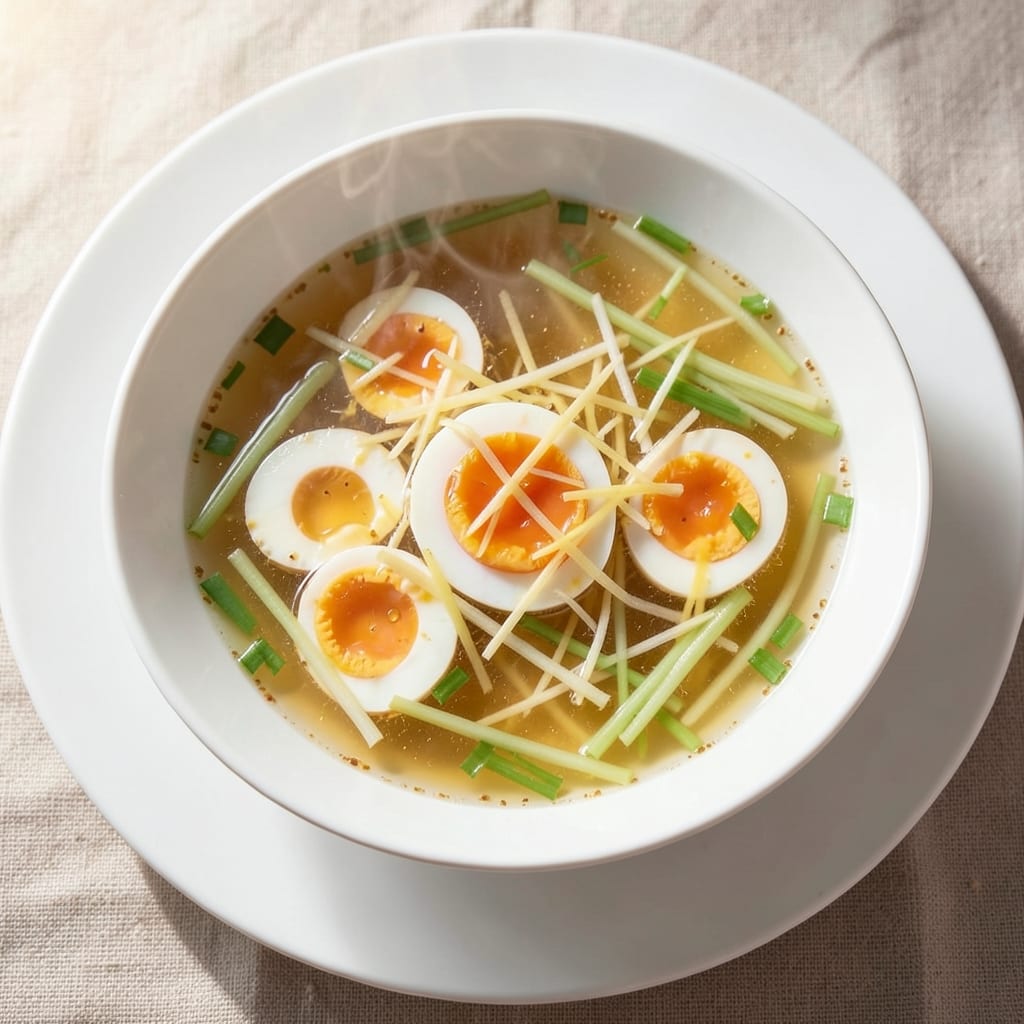
This clear egg soup recipe delivers the velvety, comforting broth that makes it a staple in Asian cuisine—where every sip feels like a warm embrace. The secret lies in a delicate balance of celery, ginger, and aromatic spices that build depth without overpowering the silky egg ribbons. I've perfected this version to achieve that signature clarity while keeping the preparation straightforward, so you can recreate restaurant-quality results at home.
The foundation of great egg drop soup is a well-seasoned broth that simmers long enough to develop layers of flavor without becoming cloudy. We'll use a combination of ginger, green onions, and a touch of soy sauce to create that signature umami warmth, while fresh cilantro adds brightness at the end. The key technique is tempering the eggs just before adding them to the broth—this creates those signature silky strands that melt on your tongue.
What you'll end up with is a bowl of golden, silky soup where each spoonful delivers perfectly balanced flavors: the warmth of ginger, the freshness of celery, and the delicate sweetness of the eggs. The broth remains crystal clear, allowing you to see the beautiful strands of egg suspended in the liquid. This is the kind of soup that feels like comfort in a bowl, perfect for chilly evenings or when you need something nourishing yet light.
While this recipe traditionally uses chicken broth, I'll show you how to adapt it for vegetarian diets using mushroom or vegetable broth without sacrificing flavor. The technique remains the same—just the base changes. Let's create this silky, warming soup that's as beautiful as it is delicious.
Ingredients for clear egg soup
Four cups of broth, fresh herbs, and eggs tempered just right—this is your ticket to restaurant-worthy clarity.
| Ingredient | Amount | Notes |
|---|---|---|
| Vegetable Broth 🥬 | 4 cups | Low-sodium preferred, homemade or high-quality store-bought |
| Large Eggs 🥚 | 4 whole | Room temperature for best results |
| Celery Stalks 🧅 | 2 whole | Thinly sliced, about 1 cup total |
| Fresh Ginger 🌿 | 1 tbsp | Finely grated, aromatic variety |
| Green Onions 🧅 | 3 whole | White and green parts separated |
| Light Soy Sauce 🧂 | 1 tbsp | Kosher salt alternative if needed |
| Sesame Oil 🫒 | 1 tsp | For aroma, not cooking |
| Cornstarch 🌾 | 1 tsp | Dissolved in 1 tbsp cold water |
| Fresh Cilantro 🌿 | ¼ cup | Chopped, for garnish |
| Vegetable Oil 🫒 | 1 tbsp | For tempering eggs |
| Salt 🧂 | ½ tsp | Adjust to taste |
| White Pepper 🌶️ | ¼ tsp | Freshly ground preferred |
The broth is where the magic happens. For that signature crystal-clear result, mushroom or vegetable broth from Pacific Foods or Imagine works best—both brands are low-sodium and packed with umami. If you're using homemade, strain it through a fine-mesh sieve to remove any impurities. The celery and ginger should be fresh, not woody—look for bright green stalks and firm ginger with no soft spots. Green onions add a subtle sharpness that brightens the whole bowl. I always buy extra cilantro because it wilts fast, but it's worth it for that final freshness.
No vegetable broth? Mushroom broth or even well-seasoned water works in a pinch, but you'll need to boost flavor with an extra half-teaspoon of soy sauce. Eggs must be room temperature—cold eggs make the soup cloudy. The cornstarch slurry is non-negotiable for clarity; skip it and you'll get a murky result. Sesame oil adds aroma but not heat—add it last so the flavor shines. For extra depth, a pinch of white pepper (not black) keeps the color bright and adds warmth. If you're feeling adventurous, swap half the broth for hot water and a bouillon cube for a lighter option.
Broth keeps for 4-5 days in the fridge, but this soup is best fresh. Eggs stay good for 3 days in the fridge if uncooked. For meal prep, assemble everything except the eggs, then temper and add them when ready to serve. The soup reheats beautifully—just warm gently on the stove and add a splash of water if it thickens. Garnish with cilantro right before serving, or it'll lose its pop. Store leftovers in airtight containers, and the broth will stay crystal clear for up to 3 days.
Why You'll Love This Recipe
- No-Chop Needed: I swear by this trick—just slice the celery into thick rounds (no dicing!) and toss in whole. The broth does the work while you sip tea. That’s how you make soup feel effortless.
- Ginger Zing: Between us, fresh ginger in broth is a game-changer—but here’s the secret: a light shave (not chopped) infuses warmth without overpowering. That crisp, bright edge? It’s the reason I double the recipe.
- Office Lunch Hero: Cold or hot, this soup travels like a dream. Pack it in a thermos for work, or let it chill overnight—it’s just as good the next day. (Yes, even my picky coworkers ask for seconds.)
- Eggs on Budget: Two eggs stretch into a whole bowl of soup, and the broth’s depth makes it feel luxurious. I’ve made this for $3 a serving—no fancy ingredients, just pure satisfaction. Leftovers? They’re my emergency dinner.
Step-by-step instructions for silky smooth egg soup
This recipe delivers a delicate, crystal-clear broth with tender poached eggs and aromatic vegetables—perfect for comfort without heaviness.
Prepare the Aromatic Base
Heat the 1 tablespoon vegetable oil in a medium saucepan over medium heat. Add the 2 whole celery stalks (thinly sliced) and 1 tablespoon fresh ginger (finely grated). Cook for 3-4 minutes until the celery softens slightly and releases its fragrance—you should smell that fresh, grassy aroma filling your kitchen.
Next, add the white parts of 2 green onions (chopped) and stir for 30 seconds until fragrant. Pour in the 4 cups vegetable broth and bring to a gentle simmer. Let it cook uncovered for 10 minutes to allow the flavors to meld—this is where the soup's depth of flavor develops. Keep the heat at medium-low to prevent boiling, which can make the broth cloudy.
Season and Thicken the Broth
Stir in the 1 tablespoon light soy sauce, 0.5 teaspoon salt, and 0.25 teaspoon white pepper. Taste the broth and adjust seasoning if needed—this is your flavor foundation, so balance is key. In a small bowl, whisk together the 1 teaspoon cornstarch with 1 tablespoon cold water until smooth.
Slowly ladle ¼ cup of the hot broth into the cornstarch mixture while whisking constantly to prevent lumps. Then, pour this slurry back into the saucepan. Bring the broth to a gentle simmer and cook for 2-3 minutes until it thickens slightly—it should coat the back of a spoon but remain silky, not gluey. Remove from heat and stir in the 1 teaspoon sesame oil for that nutty aroma.
Poach the Eggs to Perfection
While the broth simmers gently, prepare the 4 whole large eggs by cracking them into a small bowl. Bring a separate small pot of water to a gentle simmer (not a rolling boil)—you want just tiny bubbles breaking the surface. Add the eggs one at a time, stirring gently to create a gentle whirlpool. Poach for 3-4 minutes until the whites are set but the yolks remain runny and wobbly.
Use a slotted spoon to transfer the poached eggs to the prepared broth. The broth should still be warm but not boiling—this prevents the eggs from overcooking or breaking. Let the eggs sit in the broth for 1-2 minutes to absorb some of the flavor before serving. Here's the thing—don't overcrowd the pan. Poach one egg at a time if needed to maintain water temperature.
Assemble and Garnish
Ladle the warm broth into serving bowls, nestling one poached egg in each. The broth should be clear and silky, with just a hint of thickness from the cornstarch. Garnish each serving with the green parts of 1 green onion (sliced) and 2 tablespoons fresh cilantro (chopped). The contrast of bright green and delicate egg makes this dish visually stunning.
Serve immediately while the eggs are still warm at the center. The broth should be warm but not scalding, allowing you to enjoy the tender egg without overcooking. Pair with steamed rice or crusty bread to soak up every last drop of that aromatic broth. The key to success here is patience—rushing the poaching or simmering too hard will ruin the delicate texture we're after.
Pro Tips For Making Clear Egg Soup
- STRAIN TWICE, STRAIN RIGHT: The first strain removes big bits, but the second—through a fine-mesh sieve or cheesecloth—is what actually keeps your broth glass-clear. I used to skip this and ended up with a murky soup that looked like pond water. Trust me, the effort makes the difference—especially if you’re using store-bought broth.
- SLICE GINGER THINLY: No, "grate it" isn’t the answer here. Thin, matchstick slices of ginger (about 1/8-inch thick) infuse flavor without turning your broth bitter or leaving chunks. Toss them in early, then fish them out before adding eggs—you want the aroma, not the texture.
- USE COLD EGGS, WARM BROTH: Room-temperature eggs scatter like confetti in hot liquid. Chill your eggs for 30 minutes first, then gently swirl them into broth that’s simmering—not boiling. If the broth is too hot, the eggs will curdle into rubbery blobs. Start low, finish at a whisper-simmer.
- RESERVE SOME BROTH: Before you strain, set aside 1 cup of the unstrained broth. After clarifying, stir it back in—it carries the depth of flavor lost in filtering. I learned this the hard way when my first batch tasted shockingly pale. Save that last bit, even if it looks "dirty."
Creative variations of this recipe
Spicy Ginger Twist
Add a kick by incorporating ½ teaspoon of red pepper flakes or 1 teaspoon of fresh chili oil when you stir in the soy sauce. This version works beautifully with a splash of rice vinegar (about 1 teaspoon) to balance the heat. I love this variation for when I want something warming but with a little more energy. The chili oil adds a smoky depth that pairs perfectly with the silky eggs. 🌶️
Vegetarian Mushroom Broth
Swap the vegetable broth for a rich shiitake mushroom broth made by simmering 8 dried shiitake mushrooms in 4 cups water with 1 tablespoon soy sauce and 1 clove garlic for 20 minutes. Strain and use as your base. The umami from the mushrooms makes the soup even more satisfying. I find this works especially well with a garnish of toasted sesame seeds for extra texture and aroma.
Creamy Coconut Version
For a tropical twist, replace the vegetable broth with 3 cups coconut milk and 1 cup water. Add ½ teaspoon turmeric for color and warmth, along with 1 tablespoon lime juice at the end. The coconut milk creates a velvety texture that still allows the eggs to shine. Garnish with lime zest and cilantro for a refreshing contrast. This version feels like a vacation in a bowl.
Protein-Packed Addition
Boost nutrition by adding 2 ounces of thinly sliced shiitake mushrooms or ½ cup cooked shrimp to the broth while it simmers. The mushrooms add earthy depth, while the shrimp provides a delicate sweetness. If using shrimp, poach them separately for 1-2 minutes until just opaque, then add to the soup with the eggs. This keeps the dish light but satisfying. 🦐
Herb-Infused Variations
Experiment with different herbs for unique flavor profiles. Try adding 1 tablespoon fresh basil or thyme sprigs to the broth while simmering for a more Mediterranean touch. For a Chinese-inspired version, include 1 star anise pod and 1 cinnamon stick while making the broth, then remove them before adding the eggs. The star anise adds a subtle sweetness that complements the ginger beautifully.
Smoky Charred Onion
For a deeper, caramelized flavor, char 1 large onion directly over a gas flame or under a broiler until blackened in spots. Finely dice the charred onion and add it to the broth with the celery and ginger. The smoky notes elevate the soup to a whole new level. I find this works especially well with a drizzle of chili crisp on top for an extra layer of complexity. 🔥
Nutrition facts
Frequently asked questions
Why does my egg soup broth turn cloudy?
Cloudiness usually happens from either boiling the broth too vigorously (which stirs up impurities) or adding cold ingredients directly. To prevent this, maintain a gentle simmer at medium-low heat and always temper eggs in warm (not boiling) broth. Also, strain your broth through a fine-mesh sieve before adding eggs for extra clarity.
Can I use regular eggs instead of fresh ones?
Fresh eggs are ideal because their whites hold together better when poached, creating those signature silky strands. If you must use older eggs, chill them first for 10 minutes before poaching—the cold temperature helps maintain shape. For best results, use eggs no older than 1 week from the date on the carton.
How do I make this soup vegetarian without sacrificing flavor?
Use a rich mushroom or vegetable broth made from scratch with shiitake mushrooms, kombu, and soy sauce for depth. Add 1 tablespoon miso paste when simmering for extra umami. The cornstarch slurry and ginger will still create that signature clarity and warmth. For protein, stir in tofu cubes just before serving.
What's the best way to reheat leftovers?
Gently reheat on the stove over low heat until just warm (about 2-3 minutes). Never microwave—it breaks down the egg texture and makes the broth cloudy. Add a splash of hot water if it thickens. For best results, reheat only what you plan to eat immediately, as the eggs will continue cooking.
Can I make this soup ahead of time?
Prepare the broth completely and store it in the fridge for up to 3 days. When ready to serve, reheat gently and poach fresh eggs separately. The key is keeping the eggs separate until serving—this maintains their perfect texture. For a shortcut, make a double batch of broth and freeze half for future use.