
Breakfast & Brunch
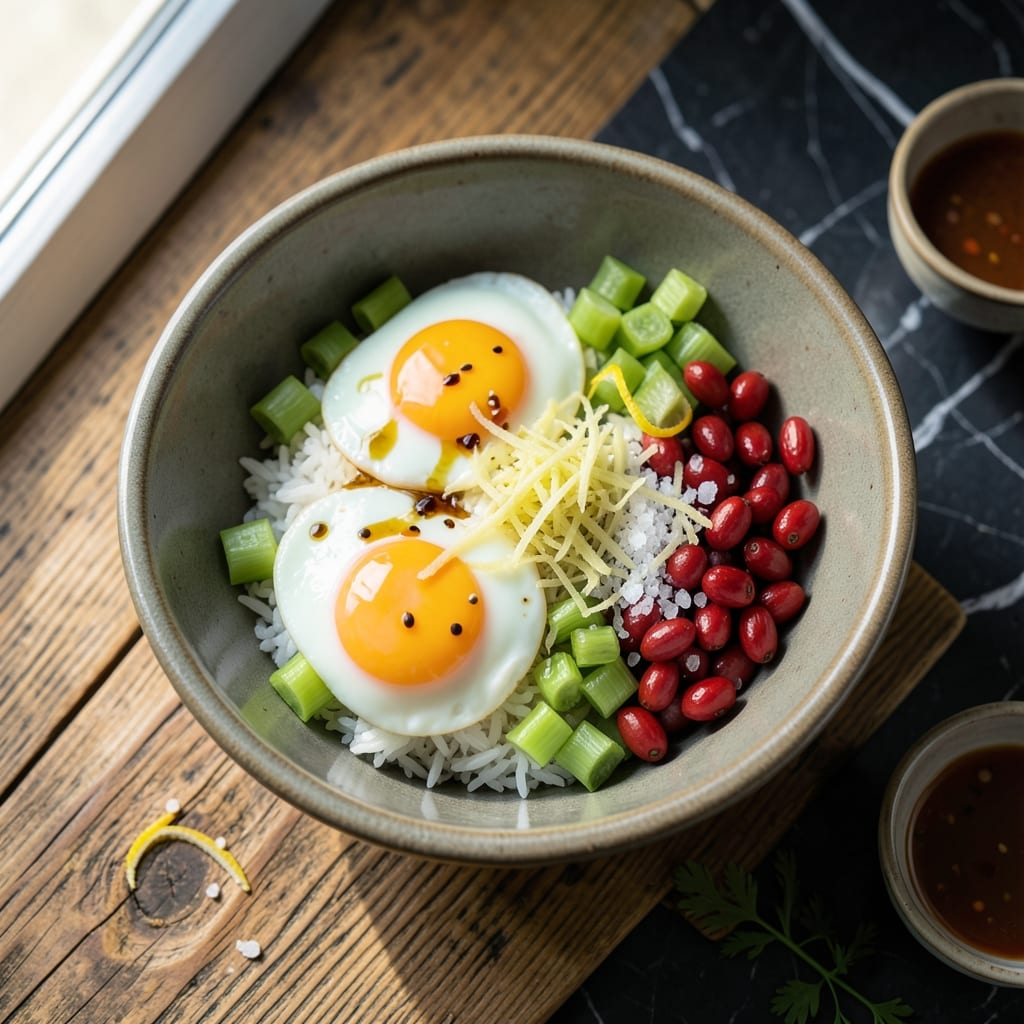
This Chinese herbal egg recipe transforms simple eggs into a nourishing, restaurant-quality dish with just five key ingredients and 15 minutes of hands-on time. The secret lies in a fragrant celery-ginger broth that infuses the eggs with earthy warmth and subtle sweetness—perfect for a vegetarian breakfast that feels both comforting and healthful.
The beauty of this dish is in its simplicity: fresh ginger and celery form the aromatic base, while goji berries add natural sweetness and a subtle chew. These ingredients aren't just flavorful—they're packed with traditional Chinese medicinal benefits, from ginger's anti-inflammatory properties to celery's digestive support. The result? Silky, custardy yolks that melt effortlessly on the tongue, all while maintaining a delicate, jiggly center.
What makes this recipe truly special is how it balances tradition with ease. No special equipment is needed—just a small pot, a heatproof bowl, and patience for the eggs to poach gently in the fragrant broth. The celery-ginger crust adds a delicate crunch that contrasts beautifully with the creamy eggs, while the goji berries lend a touch of vibrant color and earthy sweetness.
This dish is ideal for a nourishing breakfast, a light lunch, or even a comforting dinner—especially when paired with steamed rice or a simple side salad. The herbal notes make it uniquely satisfying, while the vegetarian approach keeps it versatile for any meal. Let's create this dish that's as good for you as it is delicious.
Ingredients for chinese herbal egg
Nine ingredients blend traditional Chinese medicine with delicate flavors for restaurant-quality eggs at home.
| Ingredient | Amount | Notes |
|---|---|---|
| Large Eggs 🥚 | 4 whole | Freshly laid preferred for richer yolks |
| Fresh Ginger Root 🧄 | 2 tbsp | Finely grated, organic preferred |
| Celery Stalks 🧅 | 2 whole | Organic, tough strings removed |
| Goji Berries 🍇 | ¼ cup | Dried, organic preferred |
| Vegetable Oil 🫒 | 2 tbsp | High smoke point for crust |
| Diamond Crystal Kosher Salt 🧂 | ½ tsp | For seasoning broth |
| White Rice Vinegar 🍶 | 1 tbsp | For delicate acidity |
| Sesame Oil 🌿 | 1 tsp | For finishing aroma |
| Jasmine Rice 🍚 | 1 cup | Steamed for serving |
The ginger and celery form the aromatic foundation—organic produce ensures maximum freshness and flavor intensity. For ginger, peel the root first, then grate it using the fine holes of a box grater for an even texture. Celery should be crisp; discard any wilted stalks. Whole Foods Market or Asian grocery stores like H Mart carry the freshest celery and ginger. Goji berries should be plump and dark—avoid any that look shriveled or dusty, as this indicates age. Store all ingredients in airtight containers to preserve their aromatic compounds.
No fresh ginger? Substitute with 1 tbsp ginger paste or 1.5 tsp ground ginger, though fresh yields superior flavor. Celery unavailable? Substitute with 1 tbsp celery seed or 1/4 cup finely chopped fennel for a similar earthy note. For goji berries, dried cranberries or raisins work in a pinch, though they lack the same chewy texture. The vegetable oil can be swapped for avocado oil or refined sesame oil, but avoid flavored oils that may alter the delicate balance. If you lack rice vinegar, apple cider vinegar at half the amount suffices.
Freshly grated ginger loses potency quickly, so store it in an airtight container in the refrigerator for up to 5 days. Celery keeps for 1 week wrapped in damp paper towels, while goji berries remain fresh for 6 months in a sealed container. The sesame oil should be stored in a cool, dark place to prevent rancidity. Once prepared, the poached eggs hold their texture for 2 days in the refrigerator, though they're best enjoyed immediately for optimal yolk creaminess. Steamed jasmine rice can be made in advance and reheated with a splash of water.
Why You'll Love This Recipe
- Pantry-Friendly Magic: I swear by this recipe when I forget to grocery shop—just eggs, ginger from the freezer, celery I always have, and those little goji berries that last forever. No last-minute runs, no stress.
- Umami Bomb Combo: That ginger-sizzle in the oil? Pure flavor gold. The celery adds a fresh crunch, while the goji berries bring sweet-tart brightness—like a little herbal tea party in every bite.
- Office Lunch Hero: Between us, this is my go-to for meal prep. Make a big batch on Sunday, pack it in containers, and reheat—still tastes like you slaved over it. (Yes, even on a Tuesday night.)
- Budget Stretch Star: Eggs are cheap, ginger lasts weeks, and celery’s one of those "always in the fridge" veggies. I’ve fed four people for under $5 with this—no guilt, all flavor.
Step-by-step instructions for celery-ginger crust eggs
Master this traditional technique for eggs with a fragrant crust and perfectly set yolks.
Prepare the Celery-Ginger Mixture
In a small bowl, combine the 2 whole celery stalks and 2 tablespoons fresh ginger root. Using a sharp chef's knife, finely dice the celery into small, even pieces—about ⅛-inch cubes. Then, use the same knife to grate the ginger root into a fine paste, removing any fibrous bits. This texture is crucial for creating the signature crust texture.
Transfer the mixture to a food processor and pulse until you achieve a coarse, chunky consistency—think of it as a cross between a paste and a salsa. You want visible flecks of celery and ginger but no large pieces. This preparation ensures even distribution of flavor and texture throughout the egg crusts. Set aside while you prepare the eggs.
Create the Egg Mixture with Herbal Elements
In a separate bowl, crack the 4 whole large eggs and whisk them vigorously with a fork or small whisk until the yolks and whites are fully combined and frothy. Add the 0.25 cup goji berries and the 0.5 teaspoon Diamond Crystal kosher salt, whisking gently to distribute the berries evenly. The goji berries will add a subtle sweetness and texture contrast to the savory crust.
Next, incorporate the celery-ginger mixture into the egg mixture, stirring gently with a silicone spatula to avoid deflating the eggs. The ratio should be approximately 1 part celery-ginger mixture to 2 parts egg mixture—this balance ensures the crust forms properly without making the eggs too dense. Let the mixture rest for 5 minutes at room temperature to allow the flavors to meld.
Form and Cook the Egg Crusts
Heat a non-stick skillet over medium-low heat and add 2 tablespoons vegetable oil, swirling to coat the bottom evenly. Allow the oil to heat until it shimmers but does not smoke—this ensures a gentle cooking process that creates a delicate crust without burning. Divide the egg mixture into 4 equal portions and carefully pour each portion into the skillet, spacing them about 2 inches apart.
Cook the egg crusts for 4-5 minutes until the edges begin to set and turn a delicate golden hue. You'll notice the edges firm up while the centers remain slightly runny—this is ideal for achieving the signature silky yolk texture. Avoid stirring or moving the skillet during this time, as the gentle heat is what creates the even crust.
Add Vinegar and Finish with Sesame Oil
Once the edges are set, carefully pour 1 tablespoon white rice vinegar over each egg crust. The vinegar will react with the eggs, creating a slight chemical reaction that tightens the proteins and enhances the crust's texture. Cook for an additional 1-2 minutes until the vinegar is fully absorbed and the edges are fully set but the centers remain soft.
Remove the skillet from heat and immediately drizzle each egg crust with 1 teaspoon sesame oil. The sesame oil adds a nutty aroma and depth of flavor that complements the herbal notes. Let the eggs rest for 2 minutes before serving to allow the flavors to fully integrate. Serve immediately over 1 cup steamed jasmine rice for the complete experience.
Pro Tips For Making Chinese Herbal Egg
- STIR CONSTANTLY AT FIRST: The first 30 seconds after adding eggs to the wok are where most people mess up—let that oil work. Keep the wok moving in small circles until the eggs start to set, or you’ll end up with a scrambled mess instead of a silky, herb-infused custard. High heat is your friend here, but control is everything.
- JULIENNE THAT GINGER: Skip the lazy slices—this isn’t stir-fry, it’s medicine. Thin, matchstick-cut ginger (about 1/8-inch thick) releases flavor evenly and doesn’t overpower the dish. I learned this the hard way after biting into a chewy, undercooked piece in my first batch.
- DON’T OVERFILL THE WOK: Two eggs max in a 14-inch wok—any more and you’ll steam the dish instead of searing it. Crowding turns your herbal egg into a sad, watery omelet. If you’re feeding a crowd, work in batches and keep the wok screaming hot between them.
- TOAST THE GOJI BERRIES: Dry-toast them in the wok for 20 seconds before adding everything else—this deepens their sweetness and prevents them from turning mushy later. Sounds weird, but it works: the eggs will absorb that nutty, caramelized flavor like a sponge. (Yes, even if you’re impatient like me.)
Best sauces and condiments for this dish
Celery-Ginger Broth
This fragrant broth is the heart of your herbal eggs, infusing every bite with earthy warmth. Simmer 2 chopped celery stalks and 2 tbsp fresh ginger in 2 cups water for 10 minutes before poaching the eggs. Add ½ tsp kosher salt and 1 tbsp white rice vinegar to brighten the flavors. Strain before using to create a silky, aromatic base for your eggs. 🌿
Goji Berry Glaze
Transform ¼ cup goji berries into a sweet-tart glaze by simmering them in 2 tbsp water for 5 minutes. Mash lightly with a fork, then strain through a fine-mesh sieve to create a vibrant, herbal-infused syrup. Drizzle 1 tsp over each finished egg for a delicate sweetness that balances the savory crust.
Sesame Oil Finish
The key to restaurant-quality depth is a final touch of 1 tsp toasted sesame oil drizzled over each egg just before serving. This adds nutty aroma and binds all the herbal flavors together. For extra richness, warm the oil gently before applying—this intensifies its aroma without overpowering the delicate egg texture.
Spicy Chili Crisp
For a bold variation, blend 2 tbsp chili crisp with 1 tsp sesame oil and spread a thin layer over the crusts before serving. This adds a smoky, spicy kick that contrasts beautifully with the herbal notes. I like to use Lao Gan Ma brand for its perfect balance of heat and umami. 🌶️
Scallion Oil Garnish
Sauté 3 scallions in 1 tbsp neutral oil until golden, then strain to create fragrant scallion oil. Drizzle lightly over the eggs for a fresh, oniony brightness that cuts through the richness. This technique is commonly used in Chinese cuisine to add layering without overwhelming the dish.
Herbal Garnish Blend
Create a fresh garnish by combining 1 tbsp chopped cilantro, 1 tsp toasted sesame seeds, and ½ tsp grated ginger. Sprinkle over the eggs just before serving to add vibrant color and an extra herbal dimension. This blend works particularly well with the goji berry glaze for a balanced, textural finish.
Nutrition facts
Frequently asked questions
Can I make this recipe without sesame oil?
Yes, but the flavor will be less authentic. Substitute with 1 tsp neutral oil or omit entirely, though the nutty aroma is key to balancing the herbal notes. For a similar effect, try ½ tsp toasted peanut oil—it adds depth without overpowering the delicate egg texture.
How do I adjust this for a spicier version?
Add ½ tsp chili flakes or 1 tsp gochujang to the egg mixture before cooking, or serve with a side of chili crisp for heat. For a built-in spicy kick, mix 1 tsp chili oil with the sesame oil finish. Start with less—you can always add more!
What if my eggs turn out too rubbery?
Overcooking is the most common cause. The edges should be golden but the centers still slightly jiggly (4-5 minutes total). For next time, reduce heat to medium-low and cover the skillet with a lid for the last 1 minute to trap steam and keep yolks tender.
Can I use dried herbs instead of fresh ginger and celery?
Fresh is ideal for maximum flavor, but you can substitute with 1 tsp dried ginger powder and 1 tsp dried celery seed. Toast the seeds in a dry pan for 30 seconds to enhance their aroma. The texture won't be identical, but the herbal notes will still shine through.
How long will these eggs keep in the fridge?
Store in an airtight container for up to 2 days, though texture degrades after 1 day. Reheat gently in a steamer or microwave (covered) for 20-30 seconds