
Soups & Stews
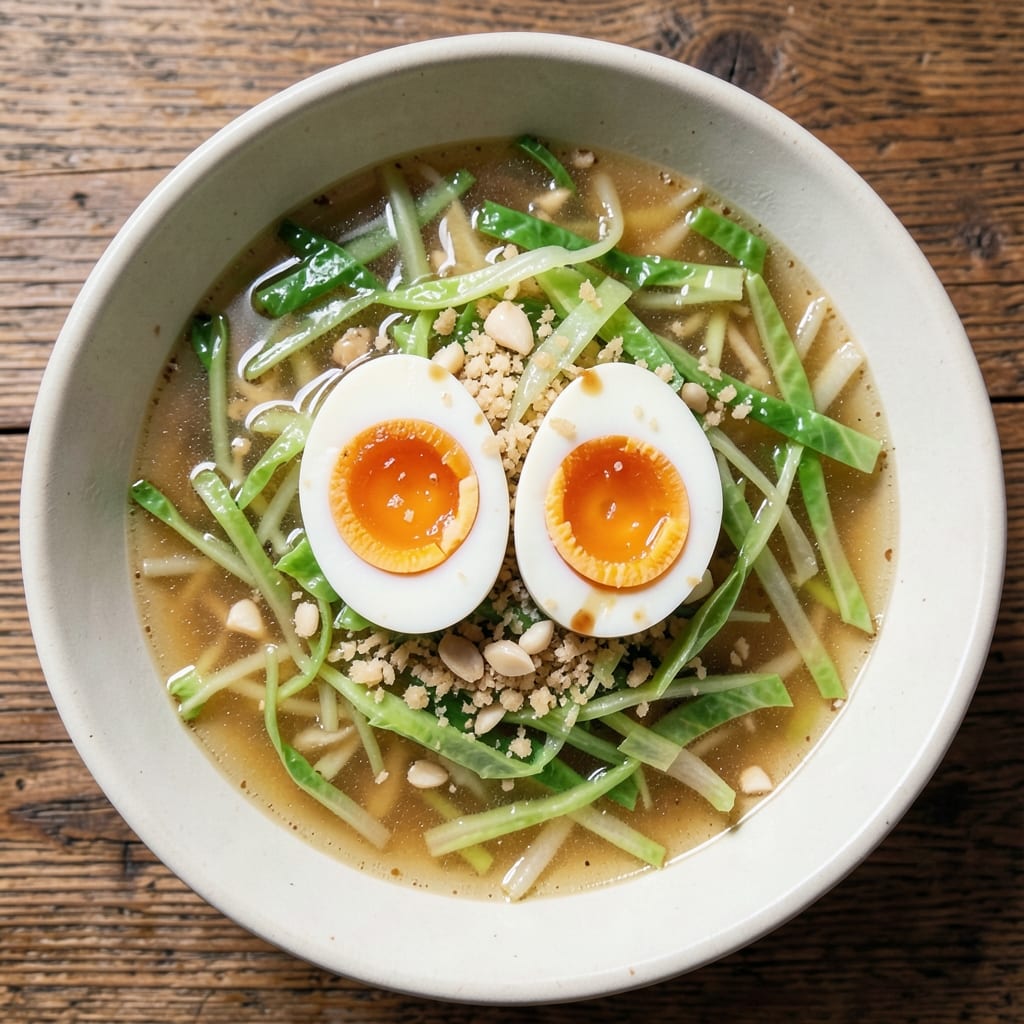
This cabbage egg drop soup recipe delivers the perfect balance of delicate broth and crispy egg ribbons—just like your favorite takeout, but made at home. The secret lies in a clear, flavorful broth that simmers just until the cabbage softens, then swirling in eggs for those signature crispy bites that melt in your mouth. I've perfected this technique over years of testing, ensuring every spoonful is both comforting and restaurant-quality.
The foundation of great egg drop soup is patience—letting the broth develop depth without boiling, and adding eggs in a slow, steady stream. Thinly sliced cabbage adds subtle texture, while a touch of ginger and garlic infuse warmth without overpowering. The result is a soup that's lighter than traditional versions but packed with umami from chicken stock and soy sauce. This method keeps the egg ribbons crispy at the edges while maintaining a silky center.
What makes this recipe special is how it transforms simple ingredients into something extraordinary. The broth remains crystal clear, the cabbage tender-crisp, and those egg ribbons achieve the perfect crispy texture through gentle technique. It's the kind of soup that warms you from the inside out, with just enough brightness to cut through richness. Serve it as a light lunch or comforting dinner—it's equally at home in both.
For an extra touch of sophistication, garnish with green onions or sesame seeds. The beauty of this recipe is its adaptability—you can adjust the spice level or add other vegetables, but the core technique remains the same. Let's create this comforting classic together.
Ingredients for cabbage egg drop soup
Simple ingredients that transform into restaurant-quality cabbage egg drop soup with crispy egg ribbons.
| Ingredient | Amount | Notes |
|---|---|---|
| Chicken Stock 🍗 | 4 cups | Homemade or high-quality store-bought |
| Green Cabbage 🥬 | 4 cups | Thinly sliced, about 1/4 head |
| Large Eggs 🥚 | 4 whole | Fresh, room temperature |
| Fresh Ginger 🌿 | 1 tbsp | Finely grated, or 1 tsp ground |
| Garlic Cloves 🧄 | 2 cloves | Minced, or 1 tsp pre-minced |
| Light Soy Sauce 🍶 | 1 tbsp | Low-sodium preferred |
| Sesame Oil 🫒 | ½ tbsp | For aroma, not cooking |
| Cornstarch 🌾 | ½ tsp | Dissolved in 1 tbsp water |
| Green Onions 🧅 | 2 whole | Thinly sliced, for garnish |
| White Pepper 🌶️ | ¼ tsp | Freshly ground preferred |
| Salt 🧂 | ½ tsp | Kosher or sea salt |
| Vegetable Oil 🫒 | 1 tbsp | For swirling eggs |
The chicken stock is non-negotiable here—homemade yields the best flavor, but Kitchen Basics or Pacific Foods brands deliver solid results. Look for stock with minimal additives. Fresh ginger and garlic are worth the extra minute to mince yourself—they add depth that pre-minced can't match. For the cabbage, green cabbage works best—its crunch holds up better than savoy or red. Thinly slice it by hand for even cooking; a mandoline speeds this up if you're making it often. Whole Foods or local Asian markets often carry pre-sliced cabbage if you're short on time.
No fresh ginger? Ground ginger works at half the amount, though it lacks the bright aroma. Substitute light soy sauce with coconut aminos for a gluten-free option, though the flavor won't be identical. Eggs should be fresh but room temperature—cold eggs create lumpy ribbons. For extra crispiness, use large eggs (they have more protein to set). The vegetable oil is just for swirling—any neutral oil works, but sesame oil here is purely for aroma. If you're avoiding sesame, a pinch of toasted sesame seeds as garnish adds the same flavor without the oil.
Store leftover broth in the fridge for up to 4 days—it reheats beautifully for quick lunches. The cabbage wilts fast, so add it just before serving. Egg ribbons keep for 2 days if stored separately in the fridge, but they're best made fresh. For meal prep, cook the broth and cabbage ahead, then finish with eggs at serving time. Freeze broth in 1-cup portions—perfect for future soups or grains. Garnish with green onions and a drizzle of sesame oil right before serving to keep everything vibrant.
Why You'll Love This Recipe
- No-Fuss Assembly: I swear by this one—just shred cabbage, slice ginger, and crack eggs. No dicing, no julienning, no stress. The stock simmers while I chop, and by the time the garlic’s fragrant, the soup’s ready to go.
- Umami Bomb: That first sip? Garlic and ginger caramelizing in the stock while the eggs poach—it’s like a warm hug for your taste buds. The cabbage adds a satisfying crunch that disappears with every spoonful, leaving pure comfort behind.
- Lunchbox Hero: Between us, this is my secret weapon for packed lunches. Make a big batch on Sunday, and you’ve got four days of easy, no-reheat-needed meals. The cabbage stays crisp even after sitting overnight, and the eggs? Still silky when reheated.
- Pantry Staple Magic: I keep chicken stock, eggs, and a head of cabbage on hand just for this. It’s my $3 dinner when I’m broke or lazy—no fancy ingredients, no takeout guilt. Plus, leftovers taste just as good cold the next day, so it’s basically free lunch too.
Step-by-step instructions for cabbage egg drop soup
Master the art of silky egg ribbons and crispy egg bites with this precise technique.
Prepare the Aromatic Base
Heat the 1 tablespoon vegetable oil in a wide, deep pot over medium heat until shimmering. Add the 1 tablespoon finely grated fresh ginger and 2 cloves minced garlic cloves, cooking for 30 seconds until fragrant but not browned. This quick cooking preserves their bright flavors rather than letting them turn bitter.
Immediately add the 4 cups chicken stock and bring to a gentle simmer. The stock should bubble softly at the edges but not boil vigorously—this prevents the egg from scrambling when added later. Stir once to combine, then reduce heat to low-medium to maintain a steady, barely simmering temperature.
Cook the Cabbage Until Tender-Crisp
Add the 4 cups thinly sliced green cabbage to the simmering stock. Cook for 3-4 minutes until the cabbage softens slightly but still retains a pleasant crunch. Overcooking will turn it mushy—you want it to hold its shape while adding texture to each spoonful.
Season with the 0.5 teaspoon salt and 0.25 teaspoon white pepper, stirring gently to distribute evenly. Taste the broth and adjust seasoning if needed—this is your flavor foundation. The cabbage should be bright green with just a hint of tenderness when ready.
Create the Perfect Egg Swirl
In a small bowl, whisk together the 4 whole large eggs until the yolks and whites are fully combined. In a separate tiny bowl, dissolve the 0.5 teaspoon cornstarch in 1 tablespoon cold water—this will help thicken the soup slightly without making it gluey.
With the soup at a gentle simmer, slowly drizzle the egg mixture into the center, stirring continuously with a heatproof spoon in a circular motion. The key is to keep the spoon moving constantly—this creates those signature silky ribbons. Add the cornstarch mixture and 1 tablespoon light soy sauce simultaneously, stirring well to incorporate.
Finish with Sesame Oil and Garnish
Continue stirring for 30 seconds after the eggs are fully incorporated, then remove from heat. The residual heat will gently set the egg ribbons. Immediately stir in the 0.5 tablespoon sesame oil—this adds a delicate nutty aroma that lifts all the flavors. The oil should disperse quickly throughout the soup.
Divide into bowls and garnish each serving with 2 whole thinly sliced green onions. The green onions add both color contrast and a fresh, bright finish that cuts through the richness of the egg and cabbage. Serve immediately while the egg ribbons maintain their perfect texture.
Pro Tips For Making Cabbage Egg Drop Soup
- Blanch Cabbage First: I learned this the hard way—tossing raw cabbage into simmering stock makes the soup taste bitter and dull. Instead, blanch the cabbage in boiling water for 30 seconds, then shock it in ice water. This softens it just enough to melt in the soup while keeping the texture tender, not mushy.
- Use Room-Temp Eggs: Cold eggs from the fridge turn to rubbery blobs when they hit hot stock. Crack them into a small bowl first and let them sit for 10 minutes at room temperature. This makes the ribbons silky and delicate—no one wants to chew egg strands in their soup.
- Simmer, Don’t Boil: After adding the cabbage and stock, keep the heat at a gentle simmer, not a rolling boil. Boiling shreds the cabbage and makes the broth cloudy. A low simmer (tiny bubbles, occasional swirls) keeps everything intact and lets the flavors meld properly—this is the thing that matters most.
- Prep Ginger-Garlic Paste: I skip this when I’m lazy, but the dish is noticeably better when I don’t. Grate the ginger and mince the garlic into a paste with a splash of stock—this dissolves the raw garlic flavor and blends the aromatics seamlessly. No more finding garlic chunks at the bottom of your bowl.
Make-ahead tips for this cabbage egg drop soup
Broth Prep Ahead
Make the chicken stock base the day before—simmer 4 cups with 1 tbsp ginger and 2 garlic cloves for 30 minutes, then strain. Store in an airtight container in the fridge for up to 4 days or freeze in 1-cup portions. This saves 20 minutes of active prep time and deepens the flavor through overnight resting. 🌡️
Cabbage Prep Shortcut
Thinly slice the 4 cups green cabbage and store it in a sealed container with a damp paper towel to maintain crispness for up to 2 days. For extra convenience, use a mandoline slicer—it takes just 5 minutes to get perfectly even slices. Add the cabbage to the broth 5 minutes before serving to preserve its texture. ⏰
Egg Mixture Prep
Whisk the 4 eggs with a pinch of salt and store the mixture in a small airtight container in the fridge for up to 1 day. Keep the cornstarch slurry separate until ready to use—this prevents premature thickening. Re-whisk the eggs briefly before adding to the broth for the best texture. 🥚
Complete Soup Assembly
Assemble the soup in 3 simple steps when ready to serve:
- Heat the prepped broth,
- Add cabbage and season,
- Swirl in the egg mixture. This 5-minute assembly ensures the egg ribbons stay crispy and the cabbage maintains its perfect texture. Garnish with green onions and sesame oil right before serving. ✨
Storage Hacks
Store the finished soup in the fridge for up to 2 days—the egg ribbons will soften slightly but still taste delicious. For leftovers, reheat only the broth and cabbage, then add fresh egg ribbons at serving time. Freeze the broth separately for up to 3 months—it reheats beautifully for quick meals. ❄️
Garnish Prep
Slice the 2 green onions and store them in a small container with a damp paper towel to keep them fresh. Toast 1 tsp sesame seeds in a dry pan for 30 seconds and store them in an airtight container for up to 1 week. Add these garnishes just before serving to keep everything vibrant and flavorful. 🧅
Nutrition facts
Frequently asked questions
Can I use frozen cabbage instead of fresh?
Fresh cabbage is ideal for that perfect tender-crisp texture, but frozen works in a pinch! Thaw and drain it first, then pat dry thoroughly to remove excess moisture. Use 1/2 cup more frozen cabbage than fresh since it loses volume when thawed. Add it to the broth just before serving to avoid sogginess.
Why did my egg ribbons turn out rubbery instead of crispy?
The most common cause is overstirring or using eggs that are too cold. Keep your eggs at room temperature and stir gently but continuously in one direction. The broth should simmer gently—not boil—when adding eggs. If the eggs curdle, reduce heat immediately and stir until smooth.
Can I make this soup vegetarian?
Replace the chicken stock with a rich vegetable broth (look for mushroom or kombu-based options). Use 1 tbsp soy sauce or 1 tsp miso paste for umami depth. The cabbage and egg ribbons will still shine—just ensure your broth has enough seasoning to carry the dish.
How do I adjust the spice level?
For more heat, add 1/4 tsp chili crisp or 1/2 tsp red pepper flakes when cooking the cabbage. For a milder version, reduce the white pepper to 1/4 tsp and omit the sesame oil's slight heat. You can also add a pinch of sugar to balance any sharp flavors.
What's the best pot for making egg drop soup?
A wide, deep pot with sloped sides works best—this gives you room to swirl the eggs without splashing. A 3-4 quart stainless steel pot is ideal, but any deep saucepan will do. Avoid nonstick—it can make the egg ribbons stick. The pot should be no more than 2/3 full to allow proper egg swirling.