
Desserts
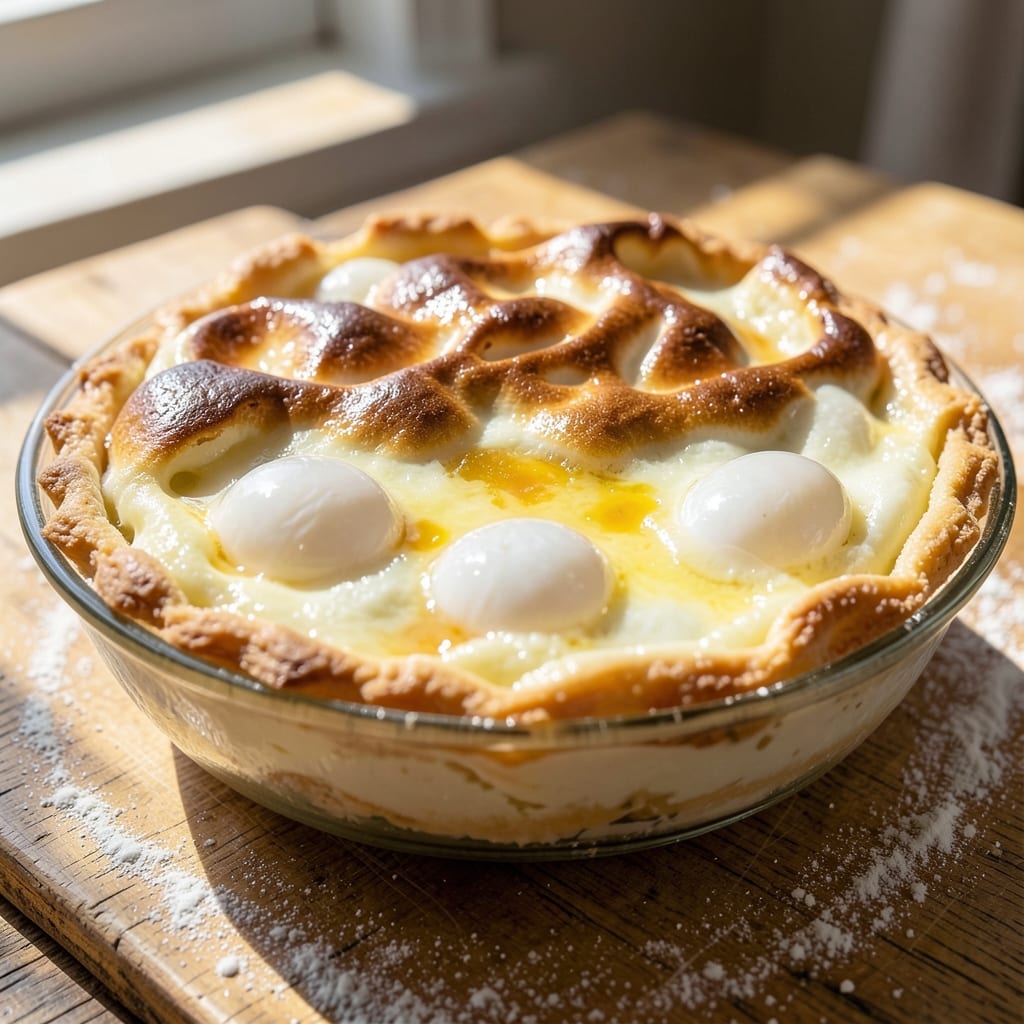
This buko egg pie recipe delivers the perfect balance of creamy coconut custard and chewy young coconut bits in every bite. 🌟 The secret lies in layering the buko pieces just right and achieving that signature golden-brown crust that's crispy yet tender. I've perfected this recipe over countless batches, ensuring each slice offers a delightful mix of textures and flavors that transport you straight to a tropical paradise.
The beauty of this dessert lies in its simplicity—just a few key ingredients transform into a showstopper that's perfect for gatherings or a special treat. The custard base is silky smooth, while the buko adds a satisfying chewiness that keeps everyone reaching for seconds. Whether you're making it for a celebration or just craving something sweet, this pie never fails to impress.
What makes this recipe truly special is the technique: mixing the custard to the right consistency and layering the buko evenly ensures every slice is packed with those little pockets of coconut goodness. The result is a pie with a firm yet tender crust that holds up beautifully, even when sliced.
Serve it warm or at room temperature, garnished with toasted coconut flakes for extra flair. This buko egg pie is the ultimate comfort dessert that's sure to become a family favorite. Let's get baking!
Ingredients for buko egg pie
Six ingredients transform into tropical perfection—creamy custard and chewy buko in every slice.
| Ingredient | Amount | Notes |
|---|---|---|
| Buko (Young Coconut Gelatin) 🥥 | 2 cups | Freshly drained, no liquid |
| Large Eggs 🥚 | 8 whole | Room temperature preferred |
| Granulated Sugar 🍚 | 1 ½ cups | White or brown sugar |
| Sweetened Condensed Milk 🥛 | 1 can | 14 oz can, unopened |
| All-Purpose Flour 🌾 | ½ cup | Sifted for smooth batter |
| Baking Powder 🍞 | 1 tsp | Aluminum-free preferred |
| Salt 🧂 | ½ tsp | Fine sea salt |
| Unsalted Butter 🧈 | ½ cup | Melted, full-fat |
| Vanilla Extract 🌸 | 1 tsp | Pure vanilla preferred |
| Shredded Coconut 🥥 | ¼ cup | Toasted for garnish |
| Whole Milk 🥛 | ½ cup | Room temperature |
| Cornstarch 🌾 | 1 tbsp | For custard thickness |
The buko is the star—freshly drained from a can (like Del Monte or Dole) gives the best texture. No liquid means no soggy pie! If you can't find pre-drained buko, rinse the canned version really well and drain thoroughly. The eggs should be room temperature—cold eggs make the custard lumpy. For the condensed milk, 14 oz cans are standard, but check the label if you're unsure. The butter matters here—full-fat, unsalted gives that rich flavor without extra sodium.
No vanilla extract? Vanilla bean paste works just as well—or even a teaspoon of vanilla sugar if you're in a pinch. Running low on cornstarch? Arrowroot powder at the same amount does the trick. The shredded coconut? Toast it in a dry pan for 2-3 minutes until golden—that aroma is worth the extra minute. For a gluten-free version, swap the flour for 0.5 cup gluten-free 1:1 blend. And if you're making this ahead, the custard actually tastes better the next day—trust me on this!
Store the unbaked pie in the fridge for up to 24 hours—great if you're prepping ahead. Once baked, it keeps 3 days at room temperature or 5 days in the fridge. Freeze the whole pie (unwrapped) for up to 2 months—thaw overnight in the fridge before serving. The best part? Leftovers reheat beautifully in the microwave for 10-15 seconds. Garnish with toasted coconut right before serving—that crunch is non-negotiable!
Why You'll Love This Recipe
- No Chopping Needed: I swear by this recipe because it’s one of those rare desserts where the prep is almost too easy—just drain the buko, crack eggs, and mix. No peeling, no dicing, no stress. The buko’s natural jelly-like texture does half the work for you.
- Creamy-Chewy Magic: That perfect balance of soft custard and chewy buko? It’s like a hug in dessert form. The condensed milk gives it a rich, caramelized sweetness, while the eggs create that silky, almost mousse-like center. Honestly, it’s the kind of texture combo that makes you close your eyes and take an extra bite.
- Party or Pajamas: This pie is my go-to for anything—birthday gatherings, lazy Sundays, or when I just need something sweet after dinner. The custard stays firm enough to slice neatly, but it’s still creamy enough to eat with a spoon. (Yes, even on a Tuesday night.)
- Leftovers? Please.: Between us, I always make a double batch because it reheats beautifully—just pop it in the microwave for 20 seconds, and it’s like it was just baked. Plus, the ingredients are budget-friendly, so I’m not hesitant to whip it up when cravings hit. It’s my secret weapon for feeding a crowd without breaking the bank.
Step-by-step instructions for buko egg pie
This creamy, dreamy pie delivers perfect silky texture every time—just follow my foolproof method!
👨🍳 Step 1: Prepare the Buko Filling
Drain the 2 cups buko (young coconut gelatin) thoroughly, pressing gently between paper towels to remove all excess liquid. This step is crucial—any moisture will make your custard watery. Transfer the drained buko to a large mixing bowl and set aside.
In a separate bowl, whisk together the 8 whole large eggs, 1.5 cups granulated sugar, 1 can sweetened condensed milk, 1 tbsp cornstarch, 1 tsp vanilla extract, and 0.5 tsp salt until completely smooth. The mixture should be pale yellow and uniform. I like to use a hand mixer for this—it ensures no lumps remain and incorporates air for a lighter texture.
Gently fold the egg mixture into the drained buko using a spatula. Be careful not to overmix—just combine until the buko pieces are evenly distributed. The filling should look like a thick, creamy custard with visible buko chunks. This is your signature layer that makes this pie special!
🍳 Step 2: Make the Coconut Cream Layer
In a medium saucepan, melt the 0.5 cup unsalted butter over low heat. Once melted, remove from heat and stir in the 0.5 cup all-purpose flour and 1 tsp baking powder to form a smooth paste. This is your roux base—it'll thicken beautifully when combined with the milk.
Return the pan to medium heat and gradually whisk in the 0.5 cup whole milk. Cook for 3-5 minutes, stirring constantly, until the mixture thickens enough to coat the back of a spoon. Then stir in the 0.25 cup shredded coconut and 1 tsp vanilla extract. The coconut should be evenly distributed—this layer gives the pie its rich, creamy texture.
Let the mixture cool slightly while you prepare your baking dish. I use a 9-inch pie dish for this recipe, but any oven-safe dish will work. The filling should be warm but not hot when you combine it with the buko layer—this prevents curdling.
🥘 Step 3: Assemble and Bake the Pie
Preheat your oven to 350°F. Carefully pour the coconut cream layer into the prepared pie dish, spreading it evenly. Then gently spoon the buko filling over the top, creating a marbled effect by swirling lightly with a spoon. This layering ensures each bite has both the creamy custard and coconut goodness.
Bake for 45-50 minutes until the edges are golden brown and the center is just set (it should still have a slight wobble—this indicates perfect custard texture). Here's the thing—don't overbake! You want that silky, jiggly center that makes this pie so irresistible. If the top browns too quickly, tent it loosely with aluminum foil after 30 minutes of baking.
When you remove it from the oven, let the pie cool completely at room temperature. This resting period allows the layers to fully set and the flavors to meld together. I know it's tempting to dig in right away, but patience here makes all the difference!
⏰ Step 4: Chill and Serve
Transfer the pie to the refrigerator and chill for at least 4 hours (overnight is even better). This chilling time is what transforms the pie into its perfect, creamy state. The custard will firm up while keeping that signature silky texture, and the coconut layer will set beautifully.
Before serving, run a knife around the edges to loosen it from the dish. Then, using a large plate, invert the pie onto it. Tap gently to release it—you want the buko pieces to stay intact and visible. Serve chilled slices with a sprinkle of toasted shredded coconut on top for that extra crunch and presentation.
The first bite should deliver that perfect balance of creamy custard, sweet buko, and rich coconut flavor. Each slice should be cool, smooth, and satisfyingly sweet—just like your favorite childhood dessert! This pie keeps well in the fridge for up to 5 days, so you can enjoy it over several days.
Pro Tips For Making Buko Egg Pie
- Drain Buko Well: I learned this the hard way—skimp on draining the buko, and your pie turns into a watery mess. Rinse the buko chunks in cold water, then squeeze them dry between paper towels (yes, even if they resist). The extra moisture makes the custard thin and sad.
- Whisk Eggs Cold: Room-temperature eggs? Skip it. Whisk the eggs straight from the fridge for a thicker custard—heat helps them emulsify better with the condensed milk. I used to ignore this, and the pie always ended up too runny.
- Skip Overmixing Batter: Lumpy batter is fine—overmixing makes the flour gummy and the texture off. Stir just until the flour disappears, then stop. The buko’s natural texture handles imperfections better than a perfectly smooth mix.
- Bake Until Set: The pie looks done at 15 minutes, but pull it at 18—it’ll finish cooking while cooling. Underbake it, and the center stays wet; overbake, and the top cracks. A toothpick should come out mostly clean (a few moist crumbs are okay).
Storing and reheating this dish
Fridge Storage Tips
Store your baked buko egg pie in an airtight container at 40°F or below for up to 5 days. The flavors actually deepen over time—this is why many Filipino families make it ahead for gatherings. I like using glass containers with snap-on lids (like Pyrex) because they keep the pie fresh and make slicing easy. Just
Freezer-Friendly Method
For longer storage, freeze the whole pie (unwrapped) in a ziplock freezer bag for up to 2 months. Thaw overnight in the fridge before serving—this preserves the creamy texture perfectly. I've found that freezing works best if you wrap the pie tightly in plastic wrap first, then place it in the bag. When reheating frozen slices, microwave for 15-20 seconds to restore that silky consistency.
Reheating Perfection
For best results, reheat individual slices in the microwave on 50% power for 10-15 seconds. This gentle approach prevents the custard from becoming grainy. If you prefer oven reheating, bake at 300°F for 10 minutes—this method gives a slightly crispier edge while keeping the inside creamy. Always add a splash of milk or coconut cream when reheating to restore moisture.
Garnish Refresh
Before serving reheated slices, always add fresh toasted coconut flakes—this restores that essential crunch. I keep a small jar of toasted coconut in my pantry specifically for this purpose. For extra flair, drizzle with caramelized coconut syrup (simmer ½ cup coconut milk with 2 tbsp sugar until thickened). This simple touch transforms reheated pie into something restaurant-worthy. ✨
Layer Preservation
To maintain the perfect custard-to-buko ratio when reheating, slice the pie before storing. This prevents the buko pieces from sinking to the bottom during reheating. For maximum freshness, store slices in a single layer with parchment paper between them. The buko pieces stay chewy and visible this way—just how you want them in every bite. 💫
Make-Ahead Hack
Prep the custard mixture up to 2 days ahead and store it in the fridge. The flavors meld beautifully overnight, and you can simply assemble and bake when ready. I often do this when hosting—it cuts my baking day stress in half. Just
Nutrition facts
Frequently asked questions
Can I use fresh coconut instead of canned buko?
Fresh coconut won't work the same way—buko refers specifically to the young coconut gelatin found in cans. For a similar texture, you could try shredded young coconut (soaked in water for 30 minutes then drained), but it won't have the same chewy consistency. The canned version is specially processed to create those signature bite-sized pieces.
Why did my custard turn grainy?
Overmixing or adding hot ingredients to cold eggs causes graininess. Always whisk eggs and sugar together first until fully dissolved, then gently fold in other ingredients. If your custard is already grainy, strain it through a fine-mesh sieve before adding to the buko. Also ensure your eggs are room temperature—cold eggs are more likely to curdle.
Can I make this pie without a pie dish?
Use a 9-inch round cake pan or even a loaf pan lined with parchment paper. For individual servings, try ramekins or custard cups—just reduce baking time to 30-35 minutes. The key is to ensure your container has at least 2-inch sides to hold the filling properly without overflowing.
How do I make it less sweet?
Reduce the sugar by 0.25 cup (use 1.25 cups total) and add 1 tbsp lemon juice to balance flavors. For a tangier version, replace 0.25 cup of condensed milk with plain yogurt. The buko's natural sweetness will still shine through, but the overall dessert will be more sophisticated. Taste as you mix!
What's the best way to serve it?
Serve chilled with toasted coconut flakes and a side of mango slices for contrast. For a festive touch, arrange slices on a platter with fresh mint leaves. The pie pairs beautifully with strong black coffee or coconut milk tea. Warm slices work too—just sprinkle with extra toasted coconut right before serving.