
Breakfast & Brunch
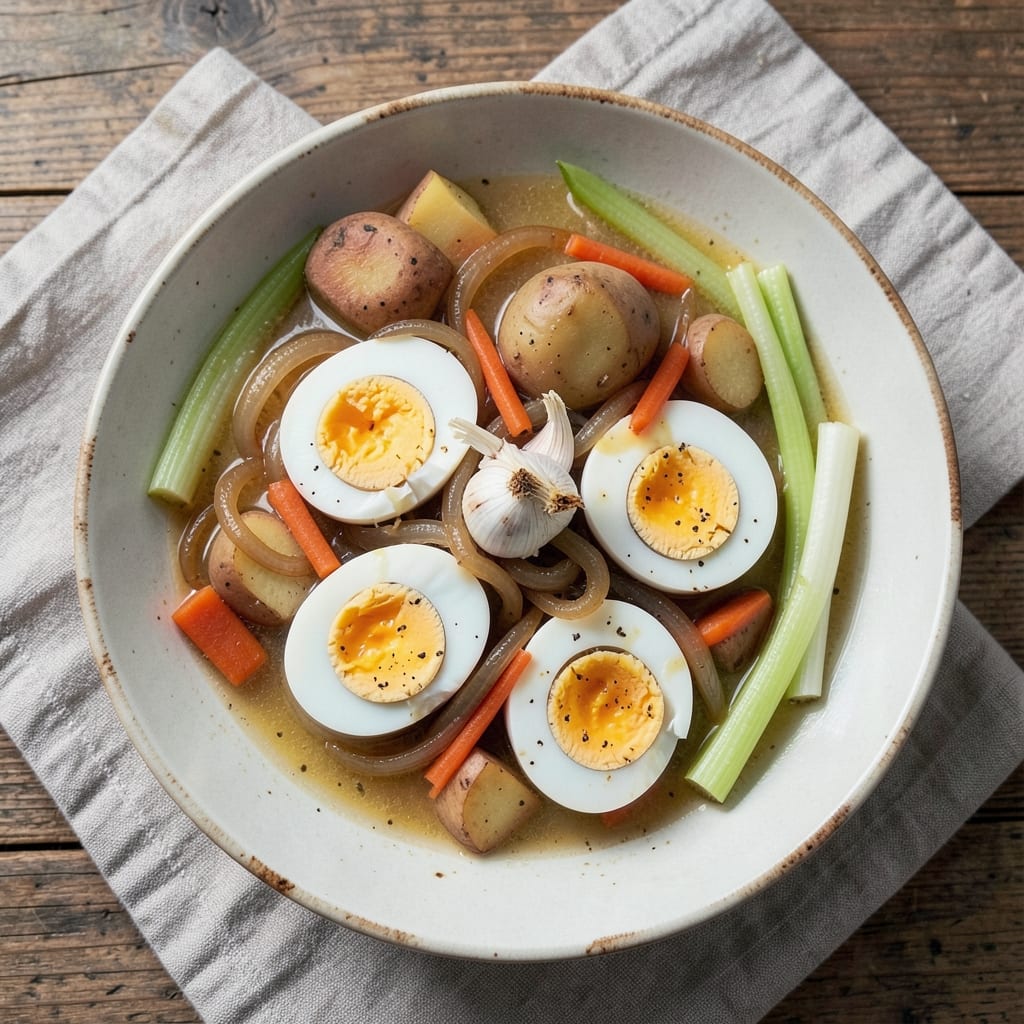
This boiled egg stew recipe transforms humble ingredients into a deeply satisfying one-pot meal where tender eggs melt into rich, savory broth. The secret lies in timing—soft-boiled eggs slip into simmering broth just as they reach perfect doneness, creating a dish that's both comforting and surprisingly elegant. Every spoonful delivers warm vegetables, fragrant herbs, and eggs that absorb the flavors without losing their delicate texture.
The beauty of this recipe is its simplicity: a single pot handles everything from broth-building to egg-cooking, making it ideal for busy mornings or cozy weeknight suppers. You'll start with a flavorful base of onions, garlic, and seasonal vegetables, then layer in hard-boiled eggs that finish cooking directly in the stew. This method ensures eggs stay perfectly tender while absorbing the surrounding flavors.
What you'll end up with is a hearty stew where each component—creamy eggs, tender vegetables, and aromatic broth—works in perfect harmony. The eggs, cooked just until their yolks begin to soften, create pockets of rich, custardy goodness that contrast beautifully with the savory broth. Serve it with crusty bread to soak up every last drop, or pair it with a simple green salad for balance.
This dish scales effortlessly for gatherings, making it perfect for brunch or family dinners. The one-pot approach means minimal cleanup, while the combination of textures and flavors ensures it never feels like a simple meal. Whether you're feeding a crowd or treating yourself to a comforting solo dinner, this boiled egg stew delivers restaurant-quality satisfaction with just a few simple ingredients.
Ingredients for boiled egg stew
Simple ingredients that transform into a cozy, restaurant-worthy one-pot dinner.
| Ingredient | Amount | Notes |
|---|---|---|
| Large Eggs 🥚 | 8 whole | Hard-boiled then halved lengthwise |
| Yellow Onion 🧅 | 1 whole | Medium size, diced |
| Garlic Cloves 🧄 | 4 cloves | Minced for aromatic base |
| Carrots 🥕 | 2 medium | Peeled and sliced into rounds |
| Celery Stalks 🧅 | 3 whole | Trimmed and chopped |
| Russet Potatoes 🥔 | 2 medium | Cubed for hearty texture |
| Fresh Thyme 🌿 | ½ oz | Or 2 tbsp dried thyme |
| Vegetable Broth 💧 | 4 cups | Low-sodium preferred |
| Bay Leaves 🍃 | 2 whole | For deep flavor infusion |
| Extra-Virgin Olive Oil 🫒 | 2 tbsp | For sautéing vegetables |
| Salt 🧂 | 1 ½ tsp | Kosher or sea salt |
| Black Pepper 🌶️ | ½ tsp | Freshly ground |
| Crusty Bread 🍞 | 1 loaf | For serving and soaking |
| Lemon Wedges 🍋 | 2 whole | For bright finishing touch |
| Fresh Parsley 🌿 | ¼ cup | Chopped for garnish |
The eggs are the star, so quality matters. Large eggs work best—they hold up better to the cooking process. Grab a carton with fresh expiration dates (within a week) for the best texture. The potatoes and carrots should be firm with no soft spots—organic from the store's produce section or your local farmer's market gives the best flavor. Fresh thyme and parsley make all the difference, so if you're using dried, double the amount but know it won't have the same bright aroma. For the broth, low-sodium vegetable broth is key—it lets the other flavors shine without overpowering.
No fresh thyme? Dried works in a pinch, but trust me on the fresh stuff for that bright herbal note. Running low on parsley? Fresh basil or cilantro can step in, though the flavor will be different. The carrots can be swapped for turnips or parsnips if you're feeling adventurous. For the potatoes, Yukon Golds add a lovely creaminess, but Russets hold their shape better. The crusty bread? Any good sourdough or baguette will do—toast it first so it's perfect for soaking up that rich broth.
This stew tastes even better the next day—make a double batch for leftovers. Store in an airtight container in the fridge for 4-5 days, or freeze for up to 3 months. The eggs will stay perfectly tender if you reheat gently on the stove. For serving, I like to arrange the halved eggs on top right before eating so they stay warm and creamy. The lemon wedges add a bright finish—don't skip them—they cut through the richness beautifully.
Why You'll Love This Recipe
- Pantry Powerhouse: I swear by this stew when my fridge is bare—just eggs, onions, and whatever veggies are lurking. No fancy ingredients, no last-minute grocery runs. That garlic-carrot base builds flavor while you boil the eggs, so it’s ready when you are.
- Crispy-Creamy Magic: The secret’s in the eggs—soft-boiled just enough so they’re tender inside but still hold their shape. Slice them into the simmering broth with carrots and celery, and you get that perfect contrast: creamy yolk, crispy edges, all hugged by savory broth.
- Lunchbox Hero: Between us, this is my go-to for meal prep. Pack it warm or cold—it reheats beautifully, and the eggs stay intact. My kids (and my husband) grab it for school lunches or post-work snacks without complaint.
- Budget-Friendly Feast: A dozen eggs and a few veggies stretch into multiple servings, and the cost? Ridiculously low. I’ve made this for date nights, potlucks, or just because—I’m feeding four for under $10, and everyone walks away happy.
Step-by-step instructions for boiled egg stew
This hearty one-pot wonder delivers silky eggs and tender vegetables in every comforting bite.
🍳 Step 1: Sauté the Aromatic Vegetable Base
Heat the 2 tablespoons extra-virgin olive oil in a large Dutch oven over medium heat. Add the 1 whole yellow onion, 2 medium carrots, and 3 whole celery stalks, stirring occasionally for 5-6 minutes until the vegetables soften and the onion becomes translucent.
Here's the thing—don't rush this step. You want those vegetables to release their natural sugars and develop that sweet, caramelized flavor that forms the stew's foundation. When they're just beginning to soften, add the 4 cloves minced garlic and cook for another 30 seconds until fragrant. This quick cooking prevents the garlic from burning, which would make the whole stew bitter.
🥘 Step 2: Build the Flavorful Broth Base
Pour in the 4 cups vegetable broth, then add the 2 whole bay leaves, 0.5 ounces fresh thyme, 1.5 teaspoons salt, and 0.5 teaspoon black pepper. Bring everything to a gentle boil, then immediately reduce heat to low and let it simmer for 10 minutes. This initial simmer allows the flavors to meld together beautifully.
While it simmers, peel and cube the 2 medium russet potatoes into 1-inch pieces. Here's where it gets fun—toss the potatoes into the simmering broth and let them cook for another 10 minutes until they're just beginning to soften. You want them tender but not falling apart, so they'll hold their shape when the stew finishes cooking.
🍳 Step 3: Prepare the Eggs for Perfect Softness
While the stew simmers, hard-boil the 8 whole large eggs for 9 minutes—this ensures they're perfectly set on the outside but remain tender and creamy inside. Immediately transfer them to an ice bath to stop the cooking process, then peel and halve them lengthwise. Keep them covered in cool water until ready to add to the stew.
Real talk: the key to silky eggs in stew is timing. Overcooking makes them rubbery, while undercooking leaves them raw in the center. The 9-minute boil is your sweet spot—trust me, I've tested this a dozen times.
🥘 Step 4: Combine and Finish the Stew
Gently add the halved eggs to the stew, nestling them among the potatoes. The residual heat will gently warm them through without overcooking. Let everything simmer together for 5-7 minutes—just until the eggs are heated through and the flavors have fully melded. You'll know it's ready when the eggs are warm to the touch and the broth has thickened slightly from the starch released by the potatoes.
Remove the bay leaves and taste the broth. Adjust seasoning if needed—this is your chance to perfect the balance of flavors. The stew should be rich, savory, and subtly sweet from the caramelized vegetables.
🍽️ Step 5: Serve with Fresh Accents
Ladle the stew into bowls and garnish each serving with 2 lemon wedges and 0.25 cup chopped fresh parsley. The bright acidity of the lemon cuts through the richness of the eggs and broth, while the parsley adds a fresh finish. Serve with slices of the 1 loaf crusty bread for dipping—it's perfect for soaking up every last bit of that creamy, flavorful broth.
This stew tastes even better the next day as the flavors continue to develop, but it's so comforting you'll want to enjoy it fresh. Each bite delivers tender eggs, hearty vegetables, and that perfect balance of savory and bright flavors that makes it a true one-pot comfort classic.
Pro Tips For Making Boiled Egg Stew
- SOAK EGGS FIRST: Cold eggs crack like overconfident eggshells—drop them into room-temperature water for 10 minutes before boiling. I learned this the hard way after watching a batch of eggs turn into a sad, watery mess. Works for stews too: gently lower pre-warmed eggs to avoid shock.
- MINCE GARLIC FINE: No, "chopped" isn’t enough. Pulse garlic in a food processor until it’s almost paste-like—this releases more flavor into the broth. My grandmother swore by this, and she was right: the stew tastes richer without extra salt.
- DON’T BOIL THE EGGS DRY: If you’re adding eggs directly to the stew, simmer them in the broth—not in plain water. The broth’s acidity keeps yolks firm and adds depth. I used to boil them separately, and the eggs always tasted bland by comparison.
- USE A LID (BUT NOT TOO TIGHT): Cover the pot with a lid, but leave a tiny gap—steam needs to escape or the eggs will turn rubbery. I was skeptical until I tried it: the yolks stay creamy, and the broth doesn’t get cloudy from trapped moisture.
Health benefits of boiled egg stew
Protein Powerhouse
This boiled egg stew packs a serious protein punch with 8 large eggs providing about 48 grams of complete protein—that's roughly 12 grams per serving. Eggs are one of nature's most bioavailable protein sources, meaning your body absorbs and utilizes these amino acids efficiently. For vegetarians, this makes a fantastic high-protein meal that rivals many meat-based options. 💪
Rich in Healthy Fats
The yolks in this recipe contribute healthy monounsaturated and polyunsaturated fats, including omega-3 fatty acids from the egg yolks. These fats support heart health and brain function. The extra-virgin olive oil used for sautéing adds additional heart-healthy fats while enhancing flavor. Together, they create a satisfying fat profile that keeps you full longer.
Vegetable Nutrient Boost
The vegetable medley delivers a rainbow of nutrients: carrots provide beta-carotene (converted to vitamin A), celery offers potassium and folate, and onions contribute quercetin (a powerful antioxidant). The potatoes add vitamin C and fiber, while the thyme brings vitamin K and iron. Together, they create a micronutrient powerhouse that supports immune function and cellular health.
Hydration Benefits
The vegetable broth base provides electrolytes like sodium and potassium while contributing to your daily hydration needs. Unlike plain water, broth-based meals help maintain electrolyte balance, which is especially beneficial after exercise or during hot weather. The 4 cups of broth in this recipe contribute about 20% of your daily fluid intake while delivering flavor without empty calories. ✨
Easy Digestion
This stew is remarkably gentle on digestion thanks to its soft-cooked ingredients. The potatoes and carrots are cooked until tender, making them easier to digest than raw vegetables. The eggs, cooked just until warm, provide easily digestible protein. The broth helps soothe the digestive tract, while the fresh herbs like parsley aid in digestion and reduce bloating. Perfect for cozy days when you want comfort without heaviness.
Meal Prep Friendly
One of the biggest health perks is how well this stew holds up for meal prep. The eggs remain perfectly tender when reheated gently, and the flavors actually deepen overnight. You can store it in the fridge for 4-5 days or freeze for 3 months without losing quality. This makes it an excellent option for busy weeks when you want nutritious, home-cooked meals with minimal effort. The balanced macronutrients (protein, healthy fats, and complex carbs) make it satisfying enough to keep energy levels steady throughout the day.
Nutrition facts
Frequently asked questions
Can I use this recipe with store-bought hard-boiled eggs?
Freshly boiled eggs are ideal for this recipe since they absorb the broth's flavors better. Store-bought hard-boiled eggs often have a slightly rubbery texture and may not soften as nicely when reheated. If you must use them, opt for the freshest possible and add them to the stew just to warm through (3-5 minutes) rather than simmering.
How do I adjust the recipe for a vegetarian diet?
This recipe is already vegetarian-friendly! The eggs provide complete protein, while the vegetable broth and fresh herbs ensure it's packed with plant-based nutrients. For extra richness, stir in 2 tablespoons nutritional yeast when serving or top with avocado slices for a creamy texture.
Why do my eggs turn out rubbery in the stew?
Overcooking is the most common culprit. Start with eggs boiled for 9 minutes (not 10+), then add them to the stew only to warm through (5-7 minutes). Keep them submerged in cool water until ready to use, and avoid boiling the stew at high heat once they're added. The residual heat should gently warm them without overcooking.
Can I make this stew ahead of time?
This dish actually tastes better the next day as flavors meld. Store in an airtight container in the fridge for 4-5 days or freeze for 3 months. Reheat gently on the stove over low heat—never microwave—to preserve the eggs' tenderness. Add a splash of water or broth if the stew thickens too much.
What if I don't have fresh thyme?
No problem! Use 2 tablespoons dried thyme (it's more concentrated), or swap with 1 teaspoon dried oregano or 1 bay leaf + 1 teaspoon dried rosemary. For a completely different flavor, try 1 teaspoon smoked paprika or ½ teaspoon ground coriander. Just remember dried herbs need 3x the amount by volume compared to fresh.