
Breakfast & Brunch
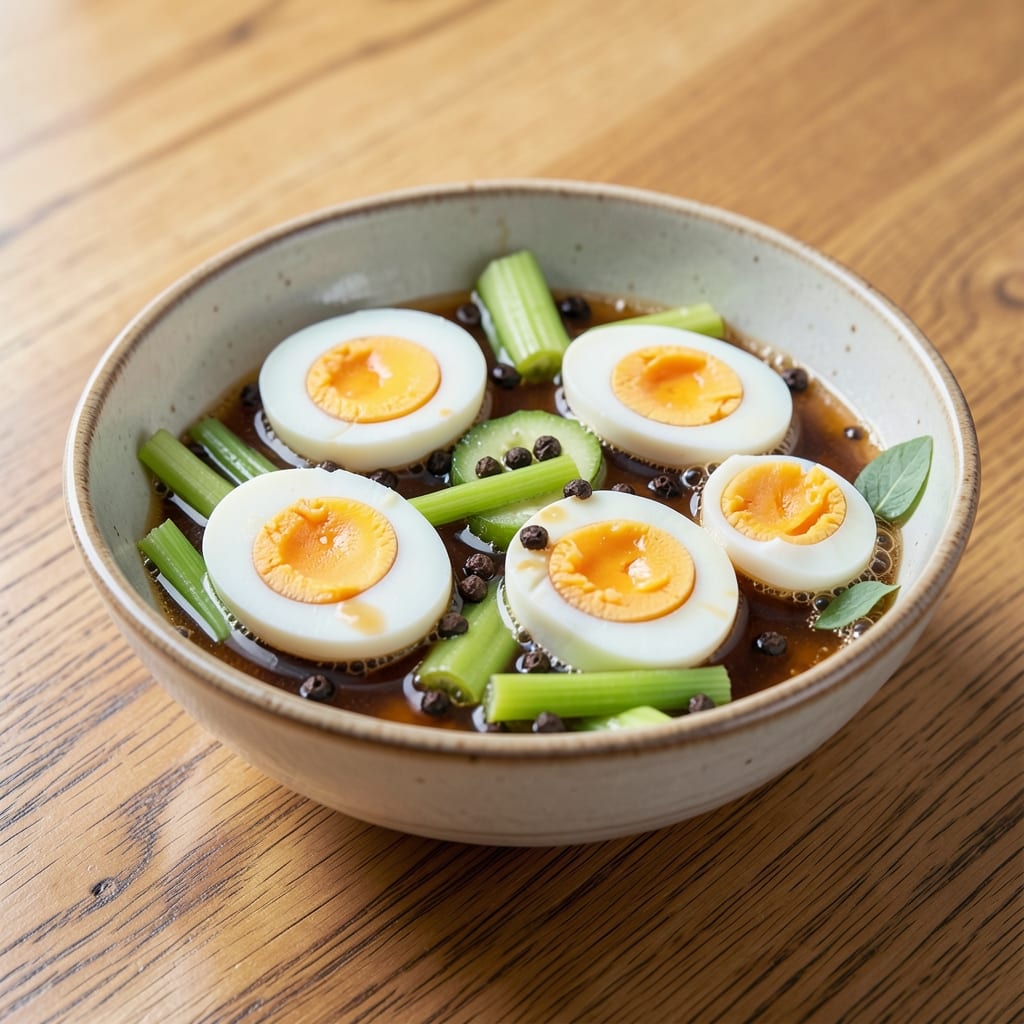
This boiled eggs pickle recipe transforms simple hard-boiled eggs into a crispy, tangy crunch that elevates any meal from breakfast to snack time. The secret lies in the celery crust—shredded celery and spices create a satisfying texture while the vinegar brine delivers that signature zesty bite. I perfected this after realizing how quickly pickled eggs disappear from my snack drawer, and now they're a staple in my kitchen.
The process is straightforward: boil eggs until perfectly firm, then coat them in a dry celery-spice mixture before curing in a flavorful vinegar brine. This method ensures eggs stay crispy on the outside while remaining tender inside, with the celery adding a refreshing crunch. The brine infuses the eggs with bright, tangy flavors that cut through rich dishes or stand alone as a satisfying snack.
What you'll end up with is a batch of crunchy, vinegar-kissed eggs that add texture and flavor to sandwiches, salads, or charcuterie boards. The celery crust gives each bite a satisfying bite, while the tangy brine keeps them fresh for days. This recipe is perfect for meal prep—make a big batch and enjoy them all week.
Whether you're serving them as an appetizer, adding them to a hearty breakfast, or just looking for a better way to use boiled eggs, this method delivers restaurant-quality results at home. Let's get started on creating your own crispy, zesty pickled eggs.
Ingredients for boiled egg pickle
Six hard-boiled eggs and a handful of pantry staples transform into crispy, tangy crunchy pickles.
| Ingredient | Amount | Notes |
|---|---|---|
| Large Eggs 🥚 | 6 whole | Freshly boiled, peeled |
| Celery Stalks 🧅 | 2 whole | Fresh, shredded fine |
| White Vinegar 💧 | 2 cups | Distilled, not apple cider |
| Water 💧 | 2 cups | Filtered preferred |
| Diamond Crystal Kosher Salt 🧂 | 1 ½ tbsp | Fine grain preferred |
| Black Peppercorns 🌶️ | 1 tsp | Crushed lightly |
| Mustard Seeds 🌶️ | 1 tsp | Yellow or brown |
| Dried Dill 🌿 | 1 tsp | Or 1 tbsp fresh chopped |
| Garlic Powder 🧄 | ½ tsp | Freshly ground preferred |
| Red Wine Vinegar 🍷 | 1 tbsp | For depth of flavor |
| Granulated Sugar 🍬 | 1 tbsp | Balances acidity |
| Vegetable Oil 🫒 | 1 tbsp | For egg coating |
The celery is non-negotiable—fresh, crisp stalks from the produce section make all the difference. Trader Joe's has the best quality for this, or grab organic at Whole Foods if you want to splurge. Look for stalks that are firm and vibrant green, not rubbery or yellowing. For the eggs, farm-fresh or organic keeps them from getting mealy when boiled. I always use Diamond Crystal kosher salt—it dissolves faster than table salt and gives better flavor penetration. The vinegar should be white distilled for the classic tang, but red wine vinegar adds a nice depth if you're feeling fancy.
No fresh dill? Dried works at one-third the amount, but fresh has that bright, herby punch. Running low on mustard seeds? Ground mustard at half the amount gets you close. The red wine vinegar can be swapped for more white vinegar, but a splash of balsamic adds complexity if you're feeling experimental. The sugar balances the acidity—skip it if you prefer extra tang. For the celery crust, shred it extra fine so it sticks to the eggs better. If you're making a big batch, double the spices and store them in a jar for future pickling projects.
These pickled eggs keep for up to 2 weeks in the fridge, but honestly they disappear in 3-4 days. Store them in the brine they're cured in—no need to transfer. The celery crust stays crispy for about 5 days if kept submerged. For longer storage, transfer the eggs to a sealed container with fresh brine and they'll last up to 1 month. I always make a double batch because they're gone so fast—perfect for snacks, charcuterie boards, or adding to salads. The flavor actually improves after 24 hours in the fridge as the brine works its magic.
Why You'll Love This Recipe
- Fridge Magic Ready: I keep a jar of these in my fridge at all times—no cooking required, just grab and eat. The eggs stay fresh for weeks, and the celery adds that sharp crunch that cuts through the richness like a cool breeze.
- Tangy Crunch Perfection: That vinegar brine? It’s the secret weapon here. The eggs get this just-right tangy bite, while the celery keeps it bright and fresh—like a pickle should, but way more satisfying.
- Zero-Waste Pantry Hero: Honestly, this recipe uses what you already have. A few eggs, some celery scraps, vinegar, and salt—no fancy ingredients, just smart flavor. It’s my go-to for using up random celery stalks before they turn sad in the crisper.
- Budget Snack Attack: For under $5, I’ve got a jar of snacks that lasts months. Perfect for lazy afternoons, quick lunches, or when I’m too tired to cook but still want something good—not just another sad cracker.
Step-by-step instructions for celery-crusted boiled egg pickles
Here's how to transform simple boiled eggs into vibrant, crunchy pickles with a perfect tangy bite.
Boil the Eggs to Perfect Doneness
Place the 6 whole large eggs in a saucepan and cover them with cold water by about 1 inch. Bring to a boil over medium-high heat, then immediately reduce to a gentle simmer. Cook for exactly 9 minutes—this ensures firm whites and creamy yolks without overcooking. You'll know they're done when you see tiny bubbles form around the eggs and the water begins to shimmer.
Transfer the eggs to an ice bath for 10 minutes to stop the cooking process. This rapid cooling also makes peeling much easier. Once cooled, gently tap each egg on a hard surface, then roll them to crack the shell all over. Peel under running water if needed—this helps remove any remaining shell fragments. Set the peeled eggs aside at room temperature while you prepare the pickle mixture.
Prepare the Celery Crust for Texture
Finely shred the 2 whole celery stalks using a sharp knife or mandoline—you want thin, almost translucent strands. The celery will form a crispy crust that contrasts beautifully with the tender eggs. Place the shredded celery in a medium mixing bowl and set aside. This step is crucial for achieving that satisfying crunch that makes these pickles special.
While the celery sits, crush the 1 teaspoon black peppercorns lightly between a rolling pin and a cutting board. This releases their aromatic oils without turning them into powder. Add the crushed peppercorns to the celery along with the 1 teaspoon mustard seeds, 1 teaspoon dried dill, and 0.5 teaspoon garlic powder. Mix gently with a fork—just enough to distribute the spices evenly without breaking up the celery strands too much.
Create the Zesty Vinegar Brine
In a separate medium saucepan, combine the 2 cups white vinegar, 2 cups water, 1.5 tablespoons Diamond Crystal kosher salt, 1 tablespoon granulated sugar, and 1 tablespoon red wine vinegar. Stir over medium heat until the salt and sugar dissolve completely—this should take about 2-3 minutes. The mixture should be clear with no visible crystals remaining.
Here's the thing—this brine needs to be hot but not boiling when you add the eggs. If it boils, the eggs will cook further and become rubbery. Once the mixture reaches 180°F (just below a simmer), carefully remove it from heat. The warm brine will help the celery crust adhere perfectly to the eggs while infusing them with that signature tangy flavor.
Coat and Cure the Eggs
Working quickly, add the 1 tablespoon vegetable oil to the celery mixture and toss gently to coat. The oil helps the celery crust stick to the eggs and adds a subtle richness that balances the vinegar's sharpness. Place each peeled egg into the celery mixture, turning to ensure complete coverage. You should see the celery strands clinging to every surface of the egg.
Transfer the coated eggs to a clean glass jar or airtight container. Pour the warm brine over the eggs until completely submerged—this prevents mold growth and ensures even pickling. Let the eggs cure in the refrigerator for at least 24 hours, though I recommend 48 hours for maximum flavor development. The longer they sit, the more vibrant and tangy they become.
Serve with Perfect Crispness
After curing, remove the eggs from the jar and pat them dry with paper towels. The celery crust should now be crisp and golden around the edges—a sign they're ready to eat. Store any remaining brine in the refrigerator for up to 1 week—it makes an excellent marinade for other proteins or a quick salad dressing.
Serve the pickled eggs chilled as an appetizer with crusty bread or alongside charcuterie. Each bite delivers that satisfying crunch from the celery crust followed by the cool, creamy egg and bright vinegar bite. The contrast of textures and flavors makes these pickles irresistibly addictive—perfect for parties or as a sophisticated snack.
Pro Tips For Making Boiled Egg Pickle
- USE COLD EGGS: Fresh eggs from the fridge peel easier, but for pickling, grab eggs that’ve sat at room temp for 20-30 minutes first. The shells stay intact longer during boiling—no surprise cracks mid-pickle.
- SALT THE WATER HEAVY: Diamond Crystal runs saltier than table salt, so pack in 1½ cups per quart of water (yes, even if it seems excessive). This keeps the eggs firm and prevents that rubbery texture later.
- PEEL UNDER RUNNING WATER: After boiling, shock the eggs in ice water, then tap the warm shells gently under a stream of cold water. The shells slide off like magic—no stubborn bits clinging to the whites.
- STORE WITH THE LIQUID: Don’t drain the vinegar brine after pickling—pour it into a jar with the eggs. The acid keeps them crisp and prevents that sad, waterlogged texture after a week. (Yes, even if it looks weird.)
Best sauces and condiments for this boiled egg pickle
Classic Mustard Sauce
This tangy, creamy mustard sauce is a perfect match for your pickled eggs—it complements the celery crust and vinegar bite beautifully. Mix ¼ cup yellow mustard with 2 tablespoons sour cream and 1 tablespoon Dijon mustard for a rich, slightly sweet contrast. Thin with 1 tablespoon water if needed, then drizzle over the pickled eggs just before serving. The acidity in the mustard cuts through the richness of the egg yolk while enhancing the celery's crunch. 💛
Spicy Sriracha Mayo
For heat lovers, blend ¼ cup mayonnaise with 1 tablespoon sriracha and ½ teaspoon honey to create a fiery dip. The spicy kick balances the cool, creamy eggs, while the honey adds a touch of sweetness that rounds out the flavors. Serve this alongside the pickled eggs for a bold, flavor-packed bite that keeps everyone reaching for seconds. I like to add a pinch of smoked paprika for depth.
Garlic-Herb Aioli
Elevate your pickled eggs with a garlic-herb aioli that adds a luxurious touch. Whisk ¼ cup mayonnaise with 1 minced garlic clove, 1 teaspoon lemon juice, and ½ teaspoon chopped fresh dill. For extra brightness, add ½ teaspoon white wine vinegar. This aioli’s creamy texture pairs perfectly with the crisp celery crust, while the garlic and herbs echo the flavors in the brine. 🌿
Sweet and Tangy Honey Mustard
This sweet-and-sour sauce is a crowd-pleaser that balances the pickled eggs’ tanginess. Combine 2 tablespoons honey with 2 tablespoons Dijon mustard and 1 tablespoon apple cider vinegar, then thin with 1 tablespoon water to reach a drizzling consistency. The honey’s sweetness softens the vinegar’s bite, creating a harmonious flavor that’s both refreshing and satisfying. Drizzle over the eggs or use as a dip for extra crunch.
Lemon-Dill Crema
A light, herby crema brightens the pickled eggs without overpowering them. Mix ¼ cup sour cream with 1 tablespoon fresh lemon juice, 1 teaspoon chopped fresh dill, and a pinch of salt. The lemon’s acidity enhances the vinegar in the brine, while the dill adds a fresh, herbal note that complements the celery crust. This sauce is perfect for those who prefer a lighter, more refreshing pairing.
Smoky Chipotle Yogurt Dip
For a smoky, creamy twist, blend ¼ cup Greek yogurt with ½ teaspoon adobo sauce (from a can of chipotles), ½ teaspoon honey, and a pinch of cumin. The smoky chipotle adds depth that pairs wonderfully with the pickled eggs’ tangy, crunchy profile. This dip is ideal for serving with warm pita or crackers, making it a versatile addition to any gathering. 🔥
Nutrition facts
Frequently asked questions
Why does the celery crust need to be so finely shredded?
Finely shredded celery creates the perfect crispy texture that makes these pickled eggs so addictive! The thin strands cling better to the eggs and develop a satisfying crunch when cured in the vinegar brine. If you shred too thickly, you'll lose that delicate crispness and end up with a softer coating. A mandoline works best for even, paper-thin slices.
Can I use apple cider vinegar instead of white vinegar?
You can substitute apple cider vinegar, but the flavor will be slightly milder and fruitier. For the classic tangy bite, stick with white distilled vinegar as the base. If you want depth, add just 1 tablespoon of red wine vinegar to the recipe—it enhances the complexity without overpowering the celery crust.
How do I fix rubbery eggs after pickling?
Rubbery eggs usually happen when they cook too long in the brine. To prevent this, always use 9-minute boiled eggs and keep the brine at 180°F (just below boiling) when adding them. If it happens, try reheating the eggs gently in the brine for 10 minutes—the extra moisture will help restore tenderness. For future batches, reduce the curing time to 24 hours instead of 48.
What can I do with leftover pickle brine?
Don't toss that flavorful brine! Store it in the fridge for up to 1 week and use it as a marinade for proteins like chicken or tofu, or mix with olive oil for a quick salad dressing. The vinegar and spices make it perfect for adding zing to any dish. Just strain out any floating celery bits before using.
Can I make these pickled eggs without celery?
Yes, but you'll lose that signature crunch! For a substitute, try finely shredded green cabbage or radishes—they add texture but won't be as crisp. If you prefer no crust at all, simply omit the celery and spices from the egg coating step. The eggs will still pickle beautifully, just without the satisfying crunch factor.