
Soups & Stews
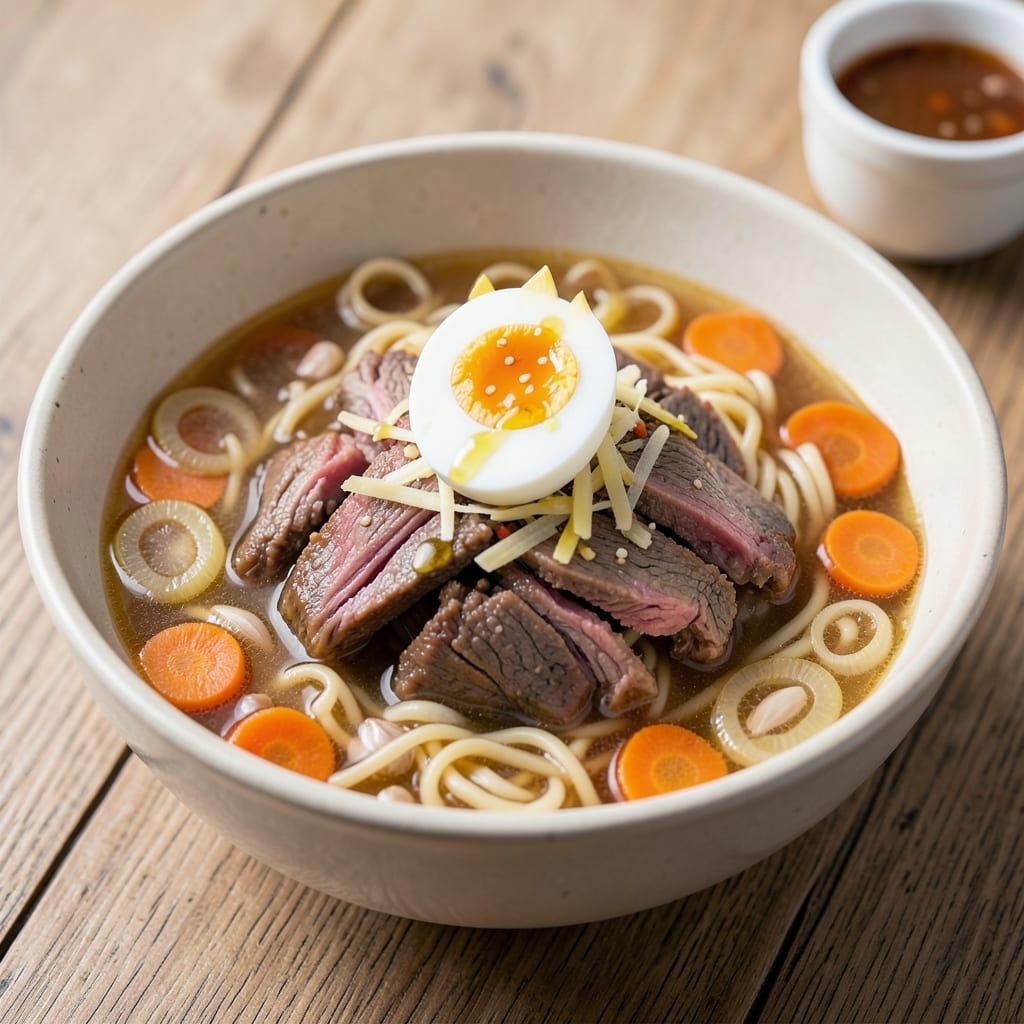
This beef egg noodle soup recipe delivers the kind of deeply satisfying bowl that warms you from the inside out. 💛 The secret lies in a slow-simmered broth packed with umami-rich beef and aromatic vegetables, where every spoonful carries layers of savory depth. I've perfected this version over years of testing—balancing tender beef, silky egg noodles, and delicate poached eggs to create harmony in every bite.
The foundation starts with a rich, slow-cooked beef broth that transforms tough cuts like brisket or shank into melt-in-your-mouth tenderness. We'll build flavor through caramelized aromatics and a splash of soy sauce, while fresh ginger and garlic add brightness. The egg noodles cook just until al dente, so they maintain their satisfying bite even after soaking up the flavorful broth.
What sets this recipe apart is the perfect poached egg—runny yolk and firm whites that cut through the rich broth like a silken ribbon. The eggs are poached directly in the hot soup, ensuring they stay warm and creamy without overcooking. Garnished with scallions and a drizzle of sesame oil, each bowl becomes a symphony of textures and flavors that taste like home.
Whether you're preparing for a chilly evening or need comfort food fast, this soup delivers restaurant-quality results with minimal effort. The broth can be made ahead and reheated, while the eggs are added fresh at serving—meaning you can have a steaming bowl ready in under 30 minutes. Let's get started on creating this timeless classic.
Ingredients for beef egg noodle soup
Pantry staples meet restaurant-quality broth in this comforting beef egg noodle masterpiece.
| Ingredient | Amount | Notes |
|---|---|---|
| Beef Brisket or Shank 🥩 | 1 ½ lb | Tough cut for rich broth |
| Egg Noodles 🍜 | 8 oz | Fresh or dried, al dente |
| Large Eggs 🥚 | 4 whole | Fresh, room temperature |
| Yellow Onion 🧅 | 1 whole | Medium size, sliced |
| Carrots 🥕 | 3 medium | Peeled, chopped into chunks |
| Garlic Cloves 🧄 | 6 cloves | Minced, fresh preferred |
| Fresh Ginger 🌿 | 1 inch | Thinly sliced, peeled |
| Low-Sodium Soy Sauce 🍶 | 2 tbsp | For umami depth |
| Vegetable Oil 🫒 | 2 tbsp | For caramelizing aromatics |
| Dried Parsley 🌿 | 1 tbsp | For garnish, chopped |
| Sesame Oil 🫒 | 1 tbsp | For finishing, toasted |
| Scallions 🧅 | 3 whole | Thinly sliced, green parts |
| Water 💧 | 8 cups | Enough for 6 cups broth |
| Salt 🧂 | 1 ½ tsp | Kosher or sea salt |
| Black Peppercorns 🌶️ | ½ tsp | Freshly cracked |
The beef is everything here—brisket or shank gives you that deep, slow-cooked flavor. Costco or Whole Foods carry great cuts, but any butcher will have what you need. Look for good marbling—it melts into the broth for richness. Fresh ginger and garlic are non-negotiable (the frozen stuff just won't cut it), so grab them from the produce section. For the noodles, fresh egg noodles from the Asian market section are ideal, but dried works too—just cook them al dente. The soy sauce? Low-sodium so you control the saltiness.
No brisket? Chuck roast or short ribs work just as well—just increase cooking time. Fresh ginger too pricey? Powdered ginger at half the amount gets you close. The sesame oil can be swapped for a drizzle of toasted peanut oil if you're avoiding sesame. For the scallions, the green parts are what you want—white parts are tough. The broth should reduce to about 6 cups—if it's too thin, simmer uncovered. And if you're making this ahead, cool the broth quickly in an ice bath before storing to prevent bacteria growth.
This soup tastes even better the next day—make a double batch and freeze half for those lazy evenings. Store the broth (without noodles or eggs) for up to 5 days in the fridge or 3 months frozen. The noodles cook in minutes when reheating, and the eggs go in fresh at serving. Garnish with scallions and sesame oil right before eating—that's when the magic happens. Leftovers? Portion into containers with a little extra broth to keep them moist.
Why You'll Love This Recipe
- One-Pot Magic: I swear by this recipe because it’s actually one-pot—no chopping boards to clean, no extra pans. Just a big pot, the brisket (or shank) simmering with onions and carrots, then noodles and eggs at the end. The broth reduces right there, and you’re left with one thing to wash.
- Rich Without Effort: Here’s what sold me—the beef gets fork-tender on its own, so the broth becomes deeply flavorful with just salt, pepper, and a splash of soy sauce. Then you crack in those eggs at the end, and suddenly it’s creamy, savory, and ridiculously satisfying. No fancy sauces needed.
- Weeknight to Potluck: This soup is my go-to for lazy nights and when I’m bringing something to a gathering. Double the batch, and it’s still easy to reheat—just add a splash of water. The egg noodles hold up perfectly, and the eggs add that restaurant-style finish no matter when you serve it.
- Budget-Friendly Feast: Between us, this is my secret weapon for stretching a meal. A pound of beef, a few veggies, and a handful of noodles feed four for under $10. The leftovers? Even better cold the next day—just reheat and crack in fresh eggs. Minimal cost, maximum comfort.
Step-by-step instructions for beef egg noodle soup
This hearty soup comes together with simple steps that build deep flavor layer by layer.
🔥 Step 1: Sear the Beef for Rich Broth
Pat the 1.5 lb beef brisket or shank dry with paper towels and cut into 2-inch chunks. Heat 2 tbsp vegetable oil in a large pot over medium-high heat until shimmering. Add the beef in batches and sear for 3-4 minutes per side until deeply browned—this creates the flavor foundation.
Don't crowd the pan or the temperature will drop. You'll know it's ready when the beef releases easily from the pot and has a rich, caramelized crust. Remove the beef and set aside. Here's the thing—those browned bits are pure umami gold, so don't scrape them out.
🍳 Step 2: Build the Aromatic Base
In the same pot, add the sliced yellow onion, chopped carrots, minced garlic cloves, and sliced fresh ginger. Cook over medium heat for 5-6 minutes, stirring occasionally, until the vegetables soften and the mixture smells fragrant.
Add the 2 tbsp low-sodium soy sauce and 1.5 tsp salt, stirring to combine. Pour in the 8 cups water and bring to a boil. Scrape up any browned bits from the bottom with a wooden spoon—this releases even more flavor into the broth.
🔥 Step 3: Simmer the Beef Until Tender
Return the seared beef to the pot. Add the 0.5 tsp cracked black peppercorns and bring to a gentle boil. Once boiling, reduce heat to low and cover partially. Simmer for 1.5-2 hours until the beef is fork-tender and easily pulls apart.
Here's the moment that matters: skim off any foam that rises to the surface during the first 30 minutes of simmering. This keeps your broth clear and clean. The beef should be so tender that a fork slides through it with minimal resistance when checked at the 1.5-hour mark.
🍳 Step 4: Prepare the Silky Egg Mixture
While the beef cooks, prepare the egg mixture. In a small bowl, lightly beat the 4 large eggs with a fork until just combined—don't overbeat or you'll get scrambled eggs instead of silky ribbons. Keep this mixture at room temperature.
Just before serving, remove the beef from the broth using tongs and set it aside. Strain the broth through a fine-mesh sieve into a clean pot to remove any impurities. Return the broth to medium heat until it's steaming gently—this prevents the eggs from curdling when added.
🥘 Step 5: Finish and Assemble the Soup
Add the 8 oz egg noodles to the hot broth and cook for 4-5 minutes until al dente. In a separate small bowl, gently stir the beaten eggs with 1 tbsp sesame oil and 1 tbsp dried parsley. Slowly ladle about 1 cup of hot broth into the egg mixture while whisking constantly—this creates silky ribbons.
Return the egg mixture to the pot with the noodles and beef. Stir gently to combine, then divide among bowls. Garnish each serving with sliced scallions and a drizzle of additional sesame oil. The contrast of warm broth, tender beef, silky eggs, and fresh garnishes makes every spoonful perfect.
Pro Tips For Making Beef Egg Noodle Soup
- Sear the Beef First: Don’t just toss raw brisket or shank into simmering broth—get a deep, dark crust on it first. After browning, scrape up those fond bits with a wooden spoon and add them to the pot. That’s where half the flavor hides, and skipping it means a duller soup.
- Cut Carrots Uniformly: Big chunks take forever to soften, while tiny dice turn to mush. Aim for ½-inch rounds or matchsticks—thick enough to hold shape but thin enough to cook through in the same time as the beef. I learned this the hard way when my carrots turned to soup before the meat did.
- Slip Eggs In Last: Poach the eggs directly in the hot broth for 3-4 minutes—no need to pre-boil. The soup’s heat will gently cook them while keeping the yolks runny, and you avoid the sad, rubbery eggs that happen when they sit in cold water too long. Just lift them out with a slotted spoon when serving.
- Salt the Broth Early: Add salt with the beef, not after the noodles go in. The broth needs time to fully season before the noodles absorb some of it. If you wait, you’ll end up guessing how much to add later—and underseasoned soup is a crime. Trust me, your taste buds will notice.
Serving suggestions for this recipe
Garnish Like a Pro
Fresh scallions sliced thinly add a bright, crisp finish that cuts through the rich broth. I like to use about 3 whole scallions per bowl, reserving the green parts for their milder flavor. For extra flair, sprinkle 1 tsp dried parsley over each serving right before eating—it adds a pop of color and freshness. A final drizzle of sesame oil (about ½ tsp per bowl) enhances the nutty aroma and ties all the flavors together beautifully. 🌿
Bread Pairings
This soup pairs perfectly with hearty bread that can soak up the flavorful broth. My go-to is a warm, crusty baguette sliced into thick pieces and lightly toasted with garlic butter. For a lighter option, try a steamed Asian-style bun—the soft texture contrasts nicely with the soup's richness. If you're serving a crowd, a homemade dinner roll or crusty sourdough works wonderfully too.
Side Dish Harmony
For a complete meal, serve this soup alongside simple sides that complement its flavors. A small steamed bok choy adds a fresh, slightly bitter contrast to the richness. Quick-pickled cucumbers (tossed with rice vinegar, sugar, and salt) bring a tangy brightness that balances the umami. For something heartier, a miso-glazed eggplant side dish adds another layer of depth to your table. 🥗
Drink Pairings
A crisp green tea, like jasmine or sencha, cleanses your palate between bites and complements the soup's savory notes. For beer lovers, a light Japanese lager (like Asahi) or a wheat beer (such as Blue Moon) works beautifully. If you prefer wine, a dry Riesling or Pinot Noir enhances the dish's umami richness without overpowering it.
Make-Ahead Serving Tips
If you're prepping ahead, store the broth and cooked beef separately in airtight containers in the fridge for up to 4 days. When ready to serve, simply reheat the broth and beef together, then add the noodles and eggs fresh. For a crowd, assemble the soup in a large pot and keep it warm in a slow cooker on low heat while serving. The eggs should always be added last to maintain their perfect texture. 💡
Kid-Friendly Adaptations
For picky eaters, serve the soup without the eggs and offer them on the side in a small bowl for dipping. You can also blend a portion of the broth with a splash of coconut milk for a creamier texture that kids often enjoy. Let them customize their bowls with extra noodles or a sprinkle of sesame seeds for fun. A small side of buttered noodles can also make the meal more appealing for younger diners.
Nutrition facts
Frequently asked questions
Can I use ground beef instead of brisket or shank?
Ground beef works, but the flavor profile changes dramatically. For the richest broth, stick with tougher cuts like brisket or shank that break down slowly. If you must use ground beef, brown it well first, then simmer with extra aromatics (like mushrooms or tomatoes) to compensate for the milder flavor. The texture will be more tender than traditional beef egg noodle soup.
How do I prevent the eggs from curdling in the soup?
Keep the broth at a gentle simmer (not boiling) when adding eggs, and use room-temperature eggs. Slowly whisk in hot broth while beating the eggs to create silky ribbons. Never add cold eggs to hot broth—this causes curdling. For extra insurance, mix a splash of broth with the eggs before combining with the soup.
What's the best way to make this soup vegetarian?
Replace the beef with mushrooms (shiitake or cremini) and tofu or tempeh for protein. Use vegetable broth and add 1 tbsp miso paste for umami depth. The egg noodles and poached eggs remain the same, creating a satisfying vegetarian version. For extra richness, stir in a spoonful of tahini or coconut milk at the end.
Can I make this soup in an Instant Pot?
Yes! Sear the beef first, then add all ingredients except noodles and eggs. Cook on high pressure for 60 minutes, then do a natural release. Strain the broth, add noodles (cook separately for 4-5 minutes), and poach eggs as directed. The pressure cooker cuts time but requires careful monitoring to avoid overcooked beef.
Why does my broth taste too salty?
Low-sodium soy sauce and careful salt control prevent this, but if it happens, dilute with hot water (1 cup per bowl) or add unsalted broth or water while reheating. For future batches, taste the broth before adding noodles—it should be seasoned but not overpowering. Remember, the noodles and beef will absorb some saltiness as they cook.