
Breakfast & Brunch
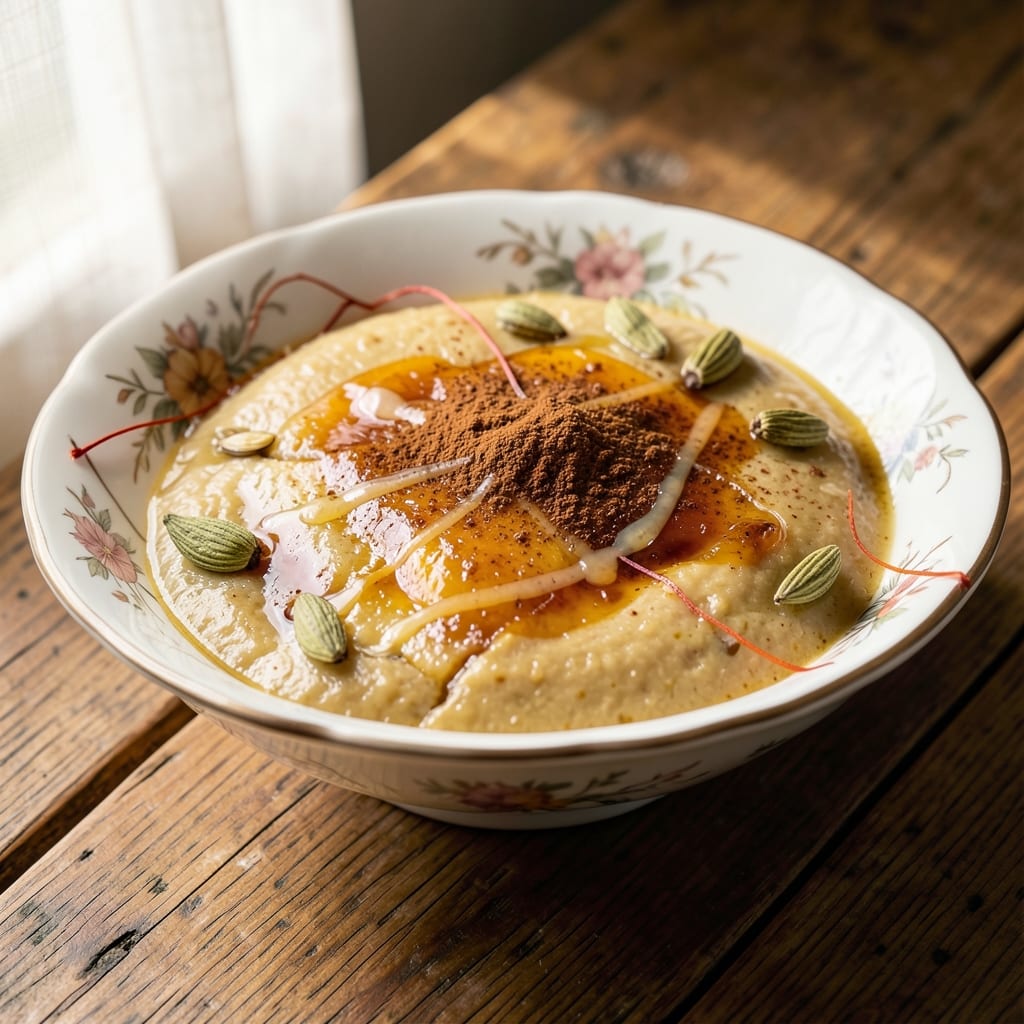
This Bangladeshi egg halwa recipe transforms simple ingredients into a dessert that feels like a warm embrace—rich, spiced, and topped with a delicate crunch. The secret lies in slow-cooking the egg-milk mixture until it reaches that signature golden caramel consistency, while cardamom infuses every spoonful with aromatic warmth. I first made this during Eid celebrations, and it became an instant family favorite, especially when served with a dollop of thickened cream.
What sets this recipe apart is the balance of textures: a velvety, custard-like base that develops a crispy caramelized top when cooked just right. Traditionally, it's made with ghee for that unmistakable richness, but you can substitute butter for a lighter version without sacrificing flavor. The cardamom isn't just an afterthought—it's the heart of this dessert, grounding the sweetness with its earthy, citrusy notes.
By the time you're done, you'll have a dessert that's both comforting and impressive—perfect for festive gatherings or quiet afternoons. The slow cooking process (about 45 minutes) ensures the eggs cook evenly, creating a smooth, pudding-like texture that's irresistibly creamy. The caramelized top adds a satisfying contrast, making every bite feel like a little celebration.
This recipe serves 6-8, making it ideal for sharing, though you might find yourself sneaking extra spoonfuls. The aroma alone will have everyone gathering around the kitchen, and the taste—warm, spiced, and just sweet enough—will make it a staple in your dessert repertoire. Let's get started on creating this beloved Bangladeshi classic.
Ingredients for bangladeshi egg halwa
Cardamom, saffron, and warm spices transform simple eggs and milk into this velvety dessert.
| Ingredient | Amount | Notes |
|---|---|---|
| Large Eggs 🥚 | 6 whole | Room temperature for even cooking |
| Whole Milk 🥛 | 2 cups | Full-fat for creamy texture |
| Granulated Sugar 🍚 | 1 ½ cups | White or light brown preferred |
| Unsalted Butter 🧈 | ½ cup | Cold, cubed for caramelization |
| Green Cardamom Pods 🌿 | 8 whole | Lightly crushed, seeds only |
| Ground Cinnamon 🌶️ | ½ tsp | Freshly ground for warmth |
| Saffron Threads 💛 | ⅛ tsp | Soaked in 1 tbsp warm milk |
| Ghee 🫒 | ¼ cup | Traditional for richness (optional) |
| Slivered Almonds 🥜 | ½ cup | Toasted for crunchy topping |
| Pistachios 🌰 | ¼ cup | Chopped, for garnish |
| Rose Water 🌸 | 1 tsp | Pure, food-grade quality |
| Vanilla Extract 🌸 | ½ tsp | Pure vanilla preferred |
| Salt 🧂 | ¼ tsp | Fine sea salt for balance |
Cardamom is the star here—look for green pods at Indian or Middle Eastern markets (or bulk bins at Whole Foods). They should smell intensely aromatic, not dusty. Ghee is traditional but butter works beautifully—just reduce the milk slightly if using butter for a lighter texture. The saffron? Buy threads, not powder—it's more potent and worth the splurge. Toast your almonds in a dry pan until golden for that perfect crunch. For the milk, whole is non-negotiable—skim won't give that creamy finish. If you can't find cardamom pods, ground cardamom at half the amount works in a pinch, but the flavor won't be as layered.
No saffron? Turmeric at a pinch adds color (though no saffron flavor), or skip it entirely—your halwa will still be delicious. Short on pistachios? Cashews or walnuts work just as well for that nutty crunch. The rose water is essential for that floral note—Trader Joe's sells good quality, or look for food-grade bottles online. Want to skip the saffron milk soak? Just use the 1 tsp warm milk it's soaked in—the flavor will still infuse. For the sugar, light brown adds subtle caramel notes, but white works perfectly fine. The butter should be cold when you add it—this creates those beautiful caramelized bubbles on top. Don't skip the vanilla extract—it rounds out all the spices beautifully.
This keeps 4-5 days in the fridge, covered tightly—though it's so good, you'll likely eat it faster. For leftovers, reheat gently in the microwave with a damp paper towel over it to restore that creamy texture. The nut topping stays crispy for 2 days if stored separately. Freeze portions for up to 3 months—just thaw overnight in the fridge. I always make extra because it disappears quickly. Serve warm with a dollop of whipped cream or extra nuts for that restaurant-quality touch. The halwa actually tastes better the second day as the flavors meld together.
Why You'll Love This Recipe
- No-Fuss Ingredients: I keep eggs, milk, and sugar stocked anyway—this recipe just adds butter and cardamom. That’s it. No exotic finds, no last-minute grocery runs. Honestly, I’ve made this three times in a row without buying anything new.
- Creamy Cardamom Magic: The moment the eggs thicken into that golden, custardy mess? Pure satisfaction. The cardamom pods crack open just enough to perfume the whole thing—warm, floral, and just sweet enough without being cloying. (Yes, even on a Tuesday night.)
- Breakfast or Dessert: Serve it warm with chai for a lazy morning treat or chill it for a no-bake dessert. My kids ask for it after school snacks, and my husband sneaks bites when he thinks I’m not looking. It’s that good.
- Budget-Friendly Luxury: A dozen eggs and a stick of butter stretch for four servings, and the sugar caramelizes into rich, buttery layers. Between us, this tastes like a bakery dessert but costs pennies. Leftovers? They disappear in a day.
Step-by-step instructions for Bangladeshi egg halwa
Here's how to create this velvety, aromatic halwa with a perfect crunchy almond topping.
Prepare the Cardamom-Saffron Milk Mixture
In a medium saucepan, combine the 2 cups whole milk, 8 lightly crushed green cardamom pods, and 0.125 tsp saffron threads (previously soaked in 1 tablespoon warm milk). Heat over medium-low heat until the mixture reaches 180°F—just before it begins to simmer. You'll notice the cardamom releases its delicate, floral aroma and the saffron infuses the milk with a golden hue. Remove from heat and let steep for 5 minutes covered, then strain through a fine-mesh sieve into a clean bowl, pressing gently on the cardamom pods to extract every drop of flavor. Discard the pods.
This infusion forms the aromatic base of your halwa. I like to work quickly here—once the milk reaches temperature, the cardamom's oils can become bitter if overcooked. The saffron's delicate color and flavor are worth the extra attention during the soaking step.
Cook the Egg-Sugar Base to Silkiness
In a heavy-bottomed saucepan, melt the 0.5 cup unsalted butter over low heat until it turns golden brown and emits a nutty aroma—this takes about 5 minutes. Immediately remove from heat and whisk in the 1.5 cups granulated sugar until completely dissolved. Return the pan to low heat and gradually whisk in the 6 room-temperature eggs, one at a time, ensuring each is fully incorporated before adding the next.
Pour in the prepared cardamom-saffron milk mixture and return to low heat. Stir constantly with a silicone spatula, scraping the bottom and sides of the pan to prevent sticking. Cook for 15-20 minutes until the mixture thickens to a pudding-like consistency and coats the back of a spoon. You'll know it's ready when it pulls away from the sides of the pan with a slight sheen—this is the perfect texture for halwa.
Incorporate Aromatics and Finish the Base
Remove the pan from heat and stir in the 0.25 cup ghee, 1 tsp rose water, 0.5 tsp vanilla extract, and 0.25 tsp salt. The ghee adds that traditional richness while the rose water and vanilla elevate the flavor profile. Return the pan to low heat and cook for an additional 5 minutes, stirring constantly to ensure even distribution of the aromatics. The mixture should now be smooth, glossy, and ready for the topping.
Here's where the halwa transforms from simple custard to something extraordinary. The ghee creates that signature melt-in-your-mouth texture, while the rose water adds a subtle floral note that's characteristic of Bangladeshi desserts. Taste the mixture now—it should be sweet, aromatic, and perfectly balanced between the cardamom's warmth and the saffron's delicate flavor.
Prepare and Add the Crunchy Topping
In a dry skillet over medium heat, toast the 0.5 cup slivered almonds for 3-4 minutes until they turn a light golden brown and become fragrant. Immediately transfer to a plate and set aside. In the same skillet, lightly toast the 0.25 cup chopped pistachios for 1-2 minutes until just warmed through—don't let them darken or they'll become bitter.
Spread the egg mixture evenly in a 9-inch round baking dish or similar size. Sprinkle the toasted almonds and pistachios evenly over the top, pressing down gently with a spoon to ensure they adhere. The contrast between the creamy base and crunchy topping is what makes this halwa so special—each bite delivers both textures in perfect harmony.
Set and Serve the Halwa
Allow the halwa to cool to room temperature before refrigerating for at least 4 hours, or preferably overnight. This chilling time is crucial—it allows the flavors to meld completely and the texture to set properly. When ready to serve, run a knife around the edges to loosen, then invert onto a serving plate. The halwa should release cleanly, revealing its beautiful golden-brown top.
Slice into 6 equal portions (about 1-inch thick each) and serve chilled. The contrast between the silky egg base and the crunchy nut topping is what makes this halwa truly special. For an extra touch, dust the top with 0.5 tsp ground cinnamon** just before serving—this adds warmth and complements the cardamom's flavor beautifully.
Pro Tips For Making Bangladeshi Egg Halwa
- Whisk Eggs Until Ribbon-Thin: After cracking the eggs, whisk them vigorously until they form a thick, glossy ribbon when you lift the whisk—about 2-3 minutes. I learned this the hard way: under-whisked eggs make the halwa grainy instead of silky, and no one wants that texture fight in their dessert.
- Toast Cardamom First: Lightly crush the green cardamom pods and dry-toast them in a small pan for 30 seconds until fragrant—then grind them fresh. My grandmother swore by this, and she was right: the extra warmth deepens the flavor instead of letting it turn bitter when simmered directly in milk.
- Simmer Milk Low and Slow: Heat the milk over medium-low heat until it just begins to bubble at the edges—no rolling boil. After burning three batches, I finally figured out that rushing this step scalds the eggs and turns the halwa rubbery. A gentle simmer keeps it creamy.
- Sweeten Gradually: Add sugar in two batches: half at the start, the rest only when the mixture thickens. I was skeptical until I tried it—this prevents a cloyingly sweet finish and lets the cardamom shine. Stir constantly after the second addition to avoid graininess.
Flavor customization for this bangladeshi egg halwa
Spice Level Control
Adjust the cardamom to taste—start with 8 whole pods for classic flavor, but for a milder version, reduce to 4 pods or use ½ tsp ground cardamom. If you love warmth, add ¼ tsp freshly grated nutmeg to the milk infusion. For heat lovers, sprinkle ¼ tsp cayenne over the finished halwa—it adds a subtle kick that pairs beautifully with the sweetness. 🌶️
Sweetness Variations
This recipe balances sweetness perfectly, but you can tweak it: reduce sugar to 1 cup for a subtler taste or increase to 1.75 cups for a more decadent version. For a diabetic-friendly option, replace ½ cup sugar with ½ cup erythritol (though texture may vary slightly). I find that 1 tsp honey stirred into the finished halwa adds floral notes without extra sweetness.
Dairy Substitutions
For a vegan version, replace eggs with 6 tbsp cornstarch mixed with ½ cup water, and use 2 cups coconut milk instead of dairy milk. The texture will be lighter but still creamy. For lactose-intolerant cooks, lactose-free whole milk works perfectly—just ensure it's full-fat to maintain richness. Ghee can be substituted with ½ cup coconut oil for a dairy-free alternative, though the flavor will differ slightly.
Nut-Free Option
Skip the almonds and pistachios entirely, and instead top with ½ cup toasted coconut flakes for a tropical twist. For a crunchy alternative, use ½ cup crushed graham crackers or ¼ cup chopped dates (soaked in warm water for 10 minutes first). The key is maintaining that textural contrast—just ensure toppings are lightly toasted to prevent sogginess.
Flavor Boosters
Enhance the floral notes by adding ½ tsp orange blossom water (available at Middle Eastern markets) to the milk infusion. For a citrusy twist, zest 1 small orange and fold it into the finished mixture. A pinch of black cardamom (more aromatic than green) adds depth, while ½ tsp fennel seeds toasted in the butter create a licorice-like complexity that pairs wonderfully with the cardamom.
Texture Adjustments
For a firmer halwa, increase cooking time by 5-10 minutes until it reaches 190°F internal temperature. For a softer texture, reduce to 15 minutes total cooking time. If the base feels too thin after chilling, warm it gently over low heat for 2-3 minutes while stirring constantly—this thickens it without altering flavor. The nut topping should always be toasted until just golden to maintain crispness. ✨
Nutrition facts
Frequently asked questions
Can I make this halwa without eggs?
The traditional recipe relies on eggs for that signature creamy texture, but you can adapt it! Replace the eggs with 6 tbsp cornstarch mixed with ½ cup water and use 2 cups coconut milk instead of dairy milk. The texture will be lighter but still delicious. For a firmer version, add 1 tbsp agar-agar to the milk mixture before cooking.
Why does my halwa turn out grainy?
Graininess usually means the eggs didn't cook evenly or the mixture was stirred too vigorously. Always cook on low heat and stir gently with a silicone spatula. For extra smoothness, whisk the eggs thoroughly before adding them to the hot butter-sugar mixture. If using store-bought eggs, ensure they're fresh—older eggs are more likely to create lumps.
How do I know when the halwa is fully cooked?
The halwa is ready when it reaches a pudding-like consistency that coats the back of a spoon and pulls away cleanly from the sides of the pan. It should be thick enough to hold its shape when spooned but still smooth. The internal temperature should reach around 185°F—use a candy thermometer for precision. Overcooking can make it too firm, so remove it just before it reaches this point.
Can I make this ahead of time for a party?
This halwa actually tastes better the next day as the flavors meld together. Prepare it 24 hours in advance and store it in an airtight container in the fridge. When ready to serve, let it sit at room temperature for 30 minutes before slicing. For parties, you can even assemble it a day ahead and refrigerate—just add the nut topping right before serving to keep it crisp.
What's the best way to reheat leftover halwa?
For the creamiest texture, reheat in 10-second bursts in the microwave, stirring between each interval. Cover with a damp paper towel to prevent drying. Alternatively, place the halwa in a heatproof bowl and warm it in a double boiler over low heat for 3-5 minutes, stirring constantly. Never microwave uncovered or it will develop a skin. The nut topping stays crispy if stored separately and added fresh.